
Sea chart · Month by month
Galápagos Water Temperature and Sea Conditions
Wind, waves and water temperature around the Galápagos Islands, zone by zone and month by month, with what they mean for your days at sea: which wetsuit to pack, how the crossings will feel and why the west is always colder.
- 21–26 °C water temperature through the year (70–79 °F)
- SE trade winds blow most of the year
- 2 seasons at sea: warm and calm, cool and lively
- 3–7 mm wetsuit, depending on the month and the island
At sea, month by month
Wind, waves and water temperature by month
–
Indicative values based on long-term averages for five zones around the islands; conditions vary from day to day and year to year. It is not a navigation aid: the captain always decides. Coastline © OpenStreetMap contributors.
Month by month
Galápagos water temperature by month
Average sea surface temperature in the central islands, with the usual range in the cooler western islands, the air temperature and the wetsuit most guests are comfortable with. The current month is highlighted.
| Month | Central islands | Western islands | Air (day) | Sea | Wetsuit |
|---|---|---|---|---|---|
| January | 23–25 °C · 73–77 °F | 22–24 °C | 29–30 °C | Calm | 3 mm |
| February | 24–26 °C · 75–79 °F | 23–25 °C | 30–31 °C | Calm | Shorty or none |
| March | 25–26 °C · 77–79 °F | 24–25 °C | 30–31 °C | Calm | Shorty or none |
| April | 25–26 °C · 77–79 °F | 23–25 °C | 30 °C | Calm | Shorty or none |
| May | 24–25 °C · 75–77 °F | 22–24 °C | 28–29 °C | Calm | 3 mm |
| June | 22–24 °C · 72–75 °F | 19–22 °C | 26–27 °C | Moderate | 3 mm |
| July | 21–23 °C · 70–73 °F | 18–21 °C | 25–26 °C | Lively swell | 3–5 mm (5 mm west) |
| August | 20–22 °C · 68–72 °F | 17–20 °C | 24–25 °C | Lively swell | 3–5 mm (5 mm west) |
| September | 20–22 °C · 68–72 °F | 17–20 °C | 24–25 °C | Lively swell | 3–5 mm (5 mm west) |
| October | 21–22 °C · 70–72 °F | 18–21 °C | 25 °C | Lively swell | 3–5 mm (5 mm west) |
| November | 21–23 °C · 70–73 °F | 19–22 °C | 25–26 °C | Moderate | 3 mm |
| December | 22–24 °C · 72–75 °F | 21–23 °C | 27–28 °C | Moderate | 3 mm |
Values are long-term averages. In El Niño years the water can be 2 to 4 °C warmer; in La Niña years, cooler.
Two seasons at sea
Warm and calm, or cool and lively
The Galápagos have no bad season, but the sea changes a lot between the first and second half of the year.
December to May
The warm season
The trade winds ease, the sea turns calm and the water reaches its warmest. Short tropical showers in the afternoon keep the islands green.
- Water: 24–26 °C (75–79 °F)
- Sea: Calm, the smoothest crossings of the year
- Sky: Sunny with brief afternoon showers
- Best for: Snorkelling, swimming and anyone prone to seasickness
June to November
The cool season (garúa)
The south-east trades strengthen, the Humboldt Current cools the water and a fine mist, the garúa, covers the highlands. The sea is richer in life than at any other time.
- Water: 20–23 °C (68–73 °F), colder in the west
- Sea: Lively, with more swell on open crossings
- Sky: Overcast mornings, dry
- Best for: Wildlife, whale sharks at Darwin and Wolf, seabird courtship
Why the temperature changes
Three currents, three temperatures
The Galápagos sit where three ocean currents meet. They explain why you may need a thicker wetsuit on Fernandina than on Floreana on the same trip.
- Humboldt CurrentCold water from the south-east, strongest from June to November. It brings nutrients, fish and the penguins and fur seals that make the islands unique.
- Cromwell CurrentA cold undercurrent that rises against the west coasts of Isabela and Fernandina. It makes the west the coldest and richest corner of the archipelago.
- Panama CurrentWarm water from the north-east, strongest from December to May. It warms the northern islands, Darwin and Wolf most of all.
Wetsuit guide
Which wetsuit do you need?
Most yachts lend or rent wetsuits on board, so ask before you pack one. As a rule of thumb, for snorkelling:
- Above 24 °CA rash guard or a shorty is enough for most people. Typical in the central and southern islands from January to April.
- 21 to 24 °CA 3 mm full wetsuit keeps you comfortable through longer snorkels. The usual choice for most of the year.
- 18 to 21 °CA 5 mm full wetsuit, especially in the west from June to November, where the Cromwell Current cools the water.
- Below 18 °CA 7 mm wetsuit with hood and gloves, mainly for divers facing thermoclines at Darwin, Wolf and Cape Marshall.
Questions
Sea conditions: frequently asked questions
Is the Galápagos sea rough?
Most of the time the sea is moderate. From December to May it is usually calm; from June to November the south-east trade winds bring more swell, especially on night crossings between distant islands. Larger yachts and catamarans move less; see our catamarans.
When is the water warmest?
From February to April, when the central islands reach about 25 to 26 °C (77 to 79 °F). The coolest months are August and September, around 20 to 22 °C, and colder in the west.
Do I need a wetsuit to snorkel in the Galápagos?
For most people, yes, at least from June to November and always in the western islands. From January to April a shorty or rash guard is often enough in the central and southern islands. Check the live chart above for today’s water temperature.
What is the garúa?
A fine, cool mist that covers the highlands from June to November, when the Humboldt Current cools the air above the sea. It keeps the highlands green and the days pleasant, rarely real rain.
Can I get seasick on a Galápagos cruise?
Some guests do, mainly on the first night or on longer crossings from June to November. Take your usual remedy before sailing, choose a cabin in the middle of the yacht and spend time on deck looking at the horizon. Your advisor can suggest calmer routes.
How accurate are these values?
They are long-term averages for each zone and month. Real conditions change from day to day, and in El Niño or La Niña years the water can be several degrees warmer or cooler. Use them to plan and pack, never as a navigation tool.
Your yacht
Stable yachts for every sea
Catamarans and larger motor yachts move less on open crossings. Chartered in full, each one is reserved for your group.
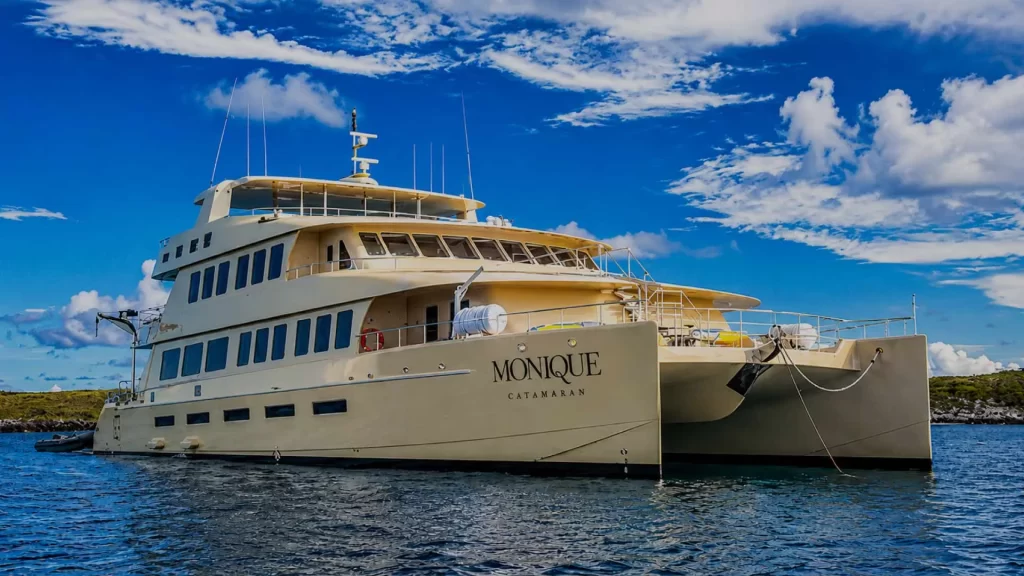
M/C Monique
A 2026 hybrid catamaran for 16 guests, with ocean-view suites, an open-air jacuzzi and a near one-to-one crew.
From USD 7,500
View yacht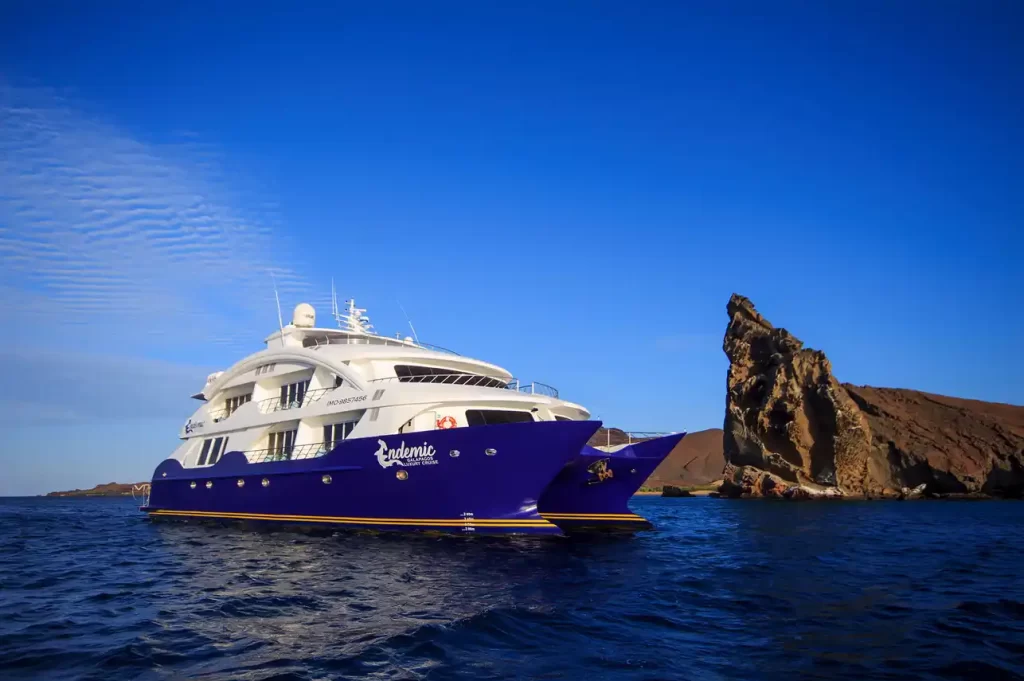
M/C Endemic
A 35-metre luxury catamaran with eight 30 m² suites and a single cabin, all with private balconies, a jacuzzi on the sky…
Private charter On request
View yacht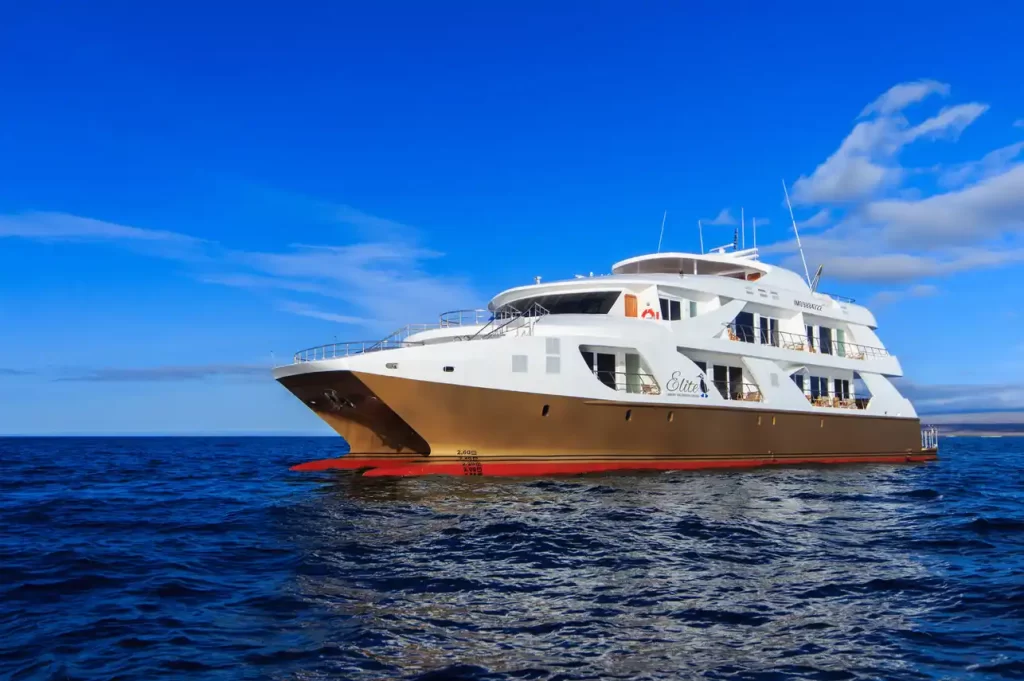
M/C Elite
A luxury catamaran launched in 2019, with Golden Suites and a single cabin, all with private balconies, a whirlpool on the sky…
Private charter On request
View yachtPersonal advice
Want the calmest seas for your dates?
Tell us when you travel and who is coming, and we will suggest the yachts, routes and month that suit you best.