
Guide · Wildlife
Galápagos wildlife calendar
Albatross courtship, newborn sea lions, nesting turtles and whale sharks: when and where to see the great moments of Galápagos wildlife from your private yacht.
8 min read
In the Galápagos, animals do not hide and do not migrate far. Sea lions, marine iguanas, boobies and giant tortoises can be seen in every month of the year. What changes is what they are doing: dancing to court a partner, guarding a nest, feeding a chick or teaching a pup to swim. This calendar tells you when those moments happen and which islands to choose to see them.
Seabirds
- Waved albatross: the only tropical albatross nests almost exclusively on Española. The first birds arrive in late March, the famous courtship dance peaks from April to June and the young leave around December. From January to March the colony is empty.
- Blue-footed booby: they breed all year, but the courtship dance, with its slow steps and raised blue feet, is easiest to see from around May to August on North Seymour and Española.
- Frigatebirds: males inflate their red throat pouch to attract females. North Seymour and Genovesa have large colonies throughout the year.
- Nazca and red-footed boobies: present all year on Genovesa, Española and other outer islands, with chicks often seen in the second half of the year.
- Galápagos penguin and flightless cormorant: found all year in the west, around Isabela and Fernandina, and most active in the cool season, when the water is richest.
- Flamingos: they feed in the lagoons of Floreana, Isabela and Rábida, and often nest early in the year.
Reptiles
- Green sea turtles: they mate in the water from November to January and come ashore to nest from January to March. Tracks on the sand are a common sight on morning landings.
- Marine iguanas: on Española, males turn red and green in the breeding season around December and January, which is why locals call them Christmas iguanas.
- Land iguanas: they breed early in the year on islands such as South Plaza, Santa Cruz and Fernandina.
- Giant tortoises: visible all year in the highlands of Santa Cruz. Females lay their eggs from June to December and the young hatch from December to April.
Sea lions and fur seals
Galápagos sea lions are the companions of every trip, on beaches, rocks and even the steps of the landing docks. Most pups are born between August and November, and by the end of the year the young swim around snorkellers, curious and playful. Fur seals, smaller and shyer, prefer shaded rocky shores such as Puerto Egas on Santiago and the cliffs of Genovesa.
Ocean giants
- Whale sharks: from June to November they gather around the remote islands of Darwin and Wolf, reached only by a private diving liveaboard.
- Hammerhead sharks: large schools at Darwin and Wolf throughout the year.
- Manta rays and sunfish: seen more often in the cool season, when the cold currents bring plankton to the west.
- Humpback whales: they pass through from June to October, mostly off the western islands, with dolphins seen all year.
In the Galápagos you do not go looking for the animals: they are simply there, close and unafraid. The calendar only tells you what they will be doing.
At a glance
| Animal | Best months | Where |
|---|---|---|
| Waved albatross | April to December | Española |
| Blue-footed booby | All year, courtship May to August | North Seymour, Española |
| Frigatebirds | All year | North Seymour, Genovesa |
| Penguin and flightless cormorant | All year, best June to November | Isabela, Fernandina |
| Green sea turtle | Nesting January to March | Beaches across the islands |
| Marine iguana | All year, colours December to January | Española, Fernandina |
| Giant tortoise | All year, hatching December to April | Santa Cruz highlands |
| Sea lion pups | August to November | All regions |
| Whale shark | June to November | Darwin and Wolf |
| Humpback whale | June to October | Western islands |
To see how sea and weather change through the year, read the best time to visit.
Where to see them
Every species has its islands, so the route is the key. The southern islands are home to the albatross and the most colourful marine iguanas. The western islands shelter penguins, flightless cormorants and whales. The northern islands are the kingdom of seabirds, from frigatebirds to red-footed boobies. The central islands combine giant tortoises, land iguanas and blue-footed boobies. Explore them all in the islands by region.
Plan your charter around a sighting
If one animal matters most to you, start with it: choose the month, then the region, then the yacht whose route reaches it. See how routes are put together in itineraries explained and how to compare boats in how to choose your yacht. Wild animals keep their own schedule, so no sighting can be guaranteed, but the right route on the right dates gives you the best possible chance.
How to watch wildlife responsibly
- Keep at least two metres from the animals, even when they come closer to you.
- Never touch or feed them, and stay on the marked trails.
- Use photography without flash.
- Follow your naturalist guide, who accompanies every landing and knows each colony.
Yachts to see it all
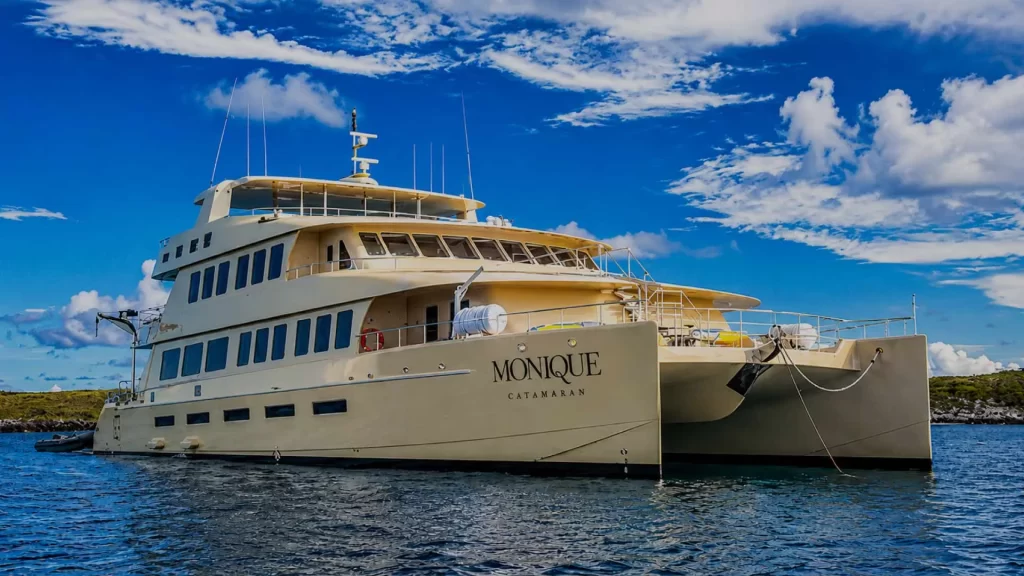
M/C Monique
A 2026 hybrid catamaran for 16 guests, with ocean-view suites, an open-air jacuzzi and a near one-to-one crew.
From USD 7,500
View yacht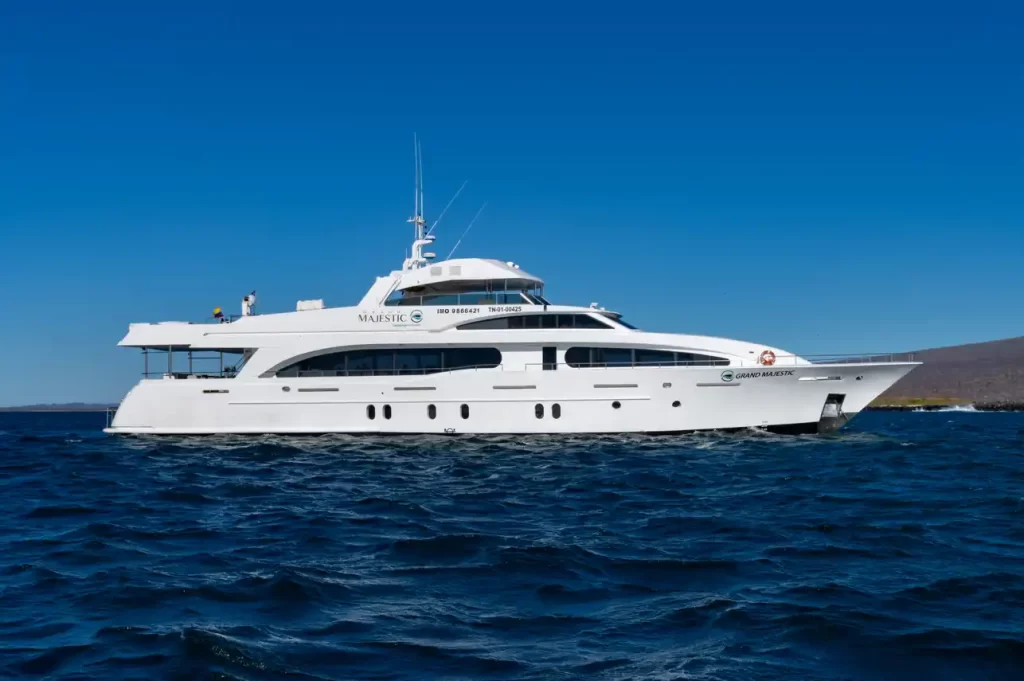
M/Y Grand Majestic
A 39-metre US-designed luxury motor yacht, launched in 2018 and reaching 25 knots, with a 39 m² master suite, seven staterooms and…
Private charter On request
View yacht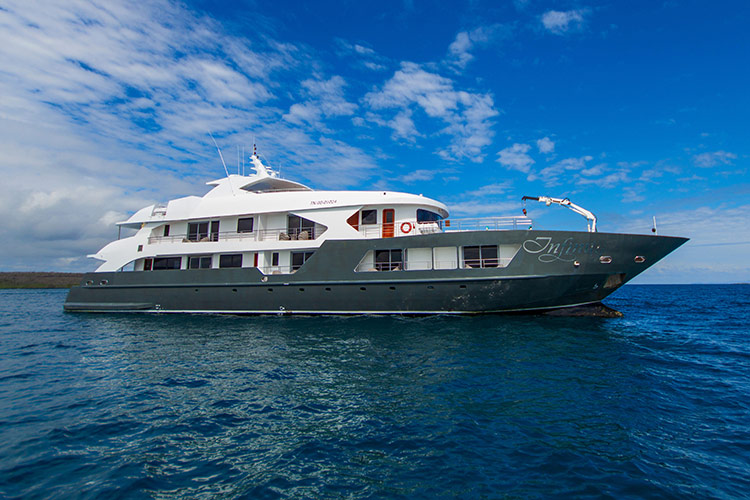
M/Y Infinity Expedition
A 49-metre luxury motor yacht launched in 2018, with eight double cabins and two suites, all with private balconies, a jacuzzi and…
Private charter On request
View yacht