
Wildlife finder
Galápagos Animals: Where and When to See Them
The iconic animals of the Galápagos Islands, with the islands where you can see them and the best months to go. Filter by island, month or group to plan your private charter around the wildlife you dream of.
- 29 iconic species in this guide
- 14 found only in Galápagos
- 17 islands and dive sites
- 12 months of wildlife
Find your animals
Which animals will you see, and where?
Tap any island to see the yachts that sail there.
29 of 29 species
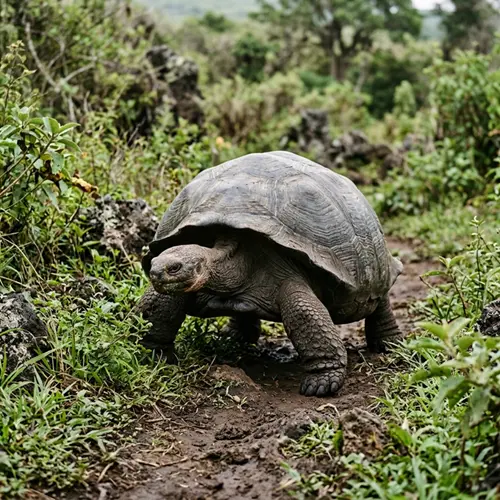
Galápagos giant tortoise
Chelonoidis spp. Endemic
The animal that gave the islands their name. See them roaming free in the highlands of Santa Cruz and at the breeding centres of Isabela and San Cristóbal.
- When
- All year
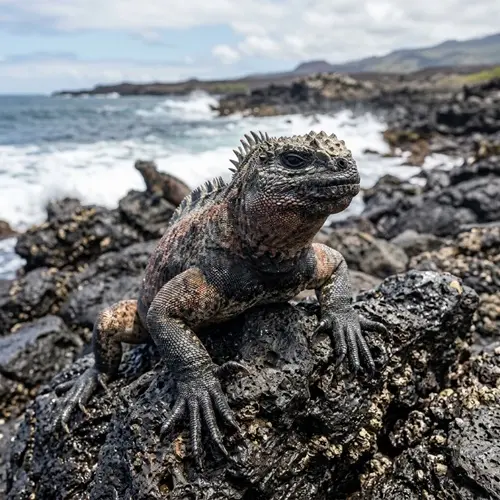
Marine iguana
Amblyrhynchus cristatus Endemic
The only lizard in the world that feeds in the sea. Fernandina has the largest colonies; on Española they turn red and green, the “Christmas iguanas”.
- When
- All year · nesting January to April
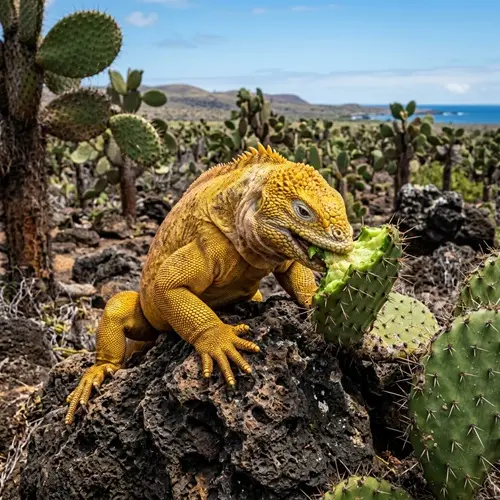
Galápagos land iguana
Conolophus subcristatus Endemic
Golden-yellow iguanas that feed on cactus pads. Easy to see on North Seymour, South Plaza, Dragon Hill on Santa Cruz and Urbina Bay on Isabela.
- When
- All year

Santa Fe land iguana
Conolophus pallidus Endemic
A paler species found only on Santa Fe, living among a forest of giant prickly-pear cactus.
- Where
- Santa Fe
- When
- All year
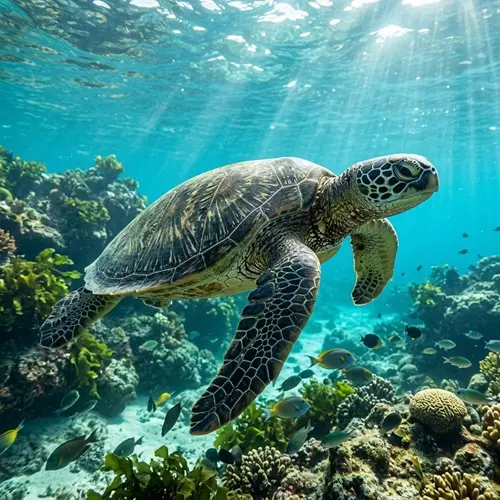
Green sea turtle
Chelonia mydas
Seen on almost every snorkel. From December to June females come ashore at night to nest on beaches such as Espumilla, Las Bachas and Gardner Bay.
- When
- All year in the water · nesting December to June
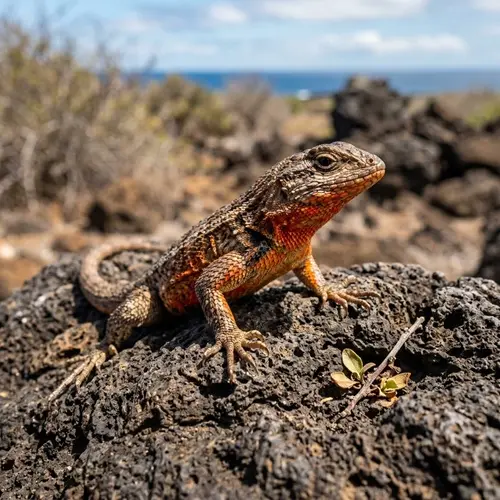
Lava lizard
Microlophus spp. Endemic
Small lizards that do push-ups on the rocks to defend their territory, with a different species on several islands.
- When
- All year
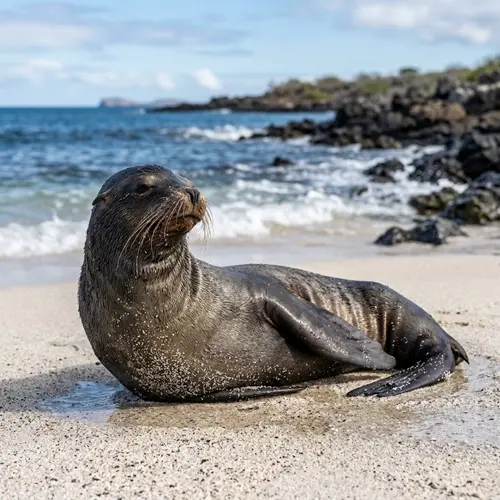
Galápagos sea lion
Zalophus wollebaeki Endemic
Curious and playful, they share beaches with visitors and often join snorkellers in the water.
- When
- All year · most pups August to December
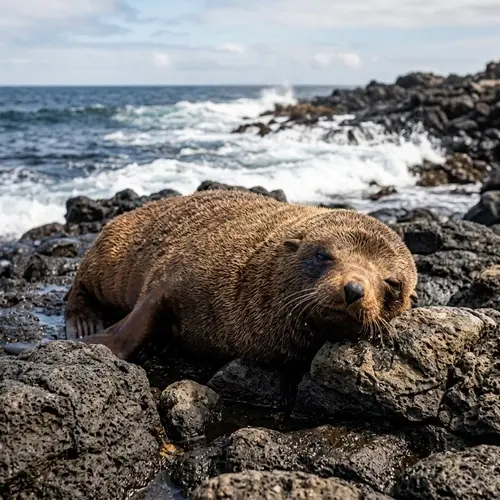
Galápagos fur seal
Arctocephalus galapagoensis Endemic
Smaller and shyer than sea lions, with thick fur and big eyes. The grottos of Egas Port on Santiago are the classic place to see them.
- When
- All year
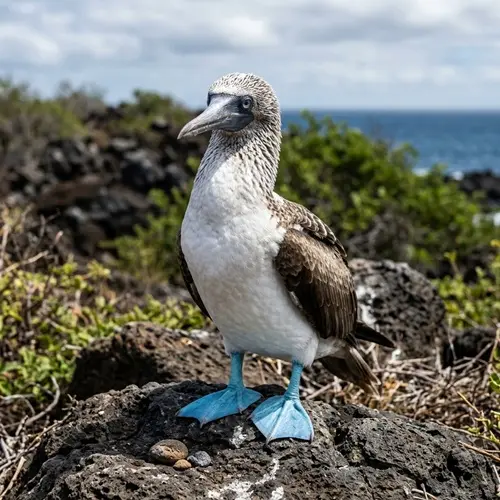
Blue-footed booby
Sula nebouxii
The most famous bird of the islands, with a slow, high-stepping courtship dance. Common on North Seymour, Española and Pitt Point.
- When
- All year · courtship dances June to August
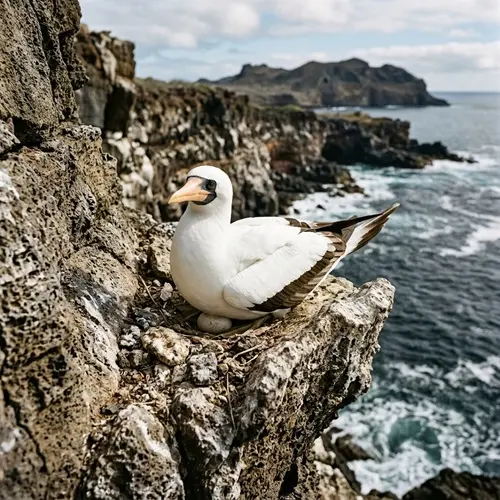
Nazca booby
Sula granti
The largest booby, bright white with a black mask, nesting on the cliffs of Española and Genovesa.
- When
- All year
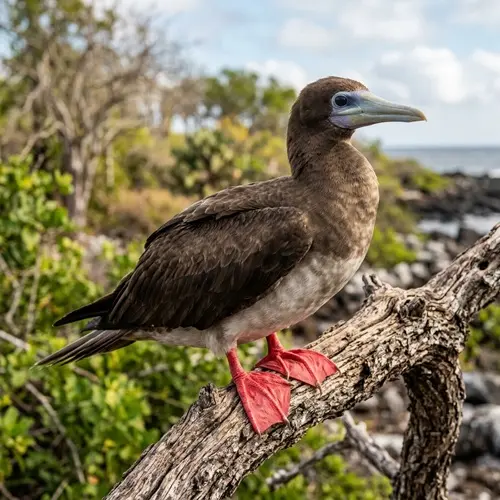
Red-footed booby
Sula sula
The only booby that nests in trees. Genovesa has one of the largest colonies in the world.
- Where
- GenovesaSan Cristóbal
- When
- All year
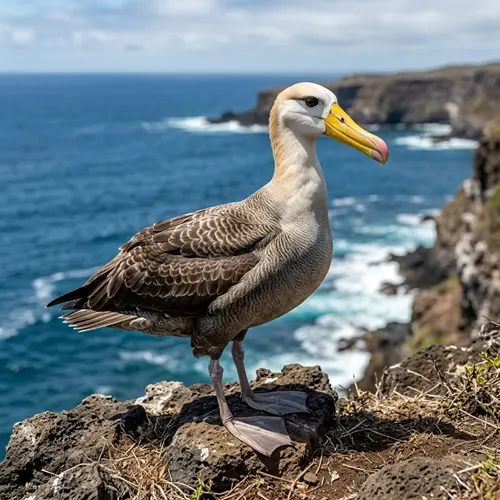
Waved albatross
Phoebastria irrorata Endemic
Nests almost only on Española, where couples perform an elaborate courtship of bill fencing. Absent from January to March.
- Where
- Española
- When
- April to December
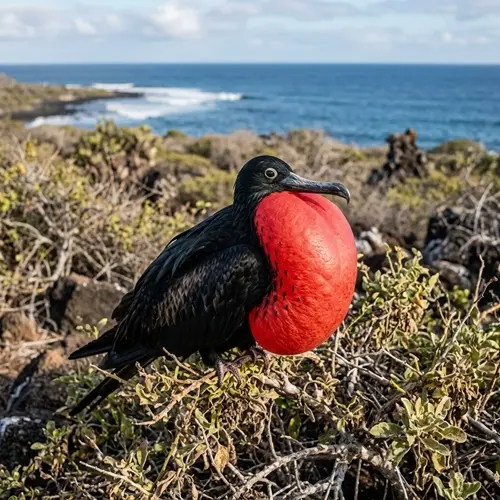
Frigatebirds
Fregata spp.
Males inflate a red throat pouch like a balloon to attract females. North Seymour has the largest colony of magnificent frigatebirds; Genovesa has great frigatebirds.
- When
- All year
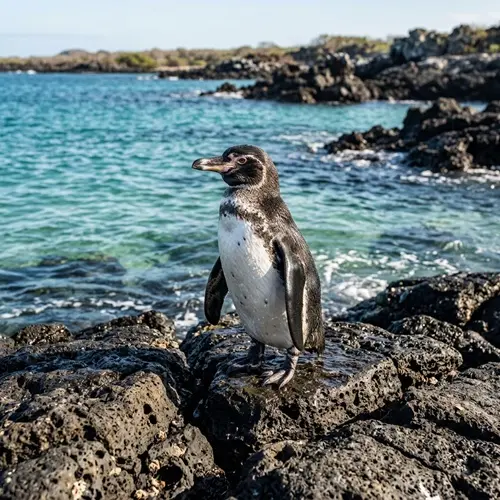
Galápagos penguin
Spheniscus mendiculus Endemic
The only penguin that lives on the Equator, thanks to the cold currents of the west. Often seen while snorkelling at Bartolomé and in the west.
- When
- All year · best June to December
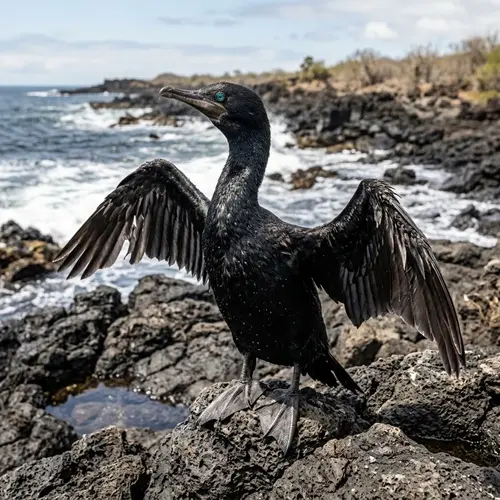
Flightless cormorant
Phalacrocorax harrisi Endemic
A cormorant that lost the ability to fly, found only on the coasts of Fernandina and western Isabela.
- Where
- FernandinaIsabela
- When
- All year
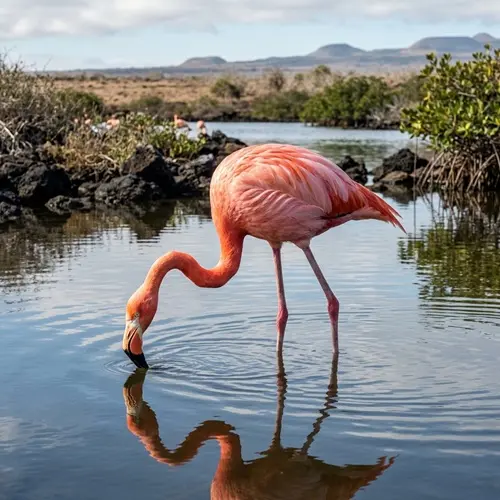
Greater flamingo
Phoenicopterus ruber
Pink flamingos feeding in brackish lagoons such as Cormorant Point on Floreana, Rábida and Dragon Hill.
- When
- All year
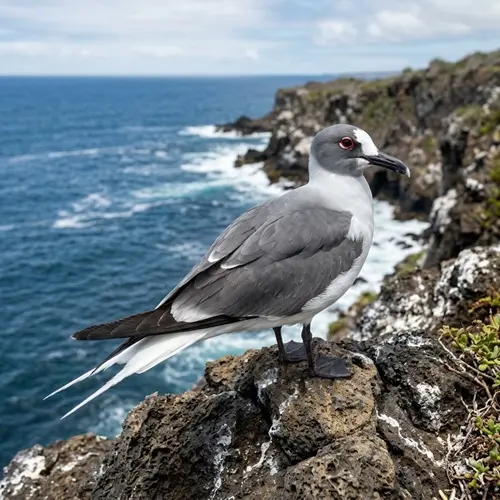
Swallow-tailed gull
Creagrus furcatus Endemic
The only nocturnal gull in the world, with a red eye ring, nesting on cliffs such as South Plaza and Genovesa.
- When
- All year
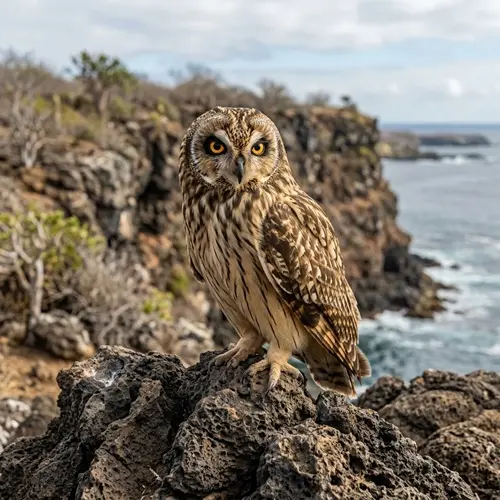
Short-eared owl
Asio flammeus galapagoensis
Hunts storm petrels by day on Genovesa, especially around El Barranco.
- Where
- Genovesa
- When
- All year
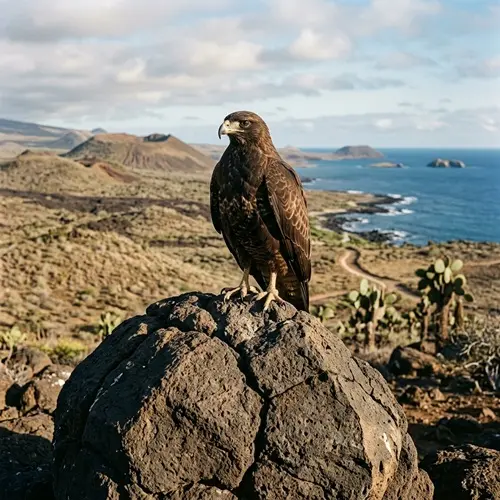
Galápagos hawk
Buteo galapagoensis Endemic
The top land predator of the islands, so used to people that it often perches a few metres away.
- When
- All year
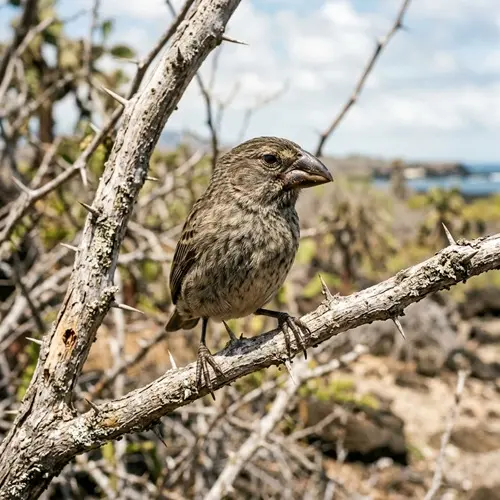
Darwin’s finches
Geospizinae Endemic
The small birds whose different beaks inspired the theory of evolution, present on almost every island.
- When
- All year
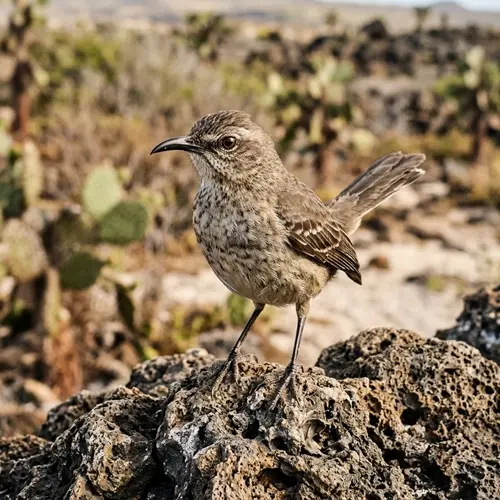
Galápagos mockingbirds
Mimus spp. Endemic
Bold and curious, with four species. The Española mockingbird will even inspect your shoes.
- When
- All year
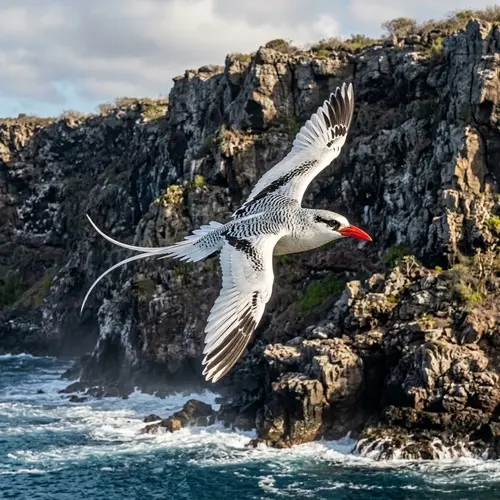
Red-billed tropicbird
Phaethon aethereus
An elegant seabird with long white tail streamers, flying along the cliffs of Genovesa and South Plaza.
- When
- All year
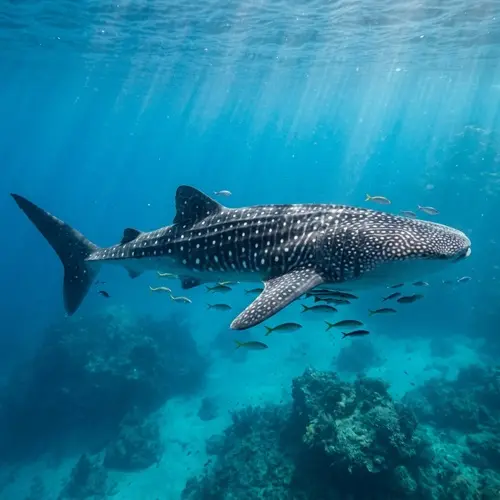
Whale shark
Rhincodon typus
The largest fish in the sea, mostly pregnant females passing Darwin and Wolf. Only on dive liveaboards.
- When
- June to November
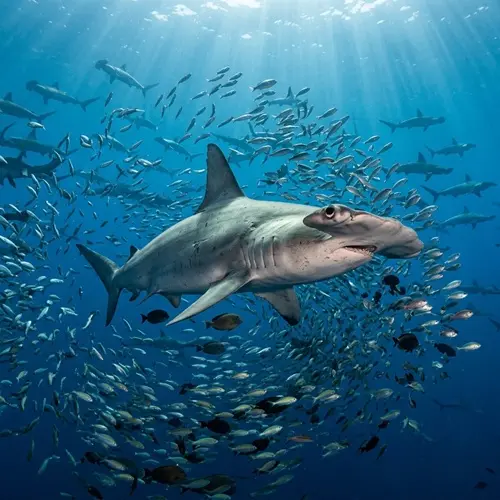
Scalloped hammerhead shark
Sphyrna lewini
Schools of hundreds of hammerheads make Darwin and Wolf world famous among divers. Snorkellers sometimes see them at Kicker Rock.
- Where
- DarwinWolfSan Cristóbal
- When
- All year

Whitetip reef shark
Triaenodon obesus
A calm reef shark often seen resting in channels such as Las Tintoreras on Isabela or swimming at Kicker Rock.
- When
- All year
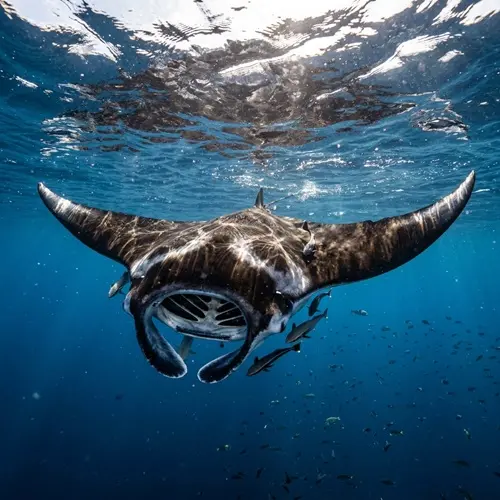
Giant manta ray
Mobula birostris
Giant mantas glide past Cape Marshall and Cousin Rock, mostly in the warm season.
- When
- December to May
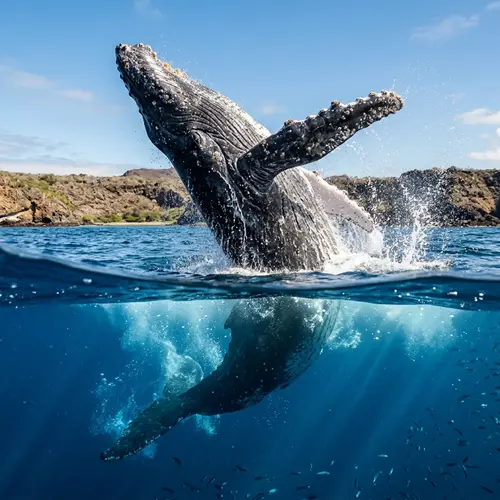
Humpback whale
Megaptera novaeangliae
Humpbacks pass through the islands in the cool season, most often seen in the channels of the west.
- Where
- IsabelaFernandina
- When
- June to October
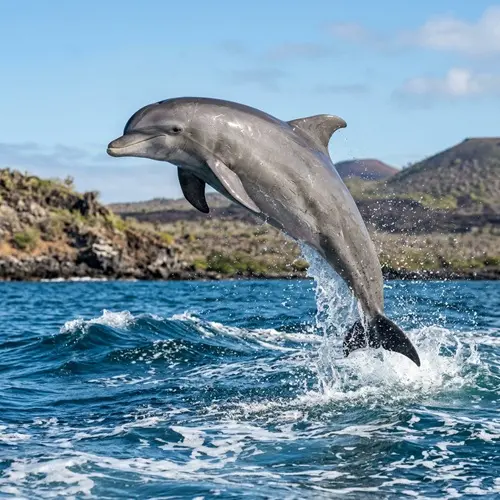
Bottlenose dolphin
Tursiops truncatus
Pods often ride the bow of the yacht, especially in the Bolívar Channel between Isabela and Fernandina.
- Where
- IsabelaFernandina
- When
- All year

Sally Lightfoot crab
Grapsus grapsus
Bright red crabs that cover the black lava shores of almost every island.
- When
- All year
No species match these filters. Try another island or month.
Found nowhere else
Why so many species are endemic
The islands rose from the sea, far from any continent, and were never connected to land. The few species that arrived by air or sea, on ocean currents or floating vegetation, adapted to each island on their own. That is why a tortoise from Española looks different from one on Santa Cruz, and why a cormorant on Fernandina forgot how to fly.
Tips
How to see more wildlife
- Choose the route, not just the yachtPenguins and flightless cormorants live only in the west; albatrosses only on Española. Check which islands each itinerary reaches before you book.
- Match the monthWhale sharks pass Darwin and Wolf from June to November; albatrosses nest from April to December; turtles nest from December to June.
- Pack for the waterHalf the wildlife is underwater. A good mask and the right wetsuit make every snorkel longer and better.
Wildlife calendarCruises by islandInteractive mapWater temperature
Personal advice
Tell us which animals you want to see
We will match them with the islands, months and yachts that give you the best chance, and send you a clear proposal.