
For many divers, the Galápagos is the ultimate destination. Schools of hammerhead sharks, whale sharks the size of a bus, manta rays, dolphins and sea lions share the same waters, pushed together by cold, rich currents. But diving here is not like diving on a calm tropical reef. The best sites are remote, the water can be cold and the currents strong. This guide to diving in the Galápagos explains what to expect and how to choose the right trip.
Darwin and Wolf: the heart of Galápagos diving
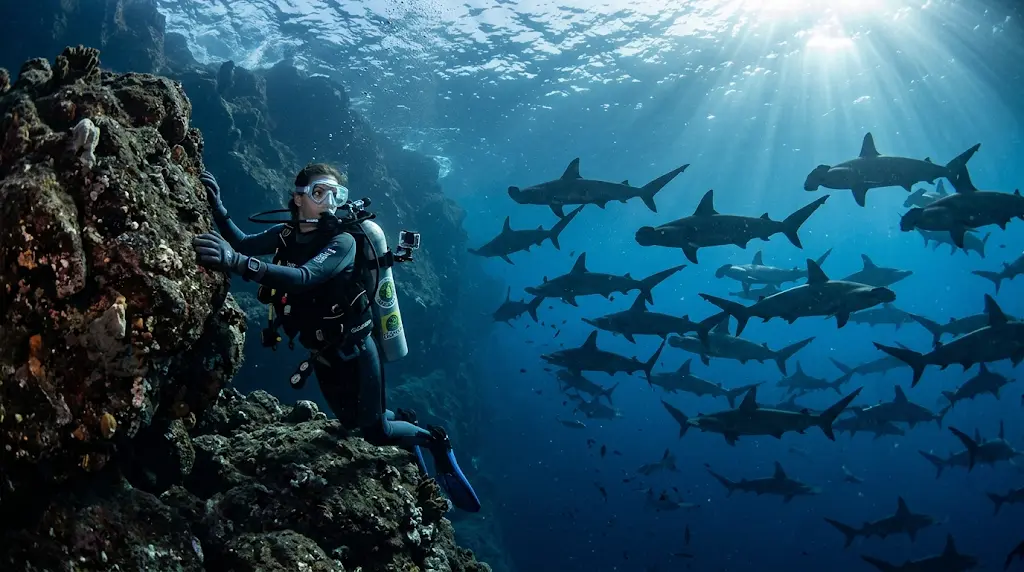
Darwin and Wolf are two small, remote islands in the far north of the archipelago. Around them, huge schools of scalloped hammerheads gather, along with Galápagos sharks, eagle rays, dolphins and, from June to November, whale sharks. Divers hold onto the rocks in the current and watch the action in the blue. In 2021 the top of the famous Darwin’s Arch collapsed, leaving two rock pillars, but the marine life around it is still extraordinary.
Darwin and Wolf can only be visited on dive liveaboards, yachts with dive itineraries that sail through the night to reach them. There are no landings, and regular cruise itineraries do not go there. See our Galápagos liveaboards.
What experience do you need?
The dives at Darwin and Wolf are in open water, with strong currents and sometimes surge. Most liveaboards ask for an advanced certification and a minimum number of logged dives, and experience with drift and current diving is important. Each operator sets its own requirements, so check them before booking. Diving with a reef hook and using a surface marker buoy are common on these trips.
Other dive sites
- Gordon Rocks, near Santa Cruz: a sunken crater with hammerheads, rays and turtles, for experienced divers.
- Cousin’s Rock, Santiago: a wall with sea lions, eagle rays and sometimes manta rays.
- Cape Marshall, Isabela: known for giant mantas along the wall.
- Kicker Rock, San Cristóbal: sharks, turtles and sea lions in the channel between the two rocks.
Best months for diving
| Season | Water | Highlights |
|---|---|---|
| Warm season, December to May | Warmer and often clearer | Large schools of hammerheads, manta rays more often reported |
| Cool season, June to November | Colder and richer | Whale sharks at Darwin and Wolf, very active marine life |
Hammerheads can be seen all year. For whale sharks, choose the cool season, with September and October often considered the peak. Check the water temperature by month and pack a thick wetsuit, hood and gloves for the cooler months.
Liveaboard or a yacht cruise with snorkelling?
A dive liveaboard is focused on diving, usually with three or four dives a day and few landings. A regular yacht cruise focuses on landings and snorkelling, with wildlife on land and in the water. If your group mixes divers and non-divers, a yacht cruise with excellent snorkelling is often the better choice; our guide to the best snorkelling spots shows how much you can see without a tank. Liveaboards come in different classes, from tourist superior to first class and luxury.
Tips for diving the Galápagos
- Get current experience first. Practise drift diving before the trip.
- Bring the right exposure protection. A 7 mm wetsuit, hood and gloves are common in the cool season.
- Check your entry requirements. See our guide to entry requirements and how to get to the Galápagos.
- Respect the distance rules. Keep away from the animals and never chase or touch them.
- Plan for the motion. Night crossings to Darwin and Wolf can be rough; see our seasickness tips.
Frequently asked questions
Can you dive Darwin and Wolf on a day trip?
No. They are only reached on dive liveaboards that sail through the night.
Is diving in the Galápagos for beginners?
The famous sites are for experienced divers because of the currents. Beginners can enjoy calmer sites and excellent snorkelling.
When is the best time to see hammerheads?
All year round; many divers prefer the warm season for warmer, clearer water.
When can you see whale sharks?
From June to November, mainly at Darwin and Wolf.
Plan your dive trip
Tell us your dates, your certification and your number of logged dives, and we will suggest the liveaboards that suit you. Send us your enquiry.