
Hammerhead Sharks in the Galápagos: Schools of Hundreds at Darwin and Wolf
Walls of hammerheads moving through the blue: why these sharks gather in huge schools, why their heads are shaped like a hammer, where to dive with them in the Galápagos and where snorkellers sometimes see them too.
4 min read
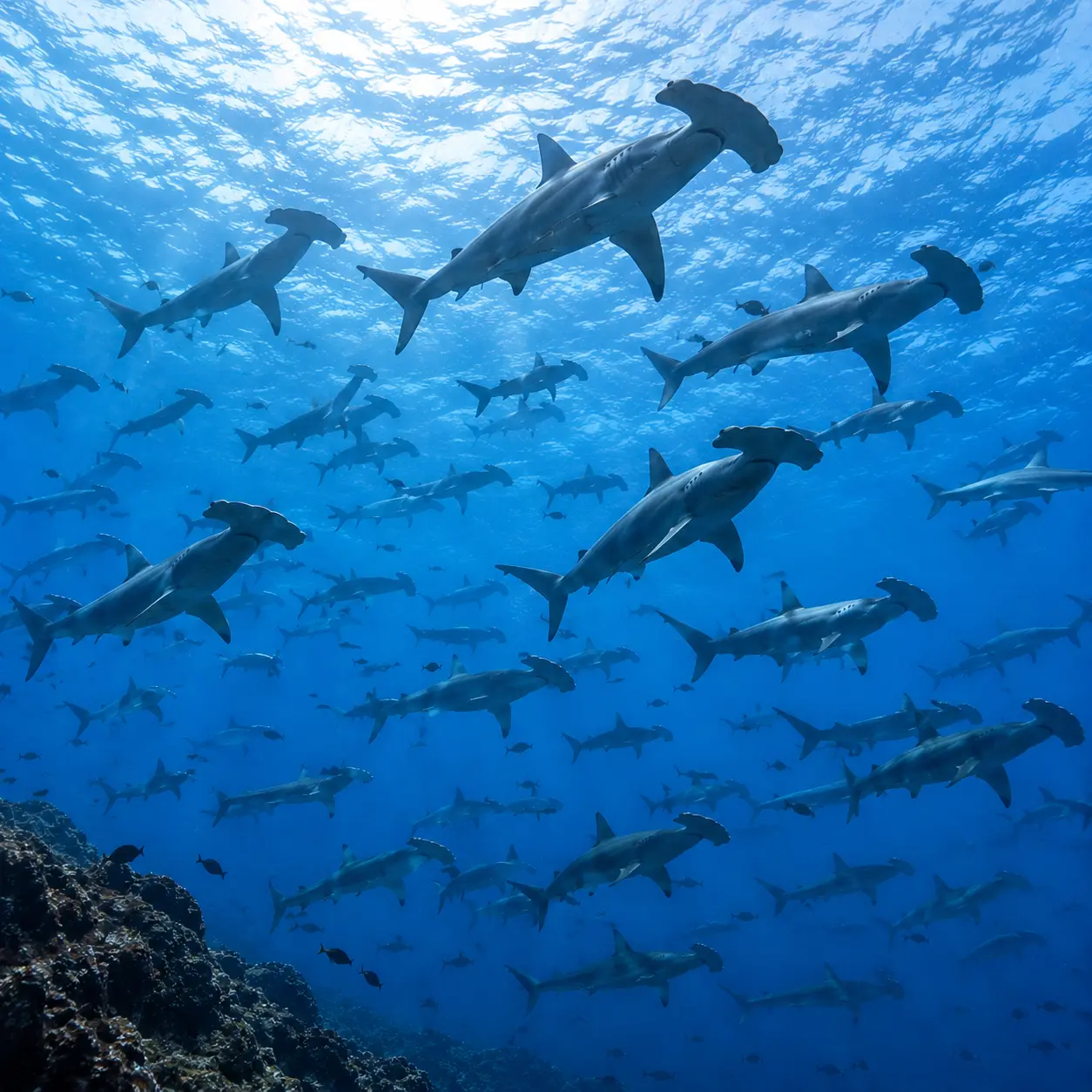
At Wolf Island, you kneel behind a rock, hold your breath to keep the bubbles quiet, and wait. Out of the blue, a grey shadow appears, then ten, then dozens: a school of scalloped hammerheads moving slowly against the current, their strange heads swinging from side to side. For many divers, this is the image of the Galápagos, and few places in the world can match it.
Quick facts
| Fact | Scalloped hammerhead shark |
|---|---|
| Scientific name | Sphyrna lewini |
| Endemic | No; it lives in warm seas around the world |
| Size | Usually 2 to 3.5 m long as adults |
| Diet | Fish, squid and octopus, hunted mostly at night |
| Conservation status | Critically Endangered (IUCN) |
| Best places | Darwin, Wolf and San Cristóbal (Kicker Rock) |
| Best time | All year round |
Why the hammer?
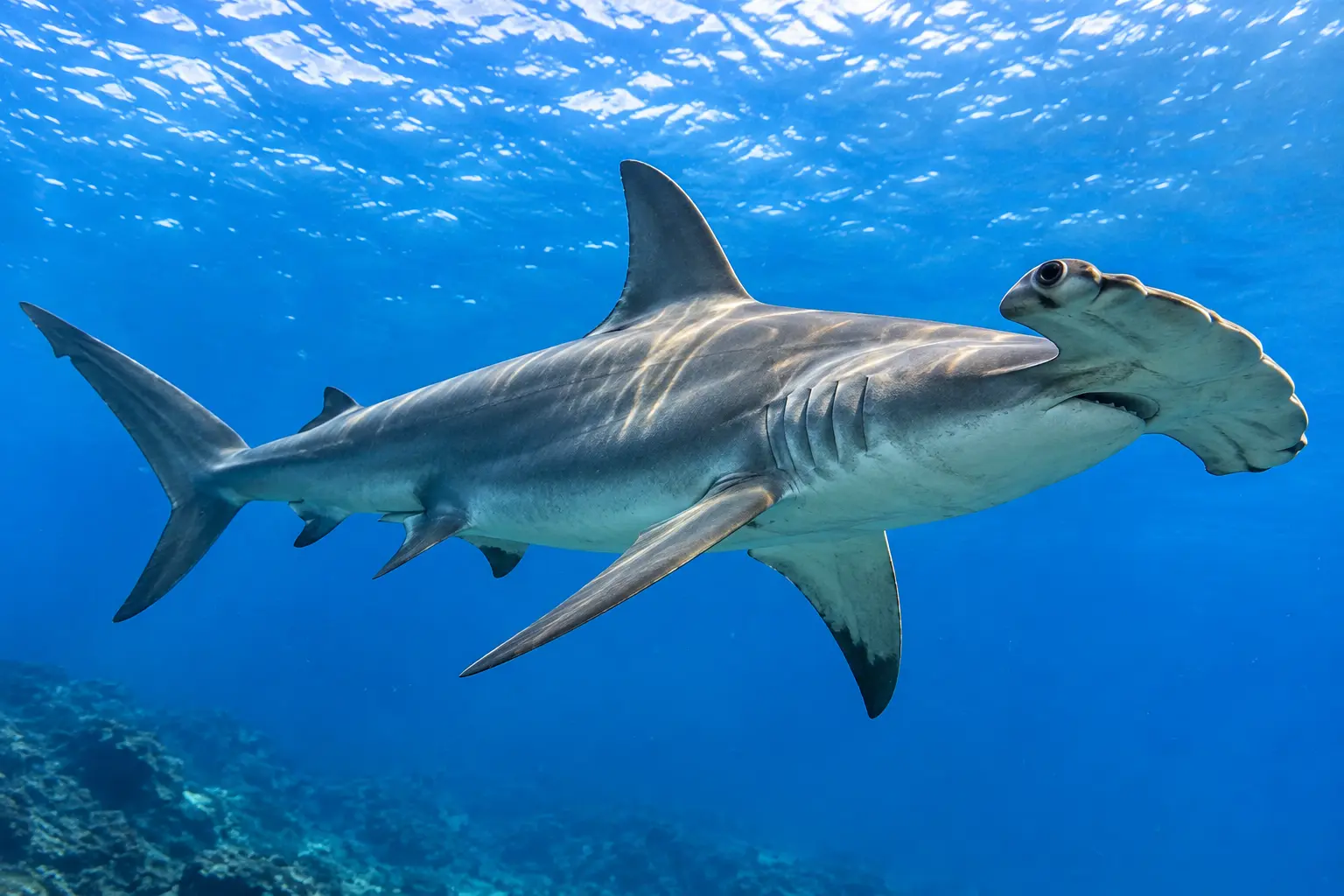
The wide, flat head of the hammerhead is called a cephalofoil. Its eyes sit at the two ends, which gives the shark a very wide field of vision. The head is also packed with tiny sensors that detect the weak electric fields of other animals, helping it find prey hidden in the sand or in the dark. And it works like a wing, helping the shark turn quickly in the water.
Schools by day, hunters by night
Scalloped hammerheads are one of the few sharks that form large schools. By day, groups of dozens or even hundreds gather around seamounts and islands such as Darwin and Wolf, where they rest, socialise and visit cleaning stations, where small fish such as king angelfish pick parasites from their skin. At night the schools break up, and each shark hunts alone in deeper water. Scientists still do not fully understand why they school, but it may help them find mates and save energy in the current.
Where to see hammerhead sharks
- Darwin and Wolf: the most famous hammerhead dives in the world, reached only on dive liveaboards. The dives are in strong currents and are for experienced divers.
- Kicker Rock (León Dormido), San Cristóbal: a tall rock split in two, where divers and sometimes snorkellers see hammerheads in the channel, along with green sea turtles and sea lions.
- Gordon Rocks, near Santa Cruz: a popular dive for experienced divers, where hammerheads are often seen.
To find the yachts whose routes include these sites, see cruises by island, or locate each one on the interactive map.
Best time to see them
Hammerheads can be seen all year round at Darwin and Wolf. Many divers prefer the warm season, from December to May, when the water is warmer and clearer and large schools are often reported. In the cool season, from June to November, the water is colder but richer, and you have the chance of seeing whale sharks on the same dives. Check the water temperature by month, the Galápagos wildlife calendar and our guide to the best time to visit.
A shark in danger
The scalloped hammerhead is listed as Critically Endangered. Around the world its numbers have fallen dramatically, mainly because of the shark fin trade and bycatch. Shark fishing is banned in the Galápagos Marine Reserve, and Darwin and Wolf are part of a strictly protected sanctuary. In 2022 Ecuador also created the Hermandad Marine Reserve, which protects a migration route used by hammerheads between the Galápagos and Cocos Island in Costa Rica.
Tips for your visit
- Stay still and quiet. Hammerheads are shy and keep away from noisy bubbles; hold onto the rock and breathe slowly.
- Look into the blue. The schools usually pass just beyond the reef, in open water.
- Choose the right trip. For the big schools, you need a dive liveaboard to Darwin and Wolf; for a chance while snorkelling, include Kicker Rock.
How to watch them responsibly
- Never chase or try to touch a shark.
- Stay low and close to the rocks so you do not scare the school.
- Do not use flash, and keep your fins away from the reef.
- Follow your dive guide’s instructions at all times.
Frequently asked questions
Where can I see hammerhead sharks in the Galápagos?
The best places are Darwin and Wolf on dive liveaboards, and Kicker Rock off San Cristóbal.
Can you snorkel with hammerheads in the Galápagos?
Sometimes. At Kicker Rock snorkellers occasionally see hammerheads in the channel below them.
Are hammerhead sharks dangerous to divers?
Scalloped hammerheads are shy and rarely approach divers; they are not considered a threat.
Why do hammerheads swim in schools?
Scientists are still studying it, but schooling may help them find mates, rest and save energy in the current.
When is the best time to see hammerheads?
All year round; many divers prefer December to May for warmer, clearer water.
More Galápagos animals
On the same dives you can see whitetip reef sharks, manta rays and dolphins. Discover all of them, with the islands and months to see each one, in our guide to Galápagos animals.
Yachts that visit them
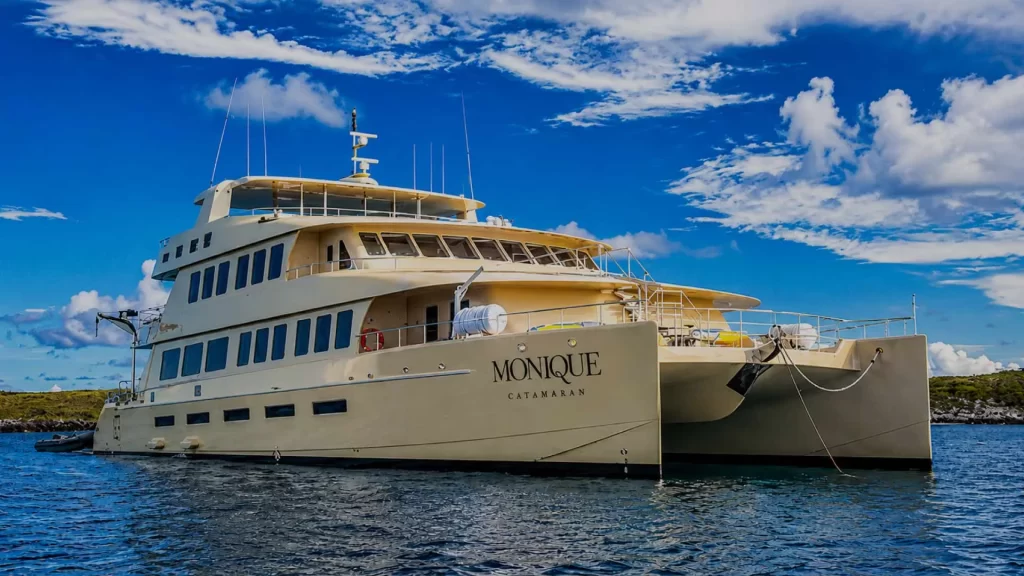
M/C Monique
A 2026 hybrid catamaran for 16 guests, with ocean-view suites, an open-air jacuzzi and a near one-to-one crew.
From USD 7,500
View yacht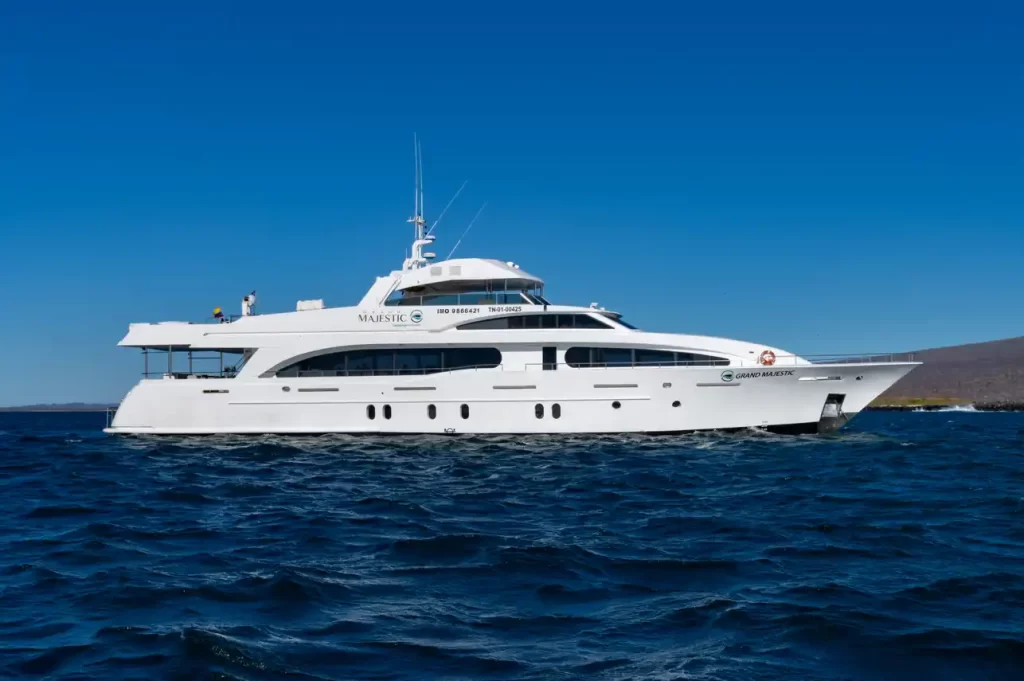
M/Y Grand Majestic
A 39-metre US-designed luxury motor yacht, launched in 2018 and reaching 25 knots, with a 39 m² master suite, seven staterooms and…
Private charter On request
View yacht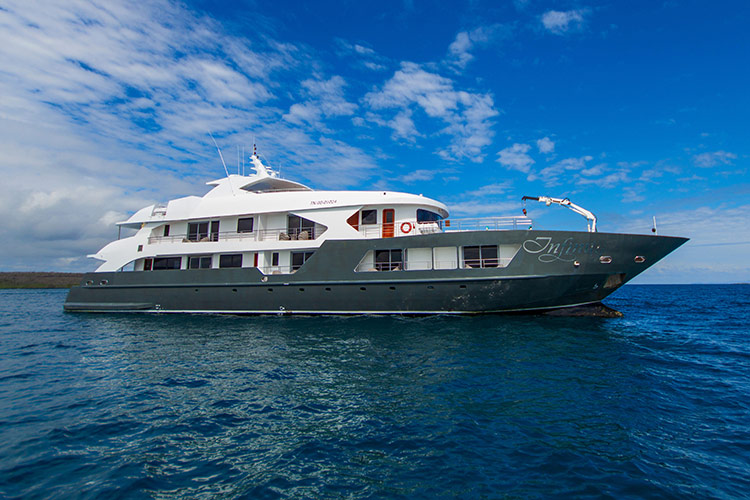
M/Y Infinity Expedition
A 49-metre luxury motor yacht launched in 2018, with eight double cabins and two suites, all with private balconies, a jacuzzi and…
Private charter On request
View yacht