
Whale Sharks in the Galápagos: Diving With the Giants of Darwin and Wolf
The largest fish in the sea, passing the remote islands of Darwin and Wolf: when whale sharks arrive, why most of them are large females, how to see them on a dive trip and what makes this encounter one of the great dives on Earth.
4 min read
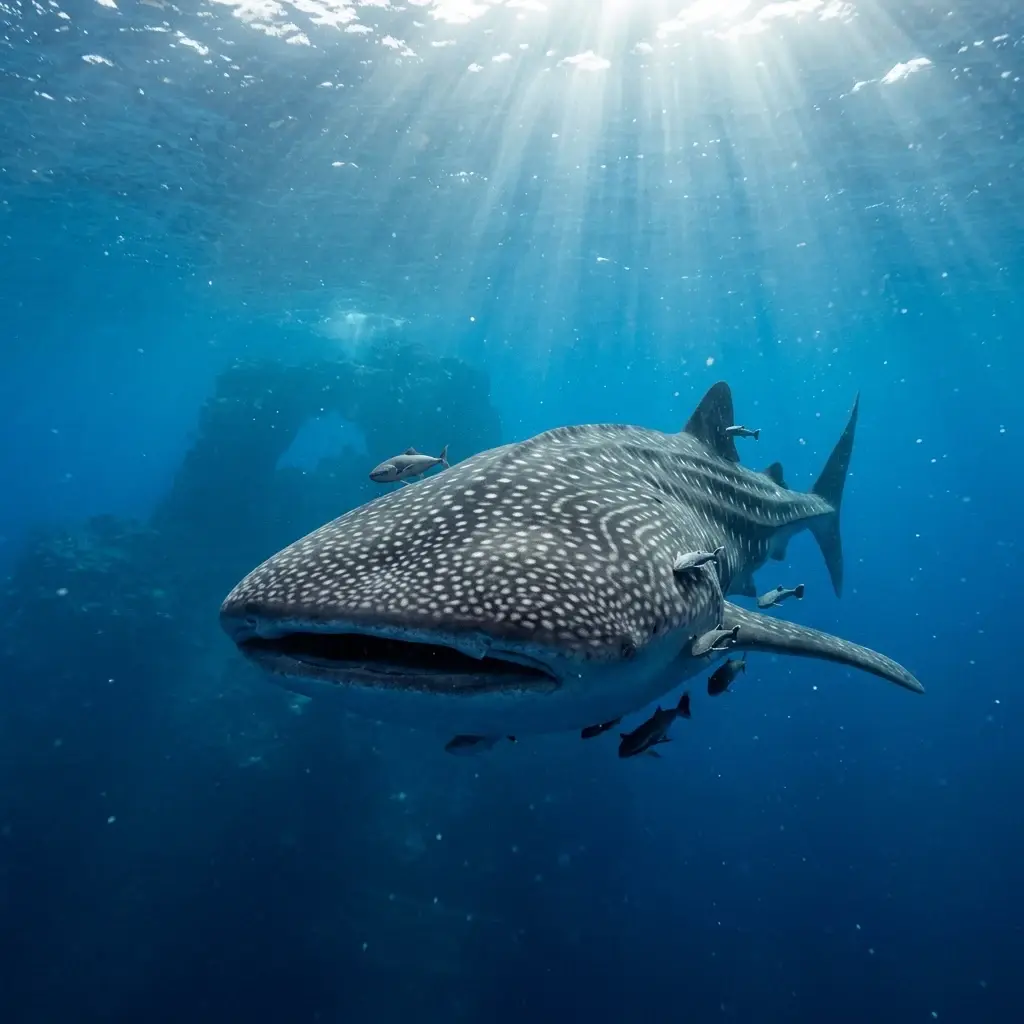
You are holding onto a rock at 15 metres, in a strong current, watching hammerheads pass in the blue. Then the divemaster bangs on a tank and points. A huge shape appears out of the haze: a wide, flat head, a spotted back and a tail that moves slowly from side to side. A whale shark, longer than a bus, glides past in total calm. At Darwin and Wolf, the most remote dive sites of the Galápagos, this is one of the great moments in diving.
Quick facts
| Fact | Whale shark |
|---|---|
| Scientific name | Rhincodon typus |
| Endemic | No; it lives in warm seas around the world |
| Size | The largest fish on Earth; those seen at Darwin and Wolf are often over 10 m long |
| Diet | Plankton, fish eggs and small fish, filtered from the water |
| Conservation status | Endangered (IUCN) |
| Where to see them | Darwin and Wolf |
| Best time | June to November |
A gentle giant
Despite its size, the whale shark is harmless to people. It feeds by opening its huge mouth and filtering plankton, fish eggs and small fish from the water through special pads in its gills. Each whale shark has its own pattern of white spots and stripes, like a fingerprint, and scientists use photos of these patterns to identify individual sharks and follow them across the ocean.
The mystery of the females
In most places where whale sharks gather, such as Mexico, the Philippines or Australia, they are mostly young males. The Galápagos is different. Almost all the whale sharks seen at Darwin and Wolf are very large adult females, and many look swollen, as if they were pregnant. Researchers of the Galápagos Whale Shark Project have tagged and studied them for years to learn where they go and where they might give birth, but much of their life is still a mystery. That is part of what makes each encounter so special.
Where to see whale sharks
Whale sharks are seen almost only around Darwin and Wolf, two small, remote islands in the far north of the archipelago. Most encounters happen near Darwin, at the site long known as Darwin’s Arch. In 2021 the top of the famous arch collapsed, leaving two rock pillars, but the marine life around it is still extraordinary.
Darwin and Wolf can only be visited on dive liveaboards: yachts with dive itineraries that sail through the night to reach them. There are no landings, and regular cruise itineraries do not go there. The dives are in open water with strong currents, so they are for experienced divers, and most liveaboards ask for advanced certification and a minimum number of logged dives. To see where these islands are, use the interactive map.

Best time to see them
The whale shark season runs from June to November, during the cool season, when the Humboldt Current brings colder, richer water to the islands. September and October are often considered the peak. During these months the water is cooler, so a thick wetsuit is a good idea. Check the water temperature by month, the Galápagos wildlife calendar and our guide to the best time to visit.
An endangered giant
The whale shark is listed as Endangered, as its numbers have fallen sharply around the world because of fishing, collisions with ships and bycatch. In the Galápagos, the waters around Darwin and Wolf are a strictly protected sanctuary inside the marine reserve, where all fishing is banned. Protecting places like this, where large adult females gather, may be key to the future of the species.
Tips for your visit
- Book a liveaboard for the right season. If whale sharks are your goal, choose a dive itinerary to Darwin and Wolf between June and November.
- Get your experience first. Practise drift and current diving before the trip, and log enough dives to feel comfortable in the blue.
- Look into the blue. Whale sharks usually pass in open water, away from the rocks, so keep an eye on the distance.
How to watch them responsibly
- Keep at least three metres from the whale shark and never block its path.
- Never touch or try to ride a whale shark.
- Do not use flash, and do not chase the shark if it swims away.
- Follow your dive guide’s instructions at all times.
Frequently asked questions
Can you see whale sharks in the Galápagos?
Yes, mainly around Darwin and Wolf, from June to November.
Can you snorkel with whale sharks in the Galápagos?
Rarely. Most encounters are on scuba dives at Darwin and Wolf, which can only be reached on dive liveaboards.
When is whale shark season in the Galápagos?
From June to November, with September and October often considered the best months.
Why are most Galápagos whale sharks female?
Nobody knows for sure. Many seem to be pregnant, and researchers are still studying why they gather here.
Are whale sharks dangerous?
No. They feed on plankton and small fish and are harmless to divers.
More Galápagos animals
At the same dive sites you will see hammerhead sharks, manta rays and dolphins. Discover all of them, with the islands and months to see each one, in our guide to Galápagos animals.
Yachts that visit them
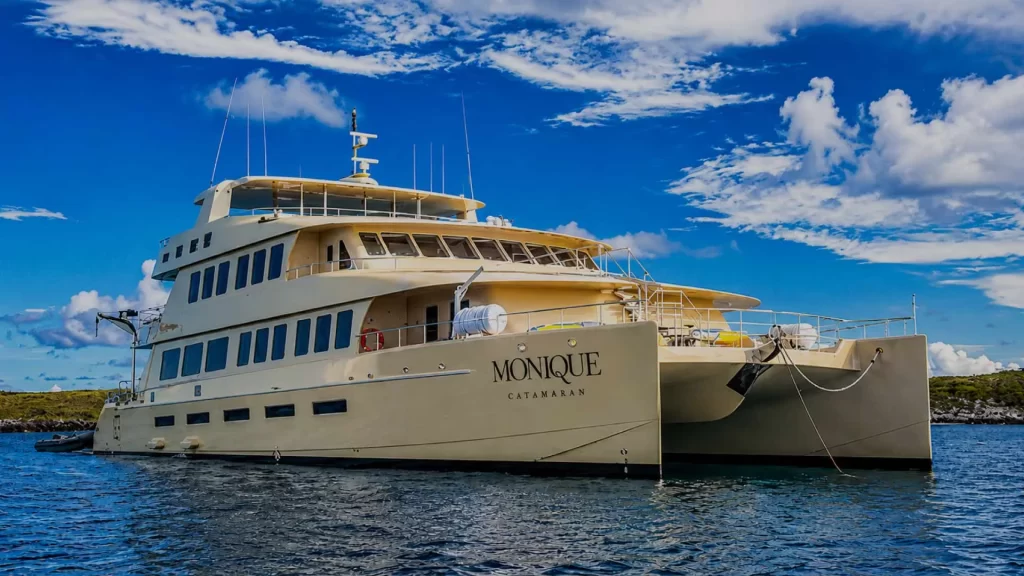
M/C Monique
A 2026 hybrid catamaran for 16 guests, with ocean-view suites, an open-air jacuzzi and a near one-to-one crew.
From USD 7,500
View yacht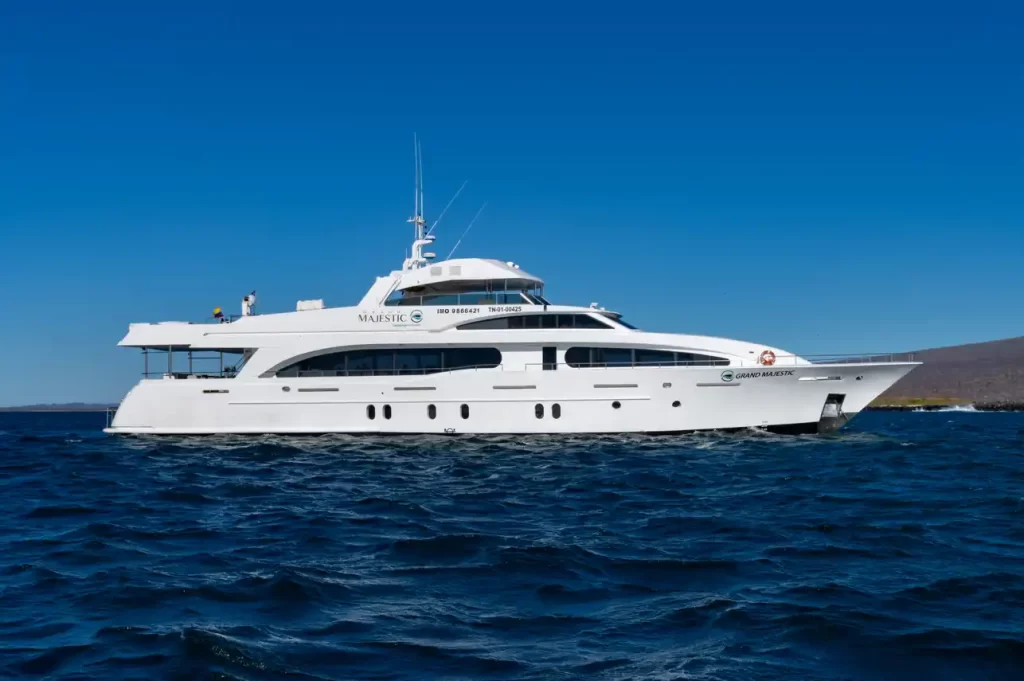
M/Y Grand Majestic
A 39-metre US-designed luxury motor yacht, launched in 2018 and reaching 25 knots, with a 39 m² master suite, seven staterooms and…
Private charter On request
View yacht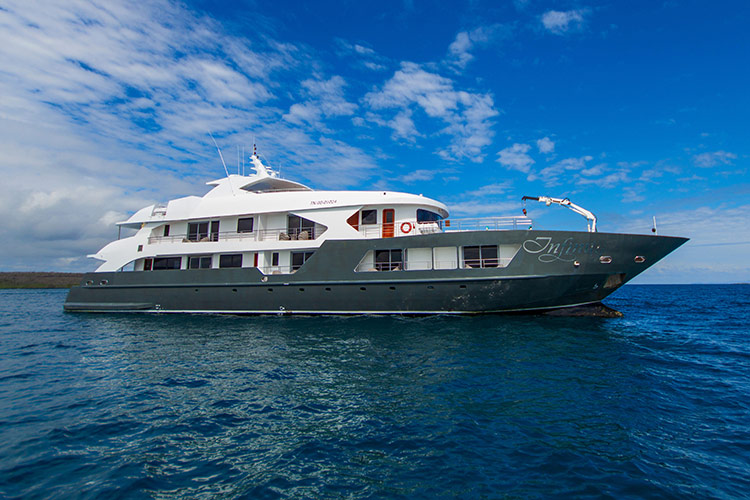
M/Y Infinity Expedition
A 49-metre luxury motor yacht launched in 2018, with eight double cabins and two suites, all with private balconies, a jacuzzi and…
Private charter On request
View yacht