
Giant Manta Rays in the Galápagos: Gliding Giants of the Open Sea
A ray as wide as a small car, gliding through the blue like a bird: how giant manta rays feed, where divers meet them in the Galápagos, when you are most likely to see one from the yacht and the other rays you will meet while snorkelling.
4 min read
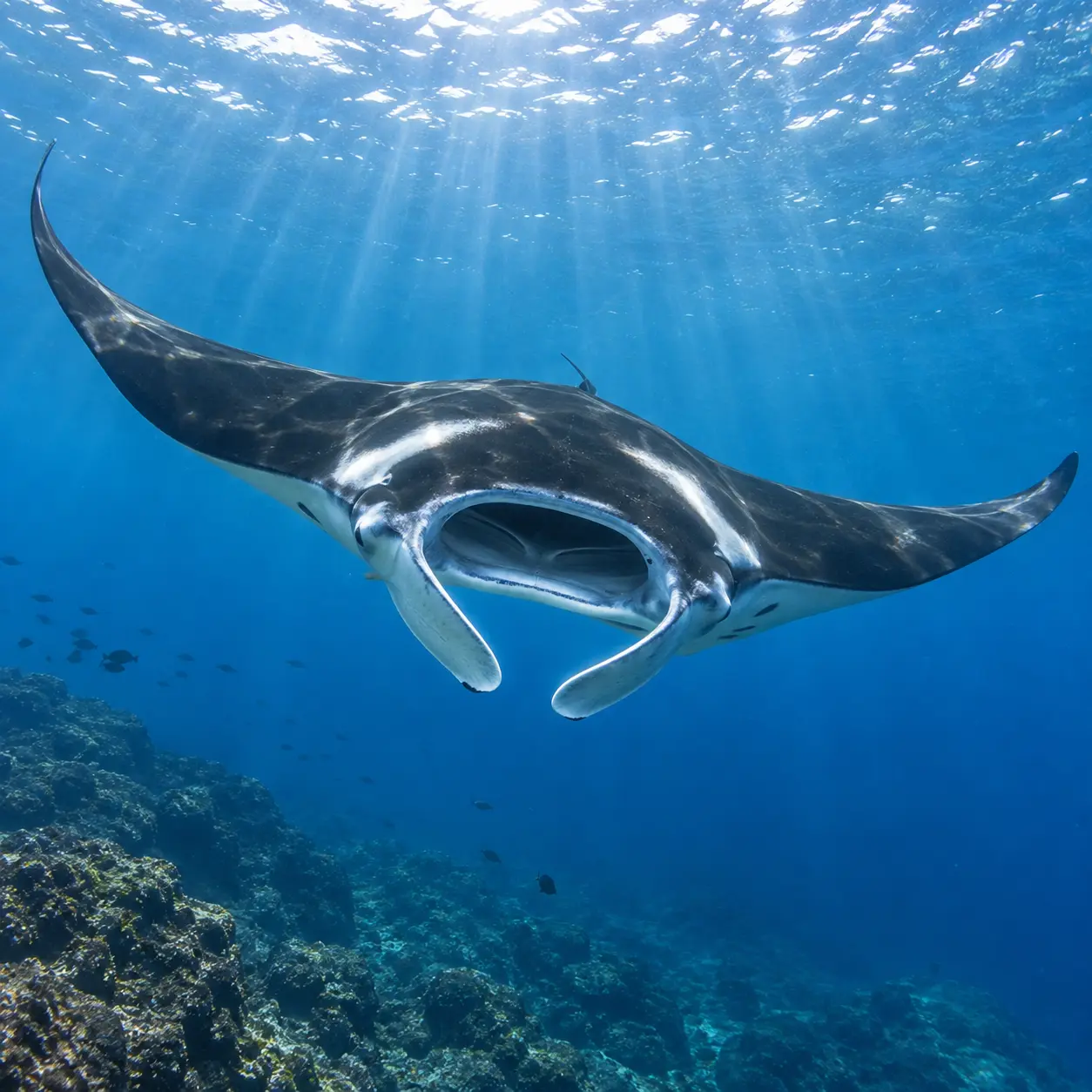
A dark shape appears below you in the blue, wider than you are tall, and moves with slow, graceful beats of its wings. As it passes, it turns slightly and shows its white belly, then disappears again into the deep. Meeting a giant manta ray is one of the most peaceful and powerful moments you can have underwater, and the Galápagos is one of the places where it can happen.
Quick facts
| Fact | Giant manta ray |
|---|---|
| Scientific name | Mobula birostris |
| Endemic | No; it lives in tropical and subtropical seas around the world |
| Size | Wingspan usually 4 to 5 m, and up to about 7 m |
| Diet | Plankton and small fish, filtered from the water |
| Conservation status | Endangered (IUCN) |
| Best places | Isabela (Cape Marshall), Santiago (Cousin’s Rock), Darwin and Wolf |
| Best time | Most often December to May |
A gentle filter feeder
Despite its size, the giant manta ray has no sting and no teeth for hunting. It swims with its huge mouth open, using two flaps on each side of its head, called cephalic fins, to funnel water in. Plankton and small fish are filtered out by special plates in its gills. Mantas have one of the largest brains of any fish compared to their body size, and they often seem curious about divers, circling back for another look.
Every manta is different
The belly of each manta has a unique pattern of dark spots, like a fingerprint. Researchers in Ecuador and the Galápagos photograph these patterns to identify individual mantas and follow their movements. Mainland Ecuador is home to one of the largest known populations of giant mantas in the world, and some of them travel between the coast and the islands.
Where to see giant manta rays
- Cape Marshall, Isabela: a dive site on the northeast coast of Isabela, known for mantas gliding along the wall.
- Cousin’s Rock, Santiago: a small rock off Santiago where divers often see mantas, eagle rays and sea lions.
- Darwin and Wolf: mantas are sometimes seen on the famous dives of the far north, reached only on dive liveaboards.
- From the yacht: on any crossing, you may see mantas feeding near the surface or even leaping out of the water.
To find the yachts whose routes include these sites, see cruises by island, or locate each one on the interactive map.

Best time to see them
Giant mantas can appear in any month, but they are most often reported in the warm season, from December to May. Encounters are never guaranteed, as mantas follow the plankton and move over large distances. Check the water temperature by month, the Galápagos wildlife calendar and our guide to the best time to visit.
Other rays you may see
Even if you do not dive, you will probably see rays while snorkelling. Spotted eagle rays glide over sandy bottoms in small groups, golden cownose rays often swim in schools near the shore, and stingrays rest half-buried in the sand of many beaches. Smaller mobula rays, relatives of the manta, sometimes jump out of the water in groups.
A giant in danger
The giant manta ray is listed as Endangered. Mantas grow slowly and have very few young, so fishing, bycatch and the trade in their gill plates have hit their numbers hard around the world. Fishing mantas is banned in Ecuador, and the Galápagos Marine Reserve is one of the places where they are safest.
Tips for your visit
- Scan the surface during crossings. Wing tips breaking the water, or a manta leaping, are often seen from the deck.
- Stay calm in the water. Mantas often return to look at divers who stay still and breathe slowly.
- Choose dive sites well. If mantas are your goal, ask for itineraries with Cape Marshall, Cousin’s Rock or Darwin and Wolf.
How to watch them responsibly
- Never touch a manta; it can damage the protective layer on its skin.
- Do not chase it or swim over its back; let it come to you.
- Avoid using flash close to its eyes.
- Follow your dive guide’s instructions at all times.
Frequently asked questions
Are there manta rays in the Galápagos?
Yes. Giant manta rays are seen around the islands, especially at dive sites such as Cape Marshall, Cousin’s Rock, Darwin and Wolf.
When is the best time to see manta rays in the Galápagos?
They are most often reported from December to May, though they can appear in any month.
Can you snorkel with manta rays in the Galápagos?
Occasionally. Most encounters are while diving, but mantas sometimes feed near the surface.
Are manta rays dangerous?
No. They have no sting and feed only on plankton and small fish.
How big is a giant manta ray?
Its wingspan is usually 4 to 5 m and can reach about 7 m.
More Galápagos animals
On the same dives you can see hammerhead sharks, whale sharks and green sea turtles. Discover all of them, with the islands and months to see each one, in our guide to Galápagos animals.
Yachts that visit them
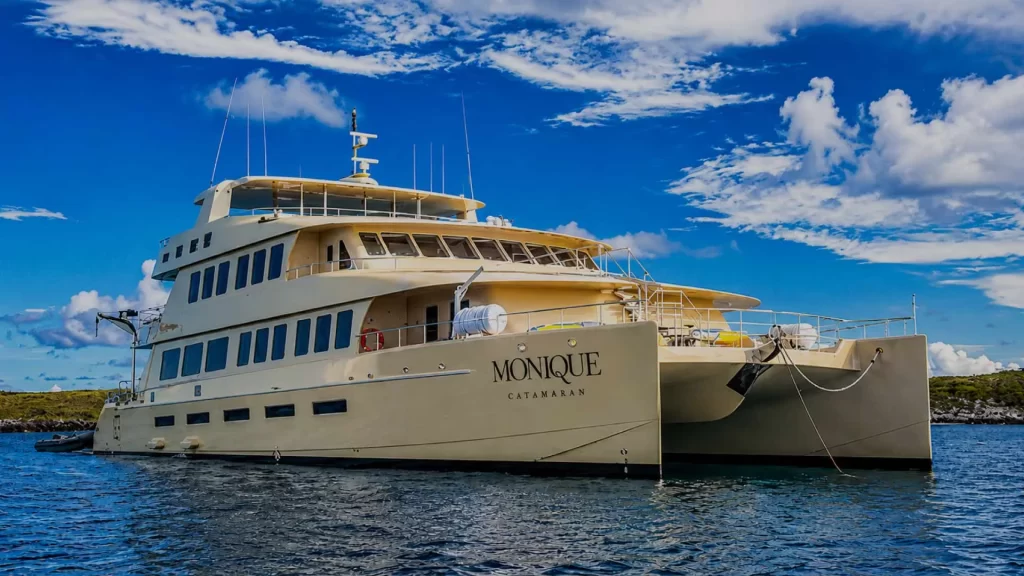
M/C Monique
A 2026 hybrid catamaran for 16 guests, with ocean-view suites, an open-air jacuzzi and a near one-to-one crew.
From USD 7,500
View yacht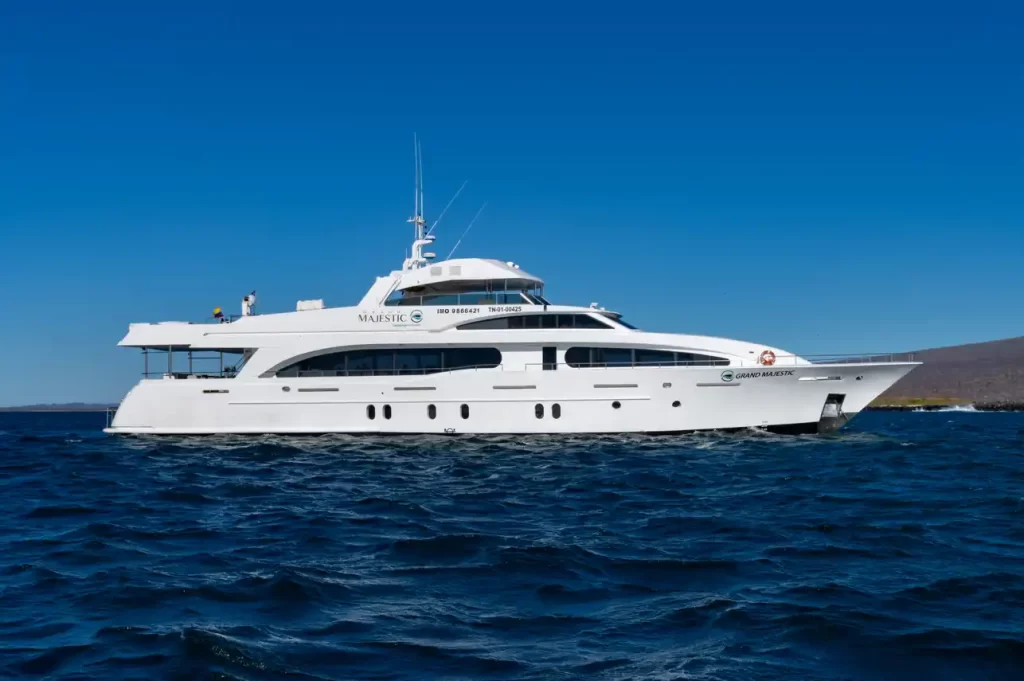
M/Y Grand Majestic
A 39-metre US-designed luxury motor yacht, launched in 2018 and reaching 25 knots, with a 39 m² master suite, seven staterooms and…
Private charter On request
View yacht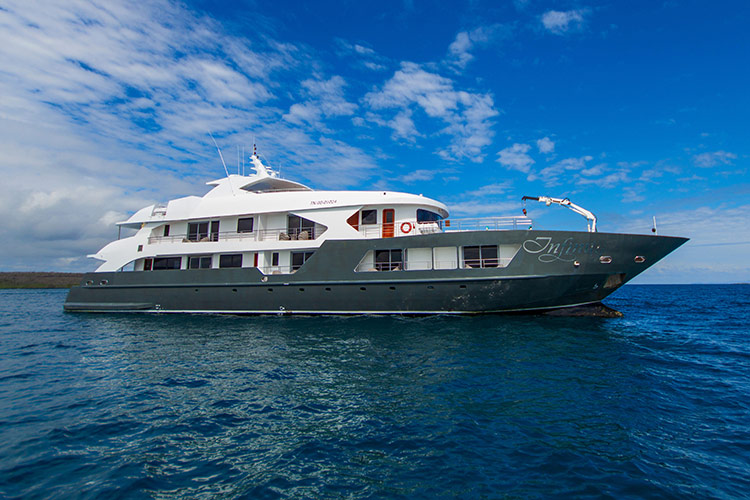
M/Y Infinity Expedition
A 49-metre luxury motor yacht launched in 2018, with eight double cabins and two suites, all with private balconies, a jacuzzi and…
Private charter On request
View yacht