
Frigatebirds in the Galápagos: Where to See the Red-Pouched Males
Pirates of the sky with balloon-like red throats: the two frigatebirds of the islands, how males court, why they cannot land on the water and the best colonies to visit.
4 min read
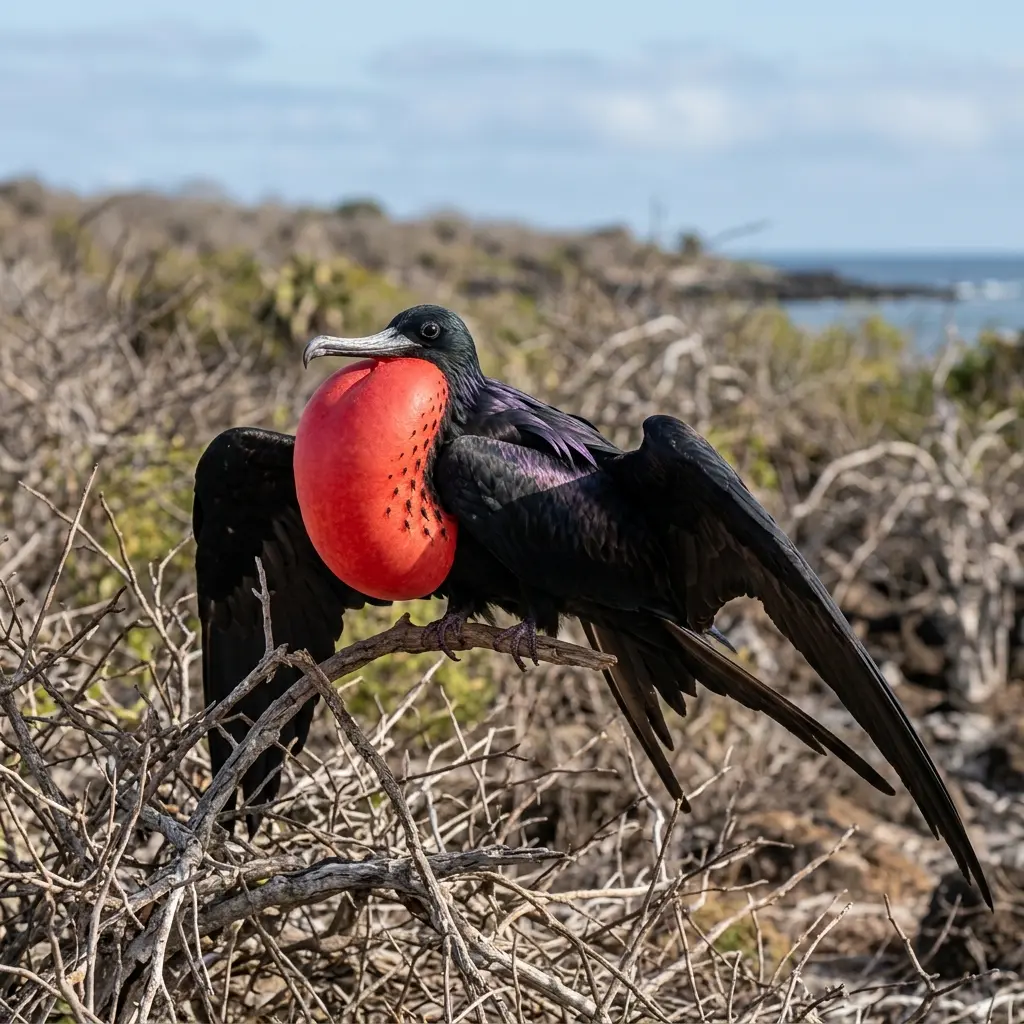
Above every Galápagos yacht, sooner or later, a black silhouette with long angled wings and a deeply forked tail glides without a single wingbeat. That is a frigatebird. On land, the males offer one of the most extraordinary shows of the islands: they sit on low bushes with a huge, bright red balloon on their throat, shaking their wings and calling to the females flying overhead.
Quick facts
| Fact | Frigatebirds |
|---|---|
| Scientific names | Fregata magnificens (magnificent) and Fregata minor (great) |
| Endemic | No; both live in tropical seas, but they nest in large numbers in the Galápagos |
| Wingspan | Over 2 m, with a body weighing only around 1 to 1.5 kg |
| Diet | Flying fish and squid caught at the surface, and food stolen from other seabirds |
| Conservation status | Least Concern (IUCN), both species |
| Best places to see them | North Seymour, Genovesa and San Cristóbal |
| Best time | All year round; displaying males can be seen in many months |
The red balloon
The male’s throat pouch, called a gular sac, is normally a small red patch. During courtship he inflates it with air until it becomes a huge scarlet balloon, which can take some time to fill. Groups of males sit together on bushes, heads thrown back, wings open and trembling, calling with a strange drumming sound when a female flies over. She chooses a partner from the air, lands beside him and, if all goes well, they build a simple nest of twigs together.
Two species, how to tell them apart
Telling the two frigatebirds apart is a favourite game for guides. Males are all black, but the magnificent frigatebird has a purple sheen on its back feathers, while the great frigatebird has a green one. Females are easier: both have white chests, but the female great frigatebird has a red ring around the eye and a pale throat, while the female magnificent has a blue eye ring and a black throat. In general, magnificent frigatebirds prefer the coast and the central islands, while great frigatebirds feed farther out at sea.
Pirates of the sky
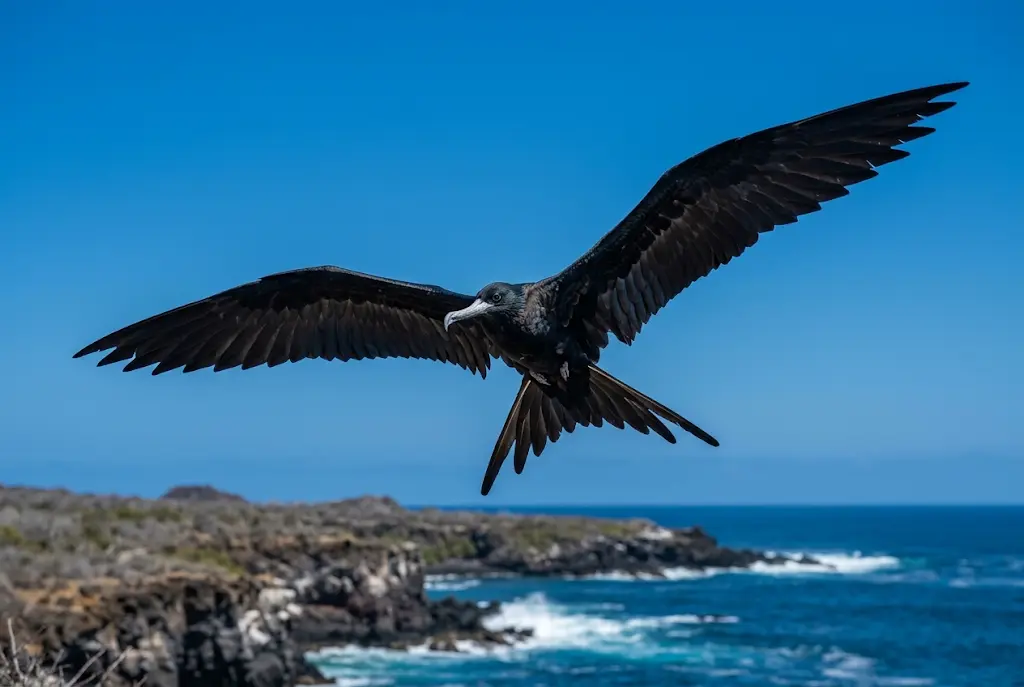
Strangely for a seabird, frigatebirds cannot land on the water: their feathers are not waterproof and their legs are tiny, so they would struggle to take off again. They catch flying fish and squid by snatching them from the surface in flight, and they are famous for chasing boobies and other seabirds until they drop or regurgitate their catch, which the frigatebird grabs in mid-air. With the largest wing area for their weight of any bird, they can stay aloft for days, riding warm air currents.
Where to see frigatebirds
- North Seymour: the largest colony of magnificent frigatebirds in the islands, right by the trail, with males displaying among blue-footed boobies, in the central islands.
- Genovesa: a great place for great frigatebirds, nesting in the bushes alongside red-footed boobies, on northern routes.
- San Cristóbal: both species can be seen at Punta Pitt and on Frigatebird Hill, near Puerto Baquerizo Moreno.
To find the yachts whose routes include these sites, see cruises by island, or locate each one on the interactive map.
Best time to see them
Frigatebirds can be seen all year round, and they often follow the yacht while you sail. Each colony has its own breeding rhythm, so males with inflated pouches can be seen in many months, and chicks stay in the nest for a long time, often more than half a year, with parents feeding them even after they can fly. Check the Galápagos wildlife calendar and our guide to the best time to visit.
Tips for your visit
- Look at the bushes. Displaying males sit at eye level on low shrubs, especially on North Seymour.
- Watch the sky from the yacht. Frigatebirds often hover above the deck or the stern, a perfect chance for photos against the blue sky.
- Use the right settings. Black birds against a bright sky are tricky: slightly overexpose your photos to keep detail in the feathers.
How to watch them responsibly
- Keep at least two metres away from nests and displaying males.
- Do not touch branches with nests or try to make males inflate their pouches.
- Never throw food to birds from the yacht.
- Stay on the marked trail and follow your naturalist guide.
Frequently asked questions
Why do frigatebirds have a red pouch?
It is the male’s throat sac, inflated during courtship to attract females flying overhead.
Where is the best place to see frigatebirds in the Galápagos?
North Seymour for magnificent frigatebirds, Genovesa for great frigatebirds, and San Cristóbal for both.
Can frigatebirds swim?
No. Their feathers are not waterproof, so they do not land on the water and catch their food in flight.
How can I tell the two species apart?
Males differ in the sheen of their back feathers, purple or green; females differ in the colour of the eye ring, blue or red.
Do frigatebirds really steal food?
Yes. They often chase boobies and other seabirds until they drop their catch, although they also hunt for themselves.
More Galápagos animals
In the same colonies you will see Nazca boobies, swallow-tailed gulls and land iguanas. Discover all of them, with the islands and months to see each one, in our guide to Galápagos animals.
Yachts that visit them
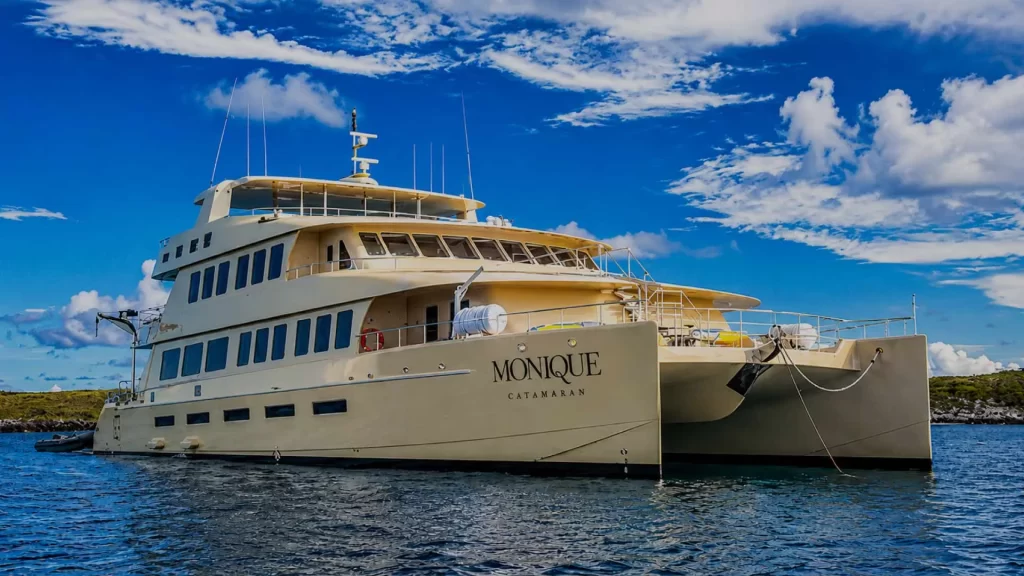
M/C Monique
A 2026 hybrid catamaran for 16 guests, with ocean-view suites, an open-air jacuzzi and a near one-to-one crew.
From USD 7,500
View yacht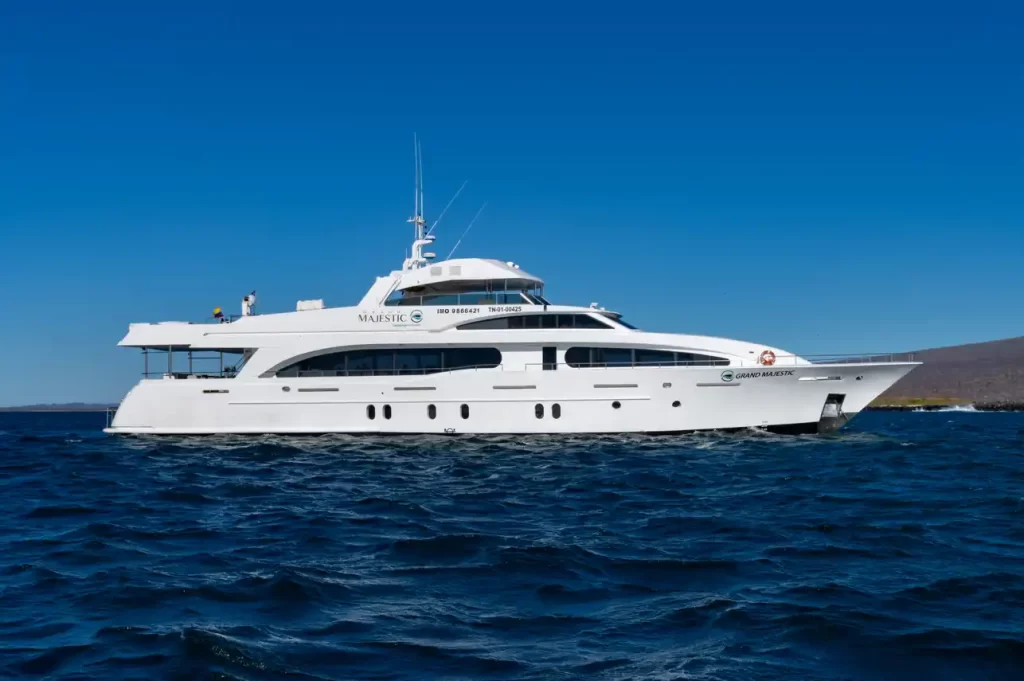
M/Y Grand Majestic
A 39-metre US-designed luxury motor yacht, launched in 2018 and reaching 25 knots, with a 39 m² master suite, seven staterooms and…
Private charter On request
View yacht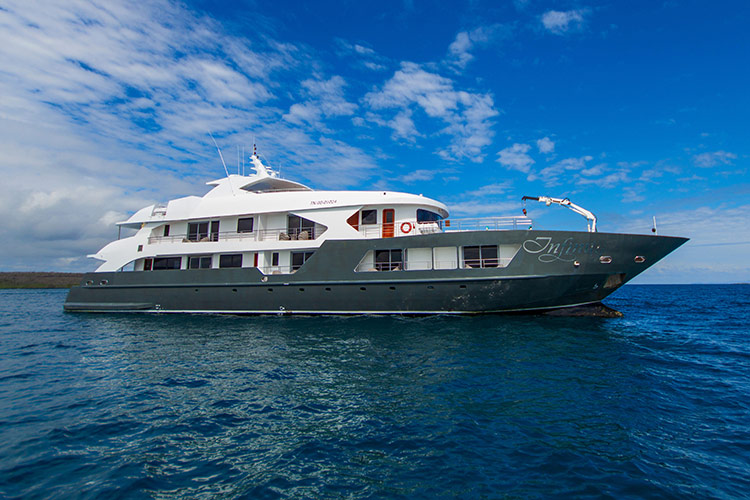
M/Y Infinity Expedition
A 49-metre luxury motor yacht launched in 2018, with eight double cabins and two suites, all with private balconies, a jacuzzi and…
Private charter On request
View yacht