
Galápagos Penguin: Where to Swim With the Penguin of the Equator
The only penguin that lives on the Equator: how it survives the tropical heat, where to snorkel with it, the best months to go and why it is one of the rarest penguins in the world.
4 min read
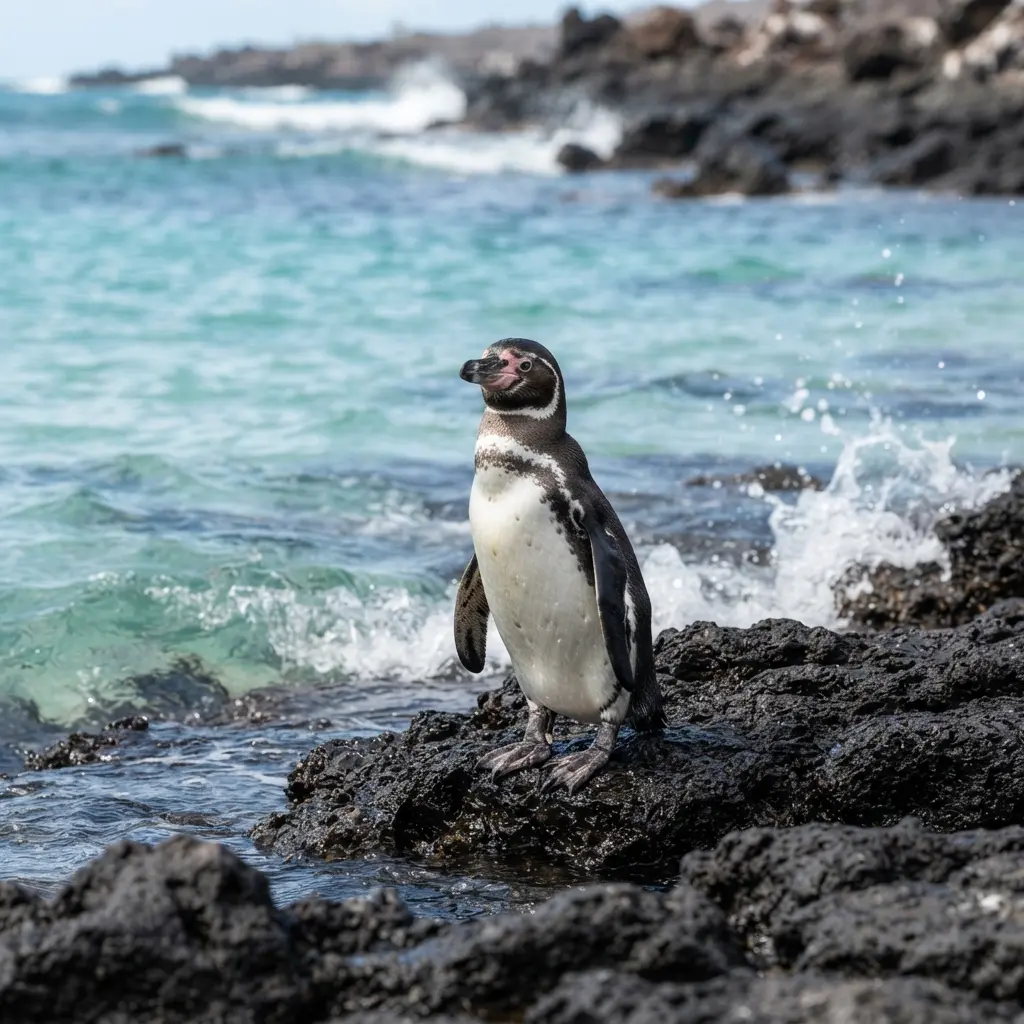
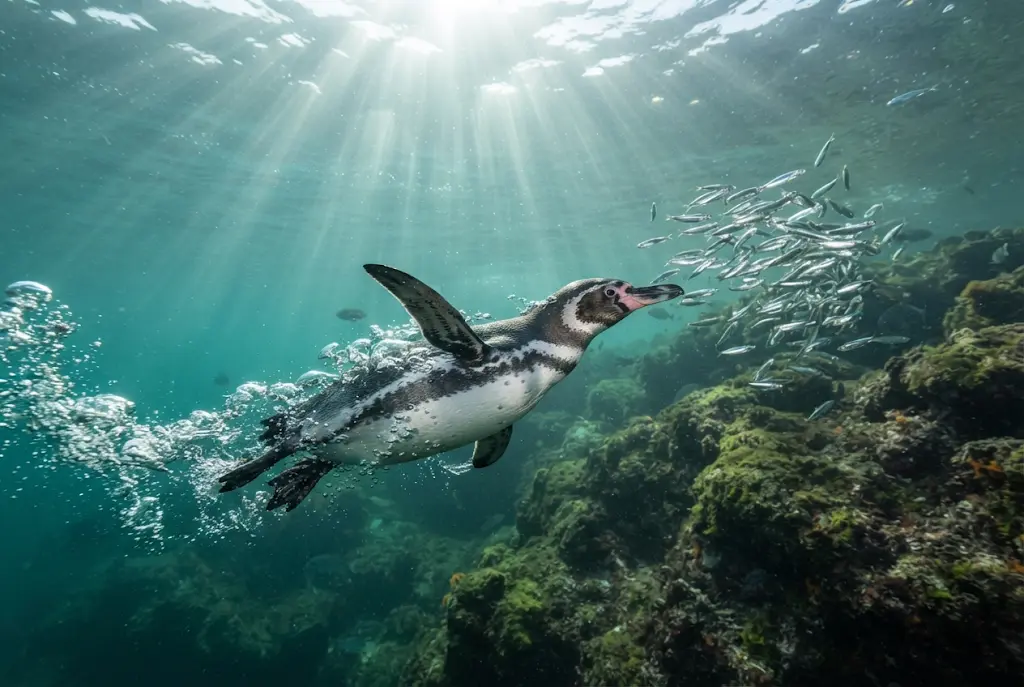
Seeing a penguin standing on black lava under the equatorial sun feels almost unreal. Yet in the Galápagos it happens: small penguins rest on the rocks near the water, panting in the heat, and then dive in and shoot past snorkellers like little torpedoes. The Galápagos penguin is the only penguin in the world that lives on the Equator, and swimming beside one is a highlight of any trip to the western islands.
Quick facts
| Fact | Galápagos penguin |
|---|---|
| Scientific name | Spheniscus mendiculus |
| Endemic | Yes, found only in the Galápagos |
| Size | Around 50 cm tall, one of the smallest penguins |
| Weight | Around 2 to 2.5 kg |
| Diet | Small fish such as sardines and mullet |
| Conservation status | Endangered (IUCN) |
| Best places to see them | Isabela, Fernandina and Bartolomé |
| Best time | All year · best from June to December |
A penguin in the tropics
Penguins are usually birds of cold seas, but the Galápagos is bathed by cool, nutrient-rich currents that rise from the deep along the western islands. Those currents bring the small fish the penguins need, and they are the reason almost all Galápagos penguins live around Isabela and Fernandina. Some even live a little north of the Equator, on the northern tip of Isabela, which makes them the only penguins found naturally in the Northern Hemisphere.
To cope with the heat, they spend much of the day in the water, rest in the shade of lava crevices, pant like dogs and hold their flippers out to lose heat. On land they often shield their feet from the sun with their bodies, as the bare skin can burn.
Where to see Galápagos penguins
- Western Isabela: Elizabeth Bay, Punta Moreno, Tagus Cove and Punta Vicente Roca are excellent for seeing penguins from the dinghy or while snorkelling, on the western routes.
- Fernandina: penguins hunt along the coast, near colonies of marine iguanas and flightless cormorants.
- Bartolomé: a small group lives around Pinnacle Rock, in the central islands, the easiest place to see them on central routes.
- Las Tintoreras, Isabela: near Puerto Villamil, penguins often rest on the lava islets.
To find the yachts whose routes reach these sites, see cruises by island, or locate each one on the interactive map.
Best time to see them
Penguins live in the islands all year round, but the best time is the cool season, from June to December, when the sea is colder and full of fish. Penguins are then more active, and they often breed, nesting in lava caves and crevices close to the water. In the warm season, from January to May, they are still there, though sometimes harder to find. Check the Galápagos wildlife calendar, the water temperature by month and our guide to the best time to visit.
One of the rarest penguins
The Galápagos penguin is listed as Endangered, with a population of only a couple of thousand birds at most. In El Niño years, when warm water pushes the fish away, many penguins starve and the population can fall sharply. Introduced cats, rats and dogs, fishing nets and pollution add to the pressure. Scientists monitor the colonies every year, and researchers have even built shaded nest sites in the lava to give penguins more safe places to breed.
Tips for your visit
- Choose a western route. If penguins are a priority, pick an itinerary that includes Isabela and Fernandina; Bartolomé is the best option on central routes.
- Bring a good wetsuit. The water where penguins live is cool; a 5 mm wetsuit lets you stay in longer and enjoy the encounters.
- Look along the waterline. From the dinghy, scan the lava ledges just above the water: penguins often stand there in small groups.
How to watch them responsibly
- Keep at least two metres away, on land and in the water.
- Never chase or touch them while snorkelling; let them pass.
- Do not approach nesting crevices or block their way to the sea.
- Follow your naturalist guide and the rules for each visitor site.
Frequently asked questions
Are there really penguins in the Galápagos?
Yes. The Galápagos penguin lives only in these islands and is the only penguin that lives on the Equator.
Where can I see penguins in the Galápagos?
Mainly in western Isabela and Fernandina, and at Bartolomé in the central islands.
Can you snorkel with Galápagos penguins?
Yes. At sites like Bartolomé, Elizabeth Bay or Punta Vicente Roca, penguins often swim past snorkellers.
When is the best time to see Galápagos penguins?
From June to December, when the water is cooler and richer in fish.
How many Galápagos penguins are there?
Only a couple of thousand at most, which makes it one of the rarest penguins in the world.
More Galápagos animals
In the same cool western waters you will meet sea lions, green sea turtles and, at times, humpback whales and dolphins. Discover all of them, with the islands and months to see each one, in our guide to Galápagos animals.
Yachts that visit them
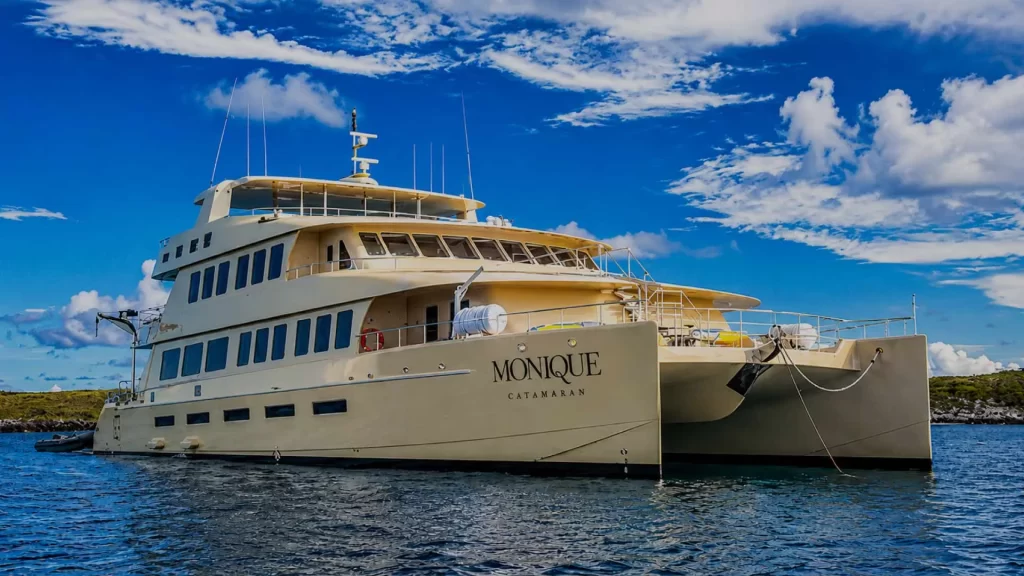
M/C Monique
A 2026 hybrid catamaran for 16 guests, with ocean-view suites, an open-air jacuzzi and a near one-to-one crew.
From USD 7,500
View yacht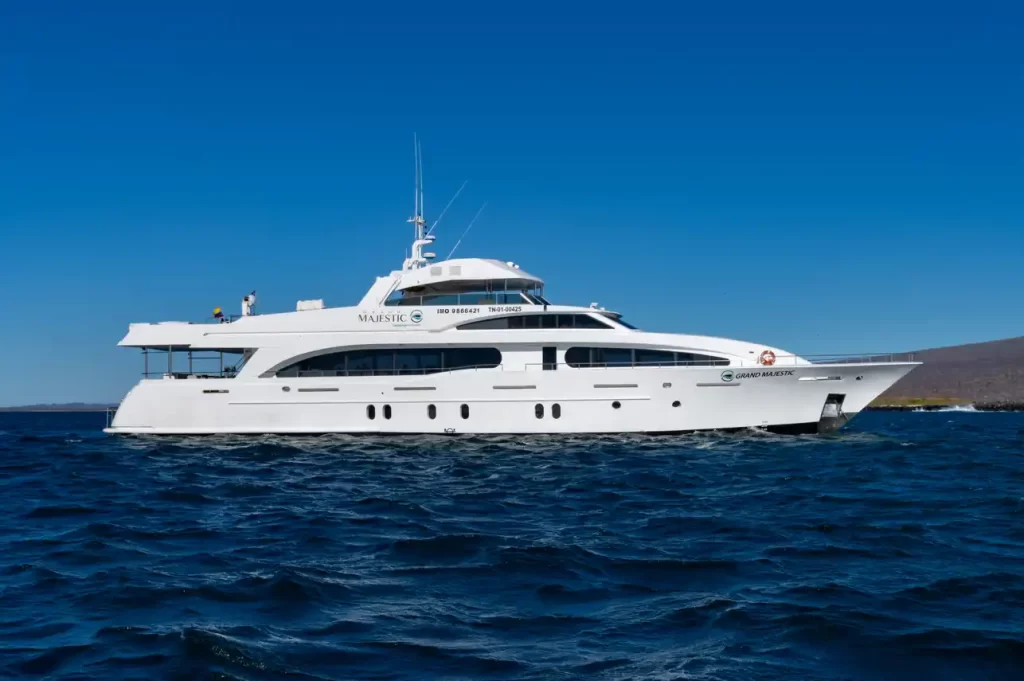
M/Y Grand Majestic
A 39-metre US-designed luxury motor yacht, launched in 2018 and reaching 25 knots, with a 39 m² master suite, seven staterooms and…
Private charter On request
View yacht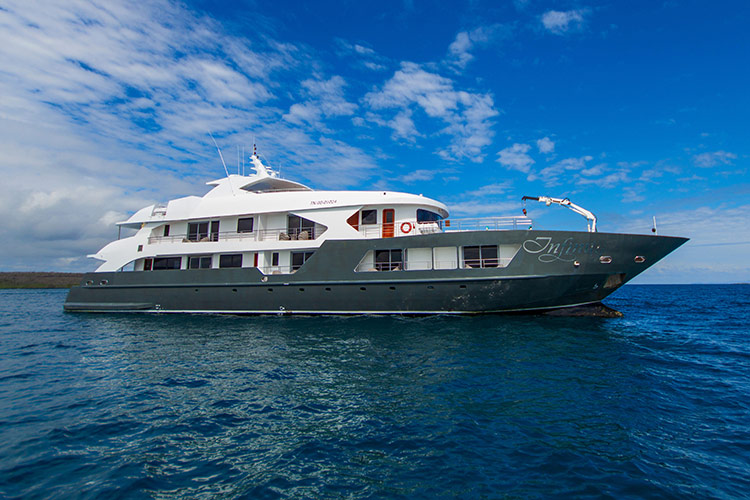
M/Y Infinity Expedition
A 49-metre luxury motor yacht launched in 2018, with eight double cabins and two suites, all with private balconies, a jacuzzi and…
Private charter On request
View yacht