
Galápagos Sea Lions: Where to Swim With the Islands’ Most Playful Animal
Curious pups, sleepy beach colonies and underwater acrobatics: where to meet Galápagos sea lions, when the pups are born, how to snorkel with them and how to keep the right distance.
5 min read
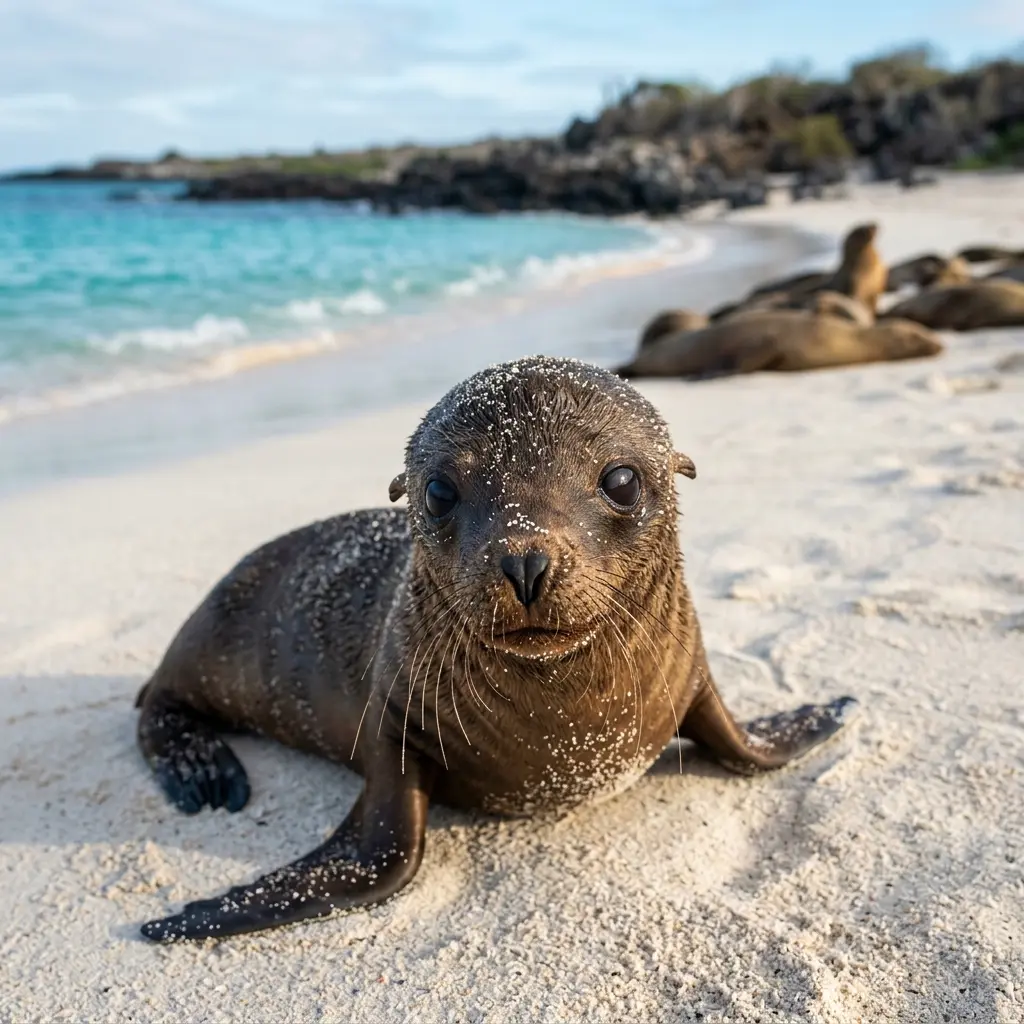
No animal welcomes you to the Galápagos like a sea lion. They sleep on the benches of the harbour, block the steps of the pier and stretch out on every beach, so close that you have to walk around them. In the water they change completely: fast, playful and curious, they spin around snorkellers and come face to face with your mask. For many travellers, swimming with a young sea lion is the best memory of the whole trip.
Quick facts
| Fact | Galápagos sea lion |
|---|---|
| Scientific name | Zalophus wollebaeki |
| Endemic | Almost: it breeds in the Galápagos, with only a small colony on the coast of Ecuador |
| Size | Males up to about 2.5 m; females around 1.5 m |
| Weight | Large males up to about 250 kg; females much lighter |
| Diet | Sardines and other fish, octopus and squid |
| Conservation status | Endangered (IUCN) |
| Best places to see them | San Cristóbal, Española, Santa Fe and Mosquera |
| Best time | All year · most pups from August to December |
Life on the beach
Sea lions live in colonies along sandy beaches and low rocky shores. A large male, the bull, patrols a stretch of beach and the water in front of it, barking loudly and swimming back and forth to keep rivals away, while several females and their young rest within his territory. Males that do not hold a territory gather in bachelor groups, such as the one on the cliffs of South Plaza.
Females give birth to a single pup and nurse it for a long time, often more than a year, going to sea to feed and returning to find it by its call. You will hear the colony before you see it: a constant chorus of barks, bleats and grunts as mothers and pups call each other.
Where to see Galápagos sea lions
You will see them almost everywhere, but some places are unforgettable:
- San Cristóbal: sea lions own the waterfront of Puerto Baquerizo Moreno, and nearby La Lobería and Kicker Rock are great places to watch and snorkel with them.
- Española: Gardner Bay has a long white beach full of sea lions, and Punta Suárez has colonies among the rocks, on the southern routes.
- Santa Fe and South Plaza: busy colonies and calm water, in the central islands.
- Mosquera: a tiny sandbar between Baltra and North Seymour with one of the largest colonies of the islands.
- Rábida: sea lions resting on a beach of deep red sand.
To find the yachts whose routes include these sites, see cruises by island, or locate each one on the interactive map.
When to see the pups
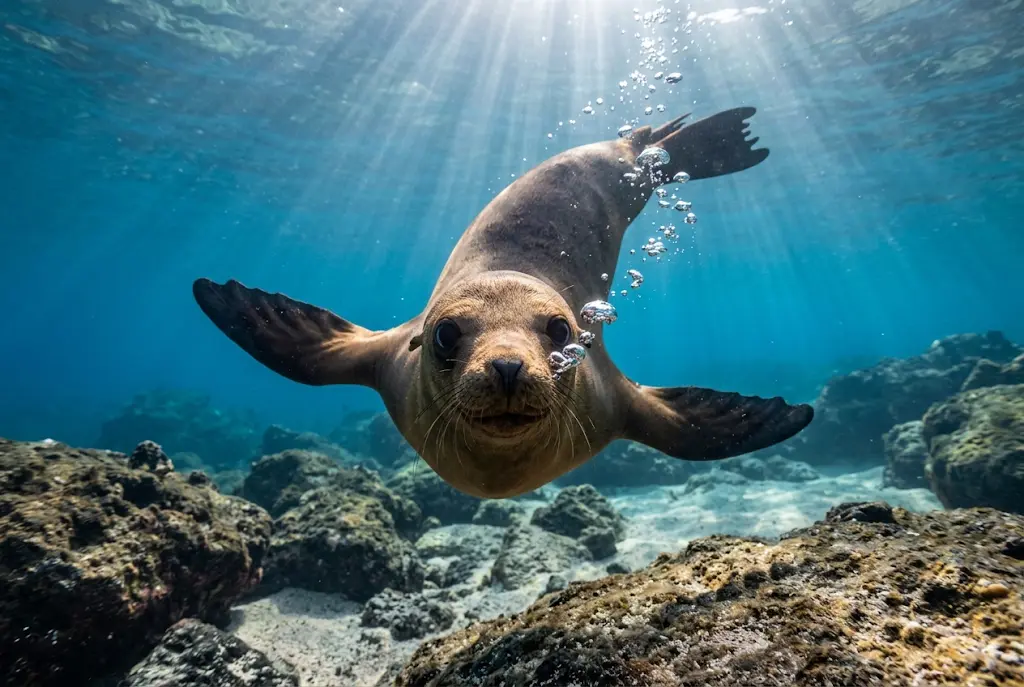
Sea lions are in the islands all year round. The breeding season changes from island to island, but most pups are born between August and December, so in the second half of the year the beaches fill with newborns, and from the end of the year the young ones start to explore the water and play with snorkellers. In the cool season the sea is richer in fish, while in the warm season, from December to May, the water is calmer and warmer for long swims. Check the Galápagos wildlife calendar and our guide to the best time to visit.
Threats and conservation
The Galápagos sea lion is listed as Endangered. Its numbers fall sharply in El Niño years, when warm water drives away the sardines it feeds on and many pups starve. Near the towns, contact with dogs, fishing lines, boats and plastic adds pressure. The Galápagos National Park and local organisations monitor the colonies, control dogs and remove nets and lines, and every visitor helps by keeping their distance and never feeding them.
Tips for your visit
- Let them come to you. In the water, stay calm and float: young sea lions are curious and will often approach on their own.
- Watch the bull. If a large male barks and swims towards you, move away slowly. In the water, avoid swimming near the colony he is guarding.
- Mind the pups. A pup alone on the beach is not abandoned: its mother is fishing. Never touch it, as her scent is how she recognises it.
How to watch them responsibly
- Keep at least two metres away on land, even when they block the trail.
- Never touch, feed or chase them, in the water or on the beach.
- Do not use flash, and keep voices low near mothers and pups.
- Follow your naturalist guide, who knows how to read their behaviour.
Frequently asked questions
Can you swim with sea lions in the Galápagos?
Yes. Many snorkelling sites have sea lions, and the young ones often play around swimmers. Keep your distance and let them decide how close they come.
Are Galápagos sea lions dangerous?
Females and young are calm and curious. Territorial bulls can be aggressive if you get close to their colony, especially in the water, so always give them space.
When are sea lion pups born?
It depends on the island, but most pups are born between August and December.
What is the difference between a sea lion and a fur seal?
Galápagos fur seals are smaller, with thick fur, bigger eyes and a more bear-like face, and they prefer shaded rocky shores. Sea lions are larger and rest on open beaches.
Do sea lions live only in the Galápagos?
The Galápagos sea lion breeds almost only in the islands, with a small colony on the coast of mainland Ecuador.
More Galápagos animals
On the same beaches and snorkels you will also meet green sea turtles, marine iguanas and Sally Lightfoot crabs. Discover all of them, with the islands and months to see each one, in our guide to Galápagos animals.
Yachts that visit them
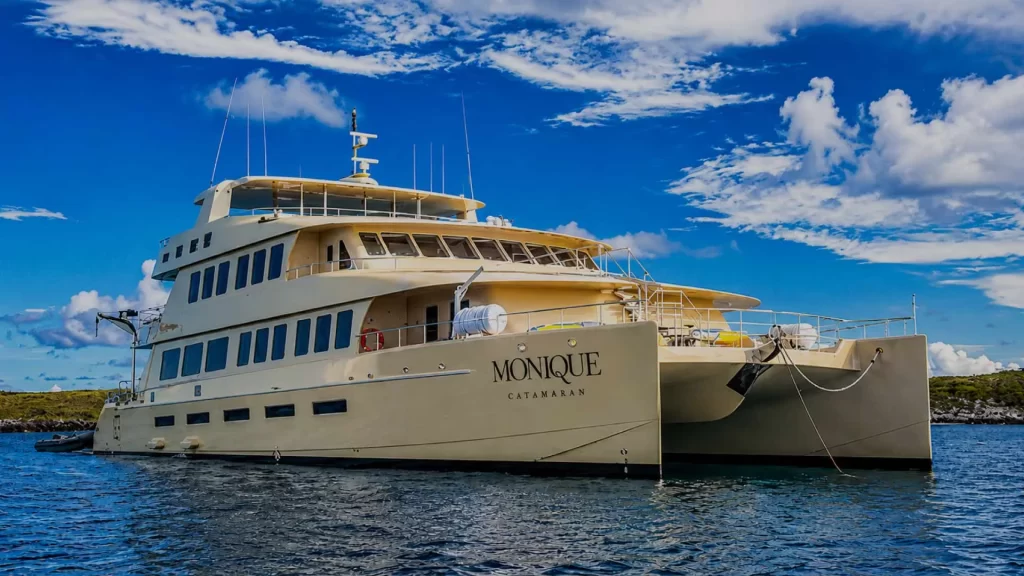
M/C Monique
A 2026 hybrid catamaran for 16 guests, with ocean-view suites, an open-air jacuzzi and a near one-to-one crew.
From USD 7,500
View yacht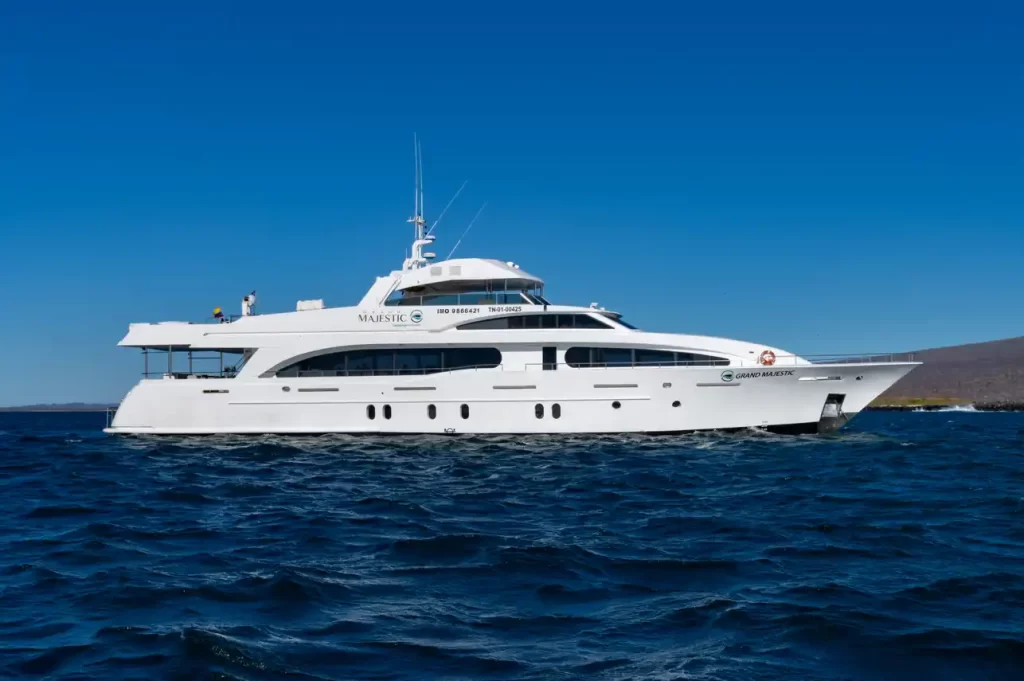
M/Y Grand Majestic
A 39-metre US-designed luxury motor yacht, launched in 2018 and reaching 25 knots, with a 39 m² master suite, seven staterooms and…
Private charter On request
View yacht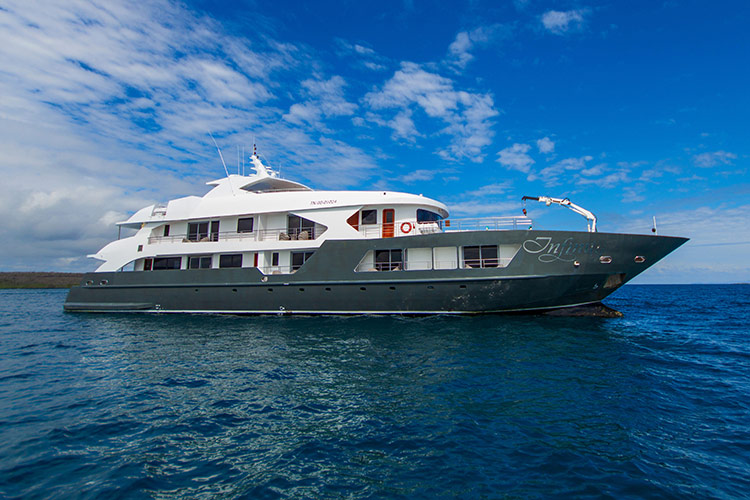
M/Y Infinity Expedition
A 49-metre luxury motor yacht launched in 2018, with eight double cabins and two suites, all with private balconies, a jacuzzi and…
Private charter On request
View yacht