
Flightless Cormorant: The Galápagos Bird That Gave Up the Sky
A cormorant that no longer flies, found only on two islands: why it lost the ability to fly, how it hunts underwater, where to see it and what makes it one of the most remarkable birds of the Galápagos.
4 min read
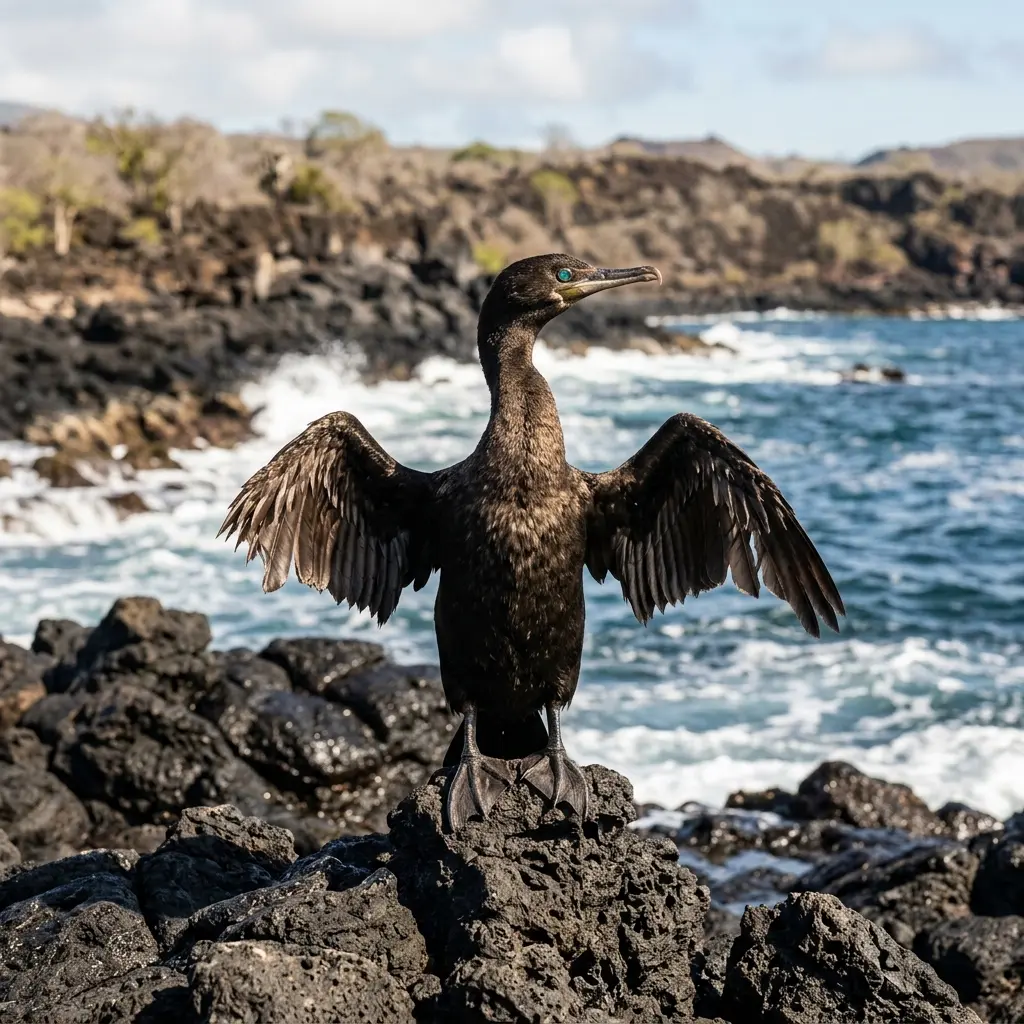
On the black lava shores of Fernandina, a dark bird stands with its wings held open, as if it had forgotten to fold them. Those wings are tiny, far too small to fly, and they never will. The flightless cormorant is the only cormorant in the world that has lost the ability to fly, and it lives only here, on a short stretch of coast at the western edge of the Galápagos.
Quick facts
| Fact | Flightless cormorant |
|---|---|
| Scientific name | Nannopterum harrisi (formerly Phalacrocorax harrisi) |
| Endemic | Yes, found only on Fernandina and western Isabela |
| Size | Around 90 to 100 cm long, the largest cormorant in the world |
| Diet | Fish, octopus and eels caught near the seabed |
| Population | Around 2,000 individuals |
| Conservation status | Vulnerable (IUCN) |
| Where to see them | Fernandina and western Isabela |
| Best time | All year round |
Why did it stop flying?
When the ancestors of the flightless cormorant reached the Galápagos, they found rich seas right next to the shore and no land predators to escape from. Flying long distances was no longer needed, while swimming and diving well was everything. Over time, the birds with stronger legs and smaller wings were the best hunters, and the wings slowly shrank. Today the flightless cormorant is a powerful swimmer, propelled by its large webbed feet, with wings only about a third of the size it would need to fly. Scientists have even found some of the genes behind this change.
Life on the edge of the sea
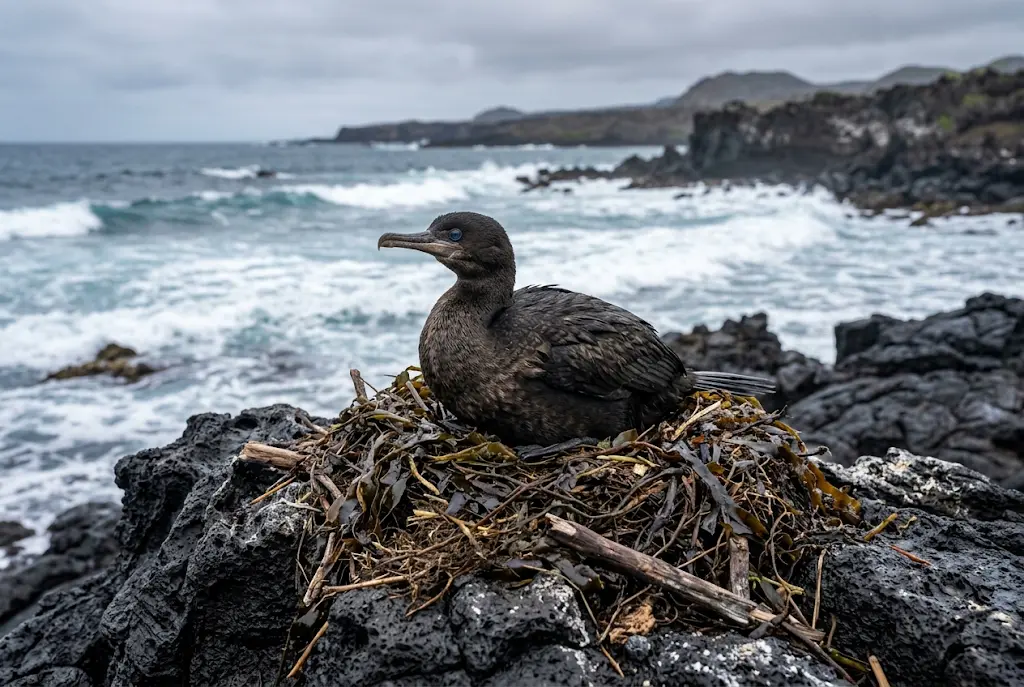
Flightless cormorants hunt underwater close to the coast, searching rocks and the seabed for fish, octopus and eels. Like other cormorants, their feathers get wet, so after each fishing trip they climb onto the lava and hold out their small wings to dry in the sun. They nest just above the waves, in nests made of seaweed, and the male often brings gifts from the sea, such as more seaweed, starfish or even bits of rope, to add to the nest. Courtship starts in the water, with the pair swimming around each other with their necks bent like snakes.
Where to see flightless cormorants
You will only see them on itineraries that include the western islands:
- Punta Espinoza, Fernandina: cormorants nest on the lava next to huge colonies of marine iguanas and sea lions.
- Western Isabela: Punta Vicente Roca, Tagus Cove, Urbina Bay, Punta Moreno and Elizabeth Bay are good places to see them from the trail, from the dinghy or while snorkelling.
To find the yachts whose routes include these sites, see cruises by island, or locate each one on the interactive map.
Best time to see them
Flightless cormorants live on the western coasts all year round, and they can breed in any month when food is plentiful, often in the cool season from June to December, when the sea is richest. Check the Galápagos wildlife calendar and our guide to the best time to visit.
A rare bird
With only around 2,000 individuals living along a short stretch of coast, the flightless cormorant is one of the rarest seabirds in the world. It is listed as Vulnerable; it used to be considered Endangered, but its numbers have been relatively stable in recent decades. El Niño, which drives away its food, is its greatest natural threat, and fishing nets, oil spills or introduced predators reaching its islands could be devastating. Fernandina, one of the most pristine islands on Earth, is strictly protected.
Tips for your visit
- Choose a western route. Flightless cormorants live only on Fernandina and western Isabela, so check that your itinerary includes them.
- Snorkel near the shore. In the cool western water you may see cormorants hunting underwater, along with penguins and turtles.
- Watch the wing-drying. Wait a few minutes near a cormorant that has just come out of the water: the wing-drying pose makes a great photo.
How to watch them responsibly
- Keep at least two metres away from birds and nests.
- Never block their path to or from the sea.
- In the water, keep your distance and let them hunt.
- Follow your naturalist guide and stay on the marked trail.
Frequently asked questions
Why can’t the flightless cormorant fly?
With rich seas next to the shore and no land predators, flying became unnecessary, and over time its wings shrank while its legs became stronger for swimming.
Where can I see flightless cormorants?
Only on the coasts of Fernandina and western Isabela, so you need an itinerary that includes the western islands.
How many flightless cormorants are there?
Around 2,000 individuals, which makes it one of the rarest seabirds in the world.
Why do cormorants hold their wings out?
To dry them in the sun after diving, as their feathers get wet underwater.
Can you snorkel with flightless cormorants?
Sometimes. At western sites they hunt close to the shore, and snorkellers occasionally see them underwater.
More Galápagos animals
On the same coasts you will see sea lions, green sea turtles and Sally Lightfoot crabs. Discover all of them, with the islands and months to see each one, in our guide to Galápagos animals.
Yachts that visit them
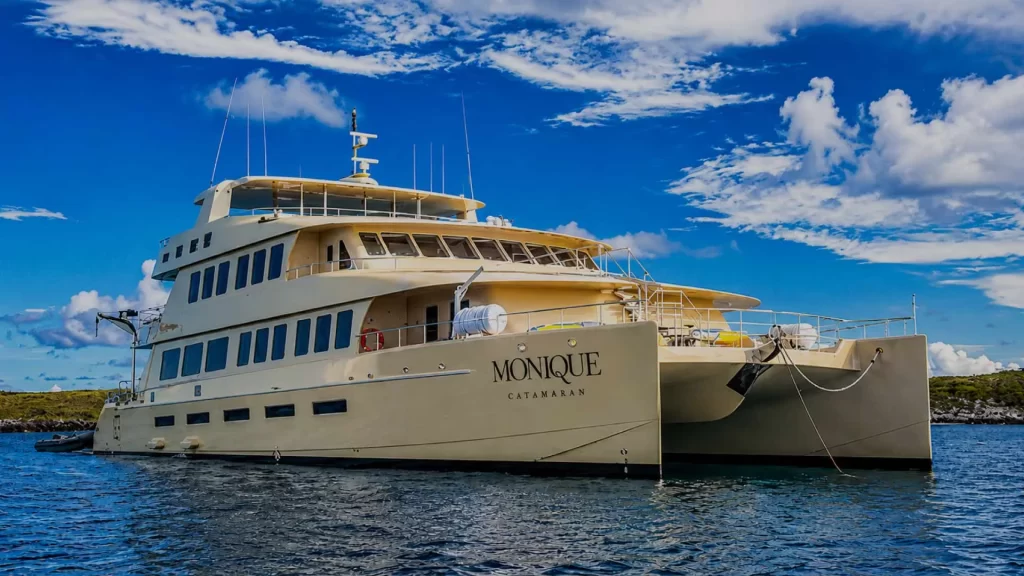
M/C Monique
A 2026 hybrid catamaran for 16 guests, with ocean-view suites, an open-air jacuzzi and a near one-to-one crew.
From USD 7,500
View yacht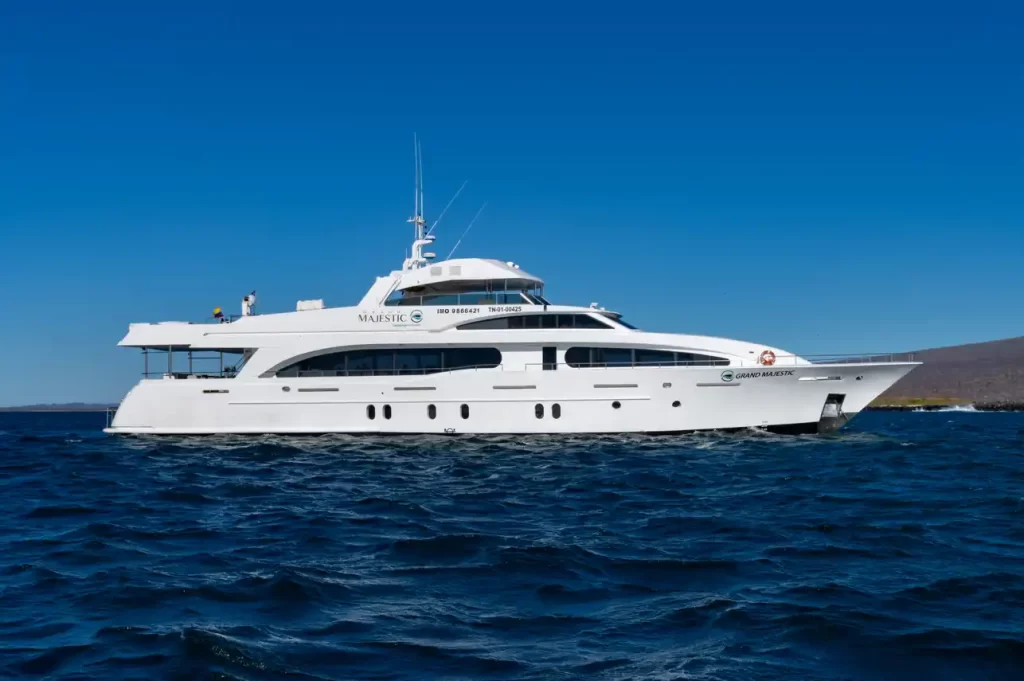
M/Y Grand Majestic
A 39-metre US-designed luxury motor yacht, launched in 2018 and reaching 25 knots, with a 39 m² master suite, seven staterooms and…
Private charter On request
View yacht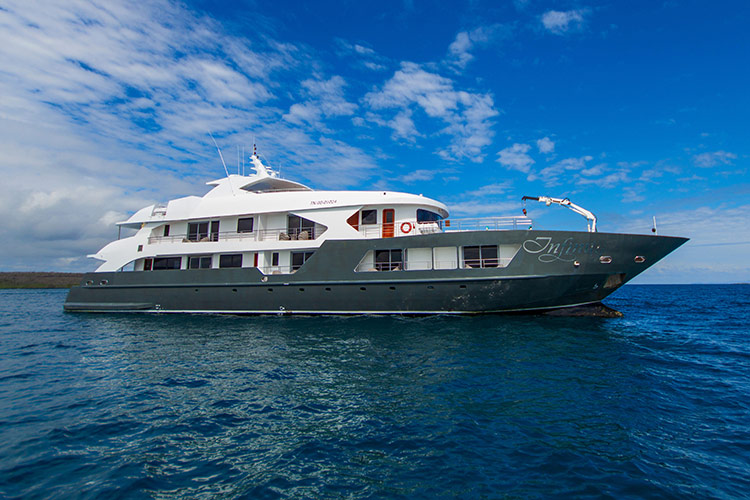
M/Y Infinity Expedition
A 49-metre luxury motor yacht launched in 2018, with eight double cabins and two suites, all with private balconies, a jacuzzi and…
Private charter On request
View yacht