
Green Sea Turtles in the Galápagos: Snorkelling and Nesting Guide
The sea turtle you will meet on almost every snorkel: where to swim with them, when females come ashore to nest, how to tell their tracks on the beach and how to share the water with them.
5 min read
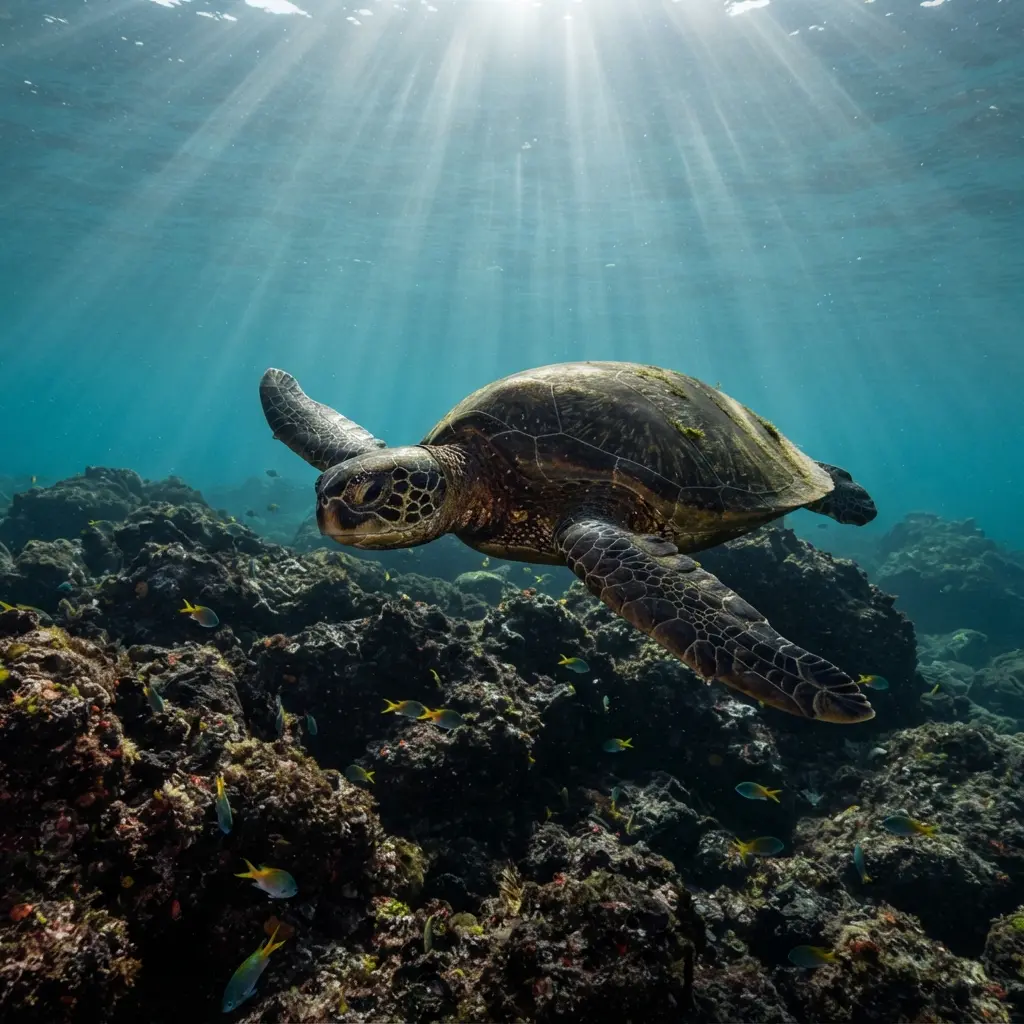
Few moments in the Galápagos are as peaceful as floating above a green sea turtle while it grazes on the rocks, unbothered, before rising slowly to breathe beside you. Green sea turtles are everywhere in the islands, from quiet mangrove lagoons to open bays, and the Galápagos is one of the most important nesting areas for the species in the eastern Pacific.
Quick facts
| Fact | Green sea turtle |
|---|---|
| Scientific name | Chelonia mydas |
| Endemic | No; it lives in warm seas worldwide, but the Galápagos population is very important |
| Size | Shell up to about 1 m long |
| Weight | Large adults can exceed 100 kg |
| Diet | Adults feed mainly on algae and sea grasses |
| Conservation status | Least Concern worldwide since 2025, after decades as Endangered; still protected |
| Best places to see them | Snorkelling sites across the islands; nesting beaches on Santa Cruz and Santiago |
| Best time | All year in the water · nesting from December to June |
Black turtles of the Pacific
The green turtle gets its name not from its shell but from the greenish colour of its fat, a result of its diet of algae. In the Galápagos and along the Pacific coast of the Americas, these turtles are smaller and darker than in other oceans, with an almost black shell, so many people in the region call them black turtles. Adults graze on algae growing on the rocks, which is why you often find them feeding close to the shore, in shallow water that is perfect for snorkelling.
Like all sea turtles, they breathe air. A resting turtle can stay underwater for a long time, but when feeding or swimming it surfaces every few minutes, often right next to snorkellers. They are long-lived and slow to mature, taking decades to become adults, which is one reason why protecting each nesting beach matters so much.
Where to swim with green sea turtles
You are likely to see them on most snorkels, but some places are especially good:
- Black Turtle Cove, Santa Cruz: a calm mangrove lagoon, explored by dinghy, where turtles glide under the boat together with rays and young sharks.
- Punta Vicente Roca and Elizabeth Bay, Isabela: cool, rich western waters where turtles feed alongside penguins and flightless cormorants, on the western routes.
- Bartolomé: clear water around Pinnacle Rock, with turtles, penguins and colourful fish.
- Gardner Bay, Española, and Devil’s Crown, Floreana: two classic snorkels of the southern islands, with turtles, sea lions and reef fish.
To find the yachts whose routes include these sites, see cruises by island, or locate each one on the interactive map.
When to see nesting turtles
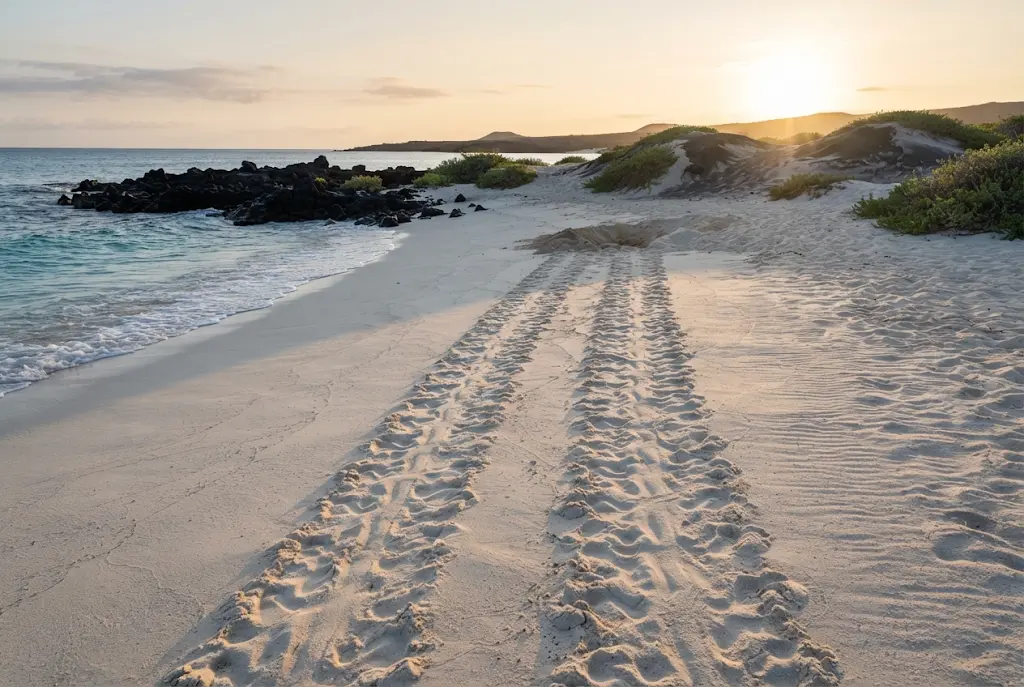
Green sea turtles live in the islands all year round, but the most special season is nesting time. Couples mate in the water from around November to January, and from December to June females come ashore at night to dig their nests in the sand above the high-tide line. Each one lays around a hundred eggs, covers them and returns to the sea before dawn, and she may repeat this several times in a season. The young hatch about two months later and race to the water, usually at night.
Visitors do not walk on nesting beaches at night, but on morning landings at beaches such as Las Bachas on Santa Cruz, Espumilla on Santiago or Quinta Playa on Isabela you can often see fresh tracks and the shallow pits of new nests. Check the Galápagos wildlife calendar and our guide to the best time to visit to combine them with other animals.
A success story still in progress
For centuries, sea turtles were hunted for their meat and shells, and their eggs were collected on beaches around the world. Thanks to decades of protection, many populations have recovered, and in 2025 the IUCN moved the green turtle from Endangered to Least Concern worldwide. In the Galápagos, nesting beaches are protected within the national park and the whole area lies inside a large marine reserve. The main threats today are fishing nets and lines, boat strikes, plastic pollution and changes in sand temperature, which decides whether hatchlings are male or female.
Tips for your visit
- Float, don’t chase. Turtles stay relaxed when you stay still. Let them come to you and you will often get the closest encounters.
- Watch them breathe. When a turtle rises to the surface, move aside and give it a clear path: it needs to breathe and will dive again calmly.
- Look at the sand. On morning landings in the nesting season, ask your guide to show you the tracks and nests, and always walk below the line of nests.
How to watch them responsibly
- Keep at least two metres away in the water, and more if the turtle is feeding or resting.
- Never touch, ride or block a turtle, and never get between a turtle and the surface.
- On beaches, do not step on nests or tracks and never use flash near turtles.
- Use reef-safe sunscreen and take all plastic back to the yacht.
Frequently asked questions
Can you swim with sea turtles in the Galápagos?
Yes. Green sea turtles are seen on most snorkelling sites, often within a few metres. You simply need to keep your distance and let them move freely.
When do sea turtles nest in the Galápagos?
From December to June, with most activity in the first months of the year. Females nest at night and you can see their tracks on morning landings.
Are Galápagos turtles the same as the giant tortoises?
No. Sea turtles live in the ocean and come ashore only to nest, while giant tortoises are land animals that cannot swim like them.
Why are they called green turtles if they look dark?
The name comes from the green colour of their fat, caused by their diet of algae. In the eastern Pacific their shell is especially dark, so they are also known as black turtles.
Are green sea turtles still endangered?
Since 2025 they are listed as Least Concern worldwide thanks to conservation, but they remain protected and some populations still face serious threats.
More Galápagos animals
On the same snorkels you may also meet whitetip reef sharks, manta rays and marine iguanas feeding underwater. Discover all of them, with the islands and months to see each one, in our guide to Galápagos animals.
Yachts that visit them
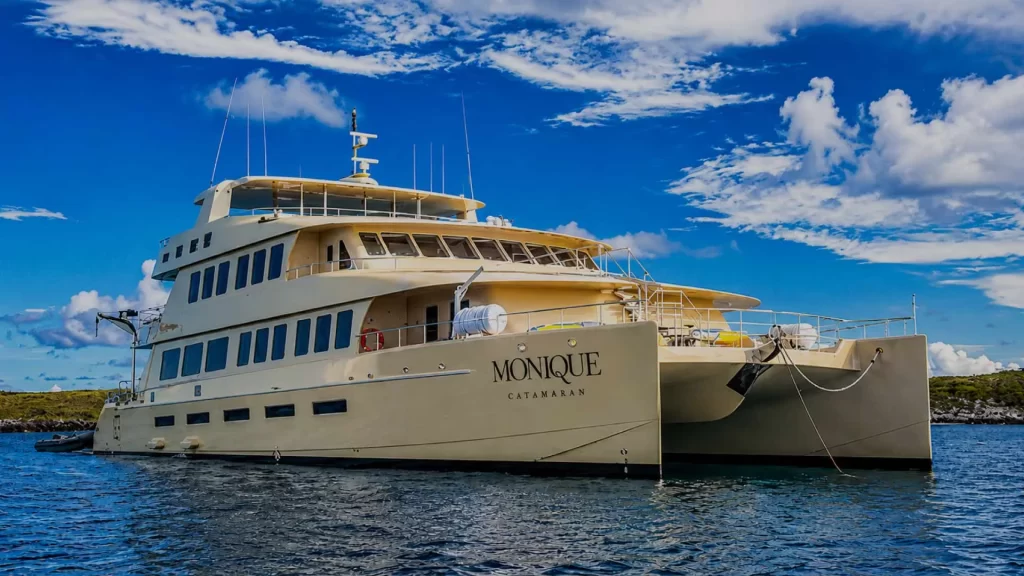
M/C Monique
A 2026 hybrid catamaran for 16 guests, with ocean-view suites, an open-air jacuzzi and a near one-to-one crew.
From USD 7,500
View yacht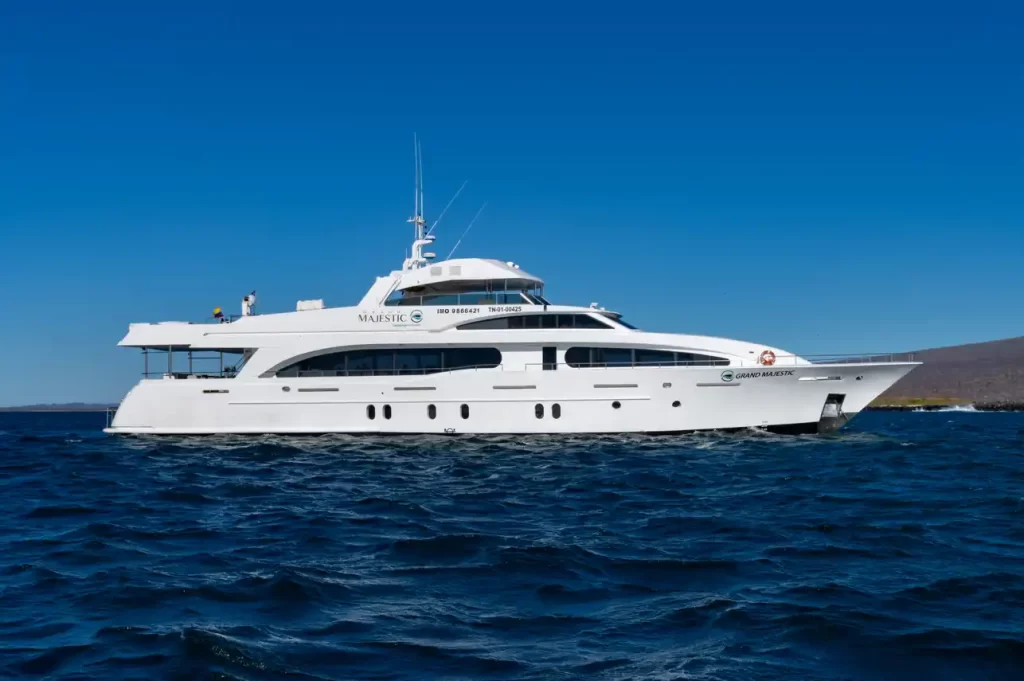
M/Y Grand Majestic
A 39-metre US-designed luxury motor yacht, launched in 2018 and reaching 25 knots, with a 39 m² master suite, seven staterooms and…
Private charter On request
View yacht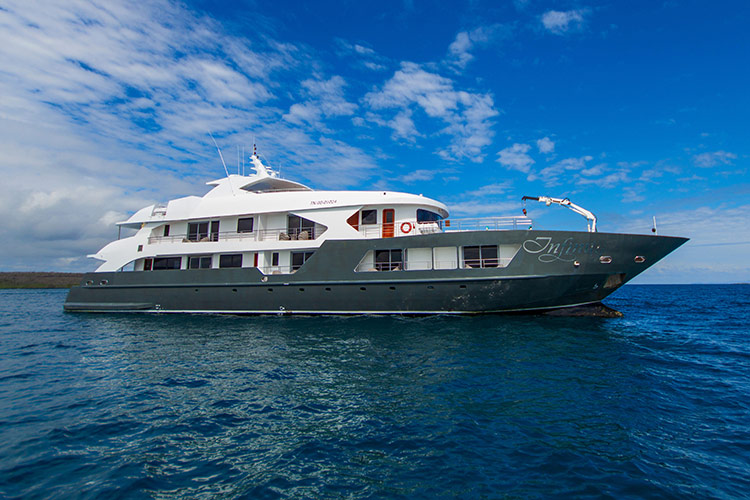
M/Y Infinity Expedition
A 49-metre luxury motor yacht launched in 2018, with eight double cabins and two suites, all with private balconies, a jacuzzi and…
Private charter On request
View yacht