
Sally Lightfoot Crab: The Red Crab on Every Galápagos Shore
Bright red crabs scattered over the black lava, leaping from rock to rock: how the Sally Lightfoot crab got its name, why young crabs are black, what it eats, how it helps marine iguanas and tips for the perfect photo.
4 min read
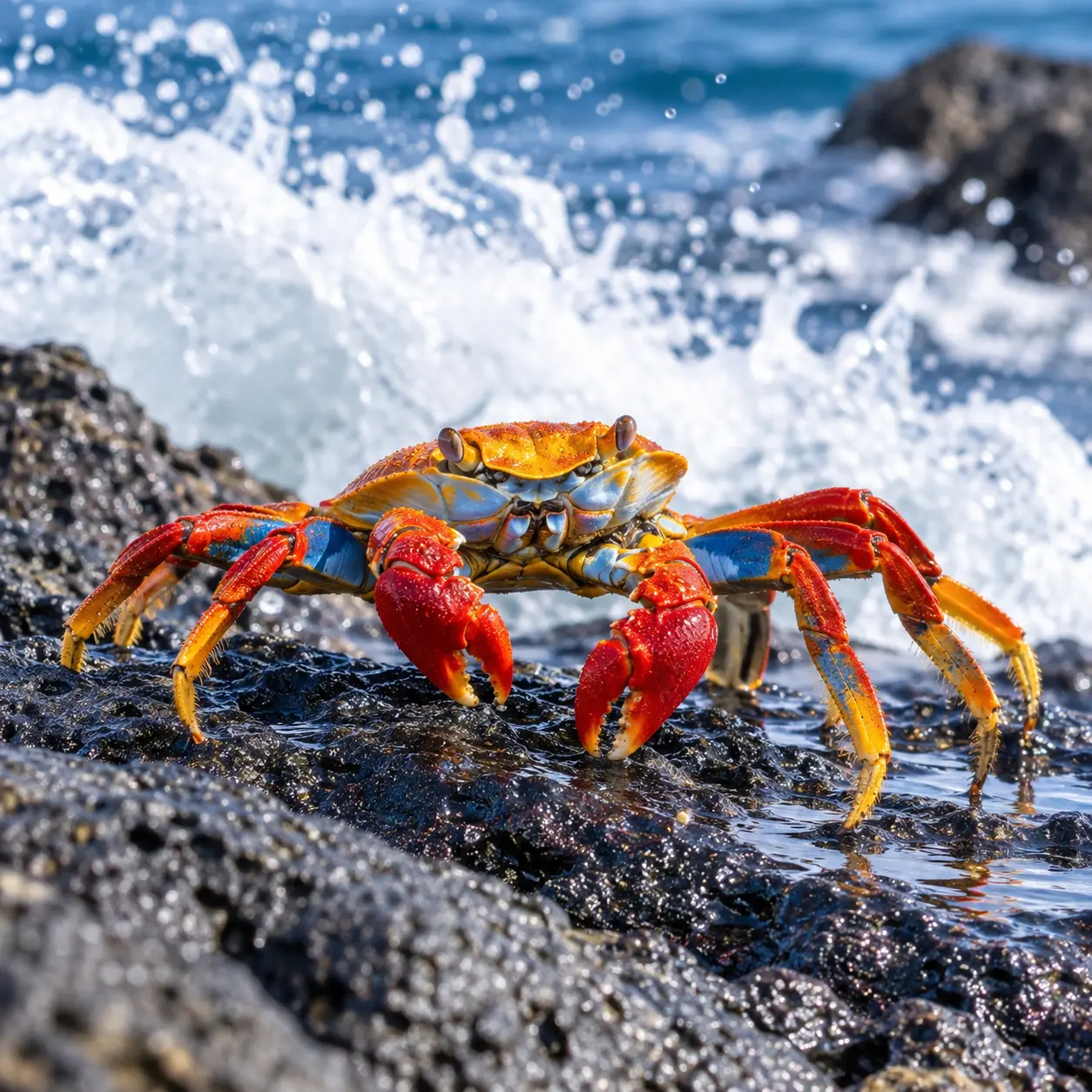
On the black lava shores of the Galápagos, splashes of bright red, orange and yellow stand out against the dark rock. Look more closely and they move: hundreds of crabs walking sideways, feeding at the edge of the waves and leaping away as the sea crashes over them. The Sally Lightfoot crab is one of the most photographed animals of the islands, and you will see it on almost every landing.
Quick facts
| Fact | Sally Lightfoot crab |
|---|---|
| Scientific name | Grapsus grapsus |
| Endemic | No; it lives on the Pacific coasts of the Americas and nearby islands |
| Size | Shell up to about 8 cm wide |
| Diet | Algae, dead animals, and parasites and dead skin from marine iguanas |
| Best places | Santiago, Fernandina, Española, Santa Cruz and Genovesa |
| Best time | All year round |
Where does the name come from?
Nobody knows for sure. The most common story is that the crab was named after a Caribbean dancer called Sally, famous for her light, quick steps, because the crab moves so quickly and lightly over the rocks. Whatever the origin, the name fits: the crab can run sideways at high speed, leap between rocks and even skip over small pools of water.
Red adults, black young
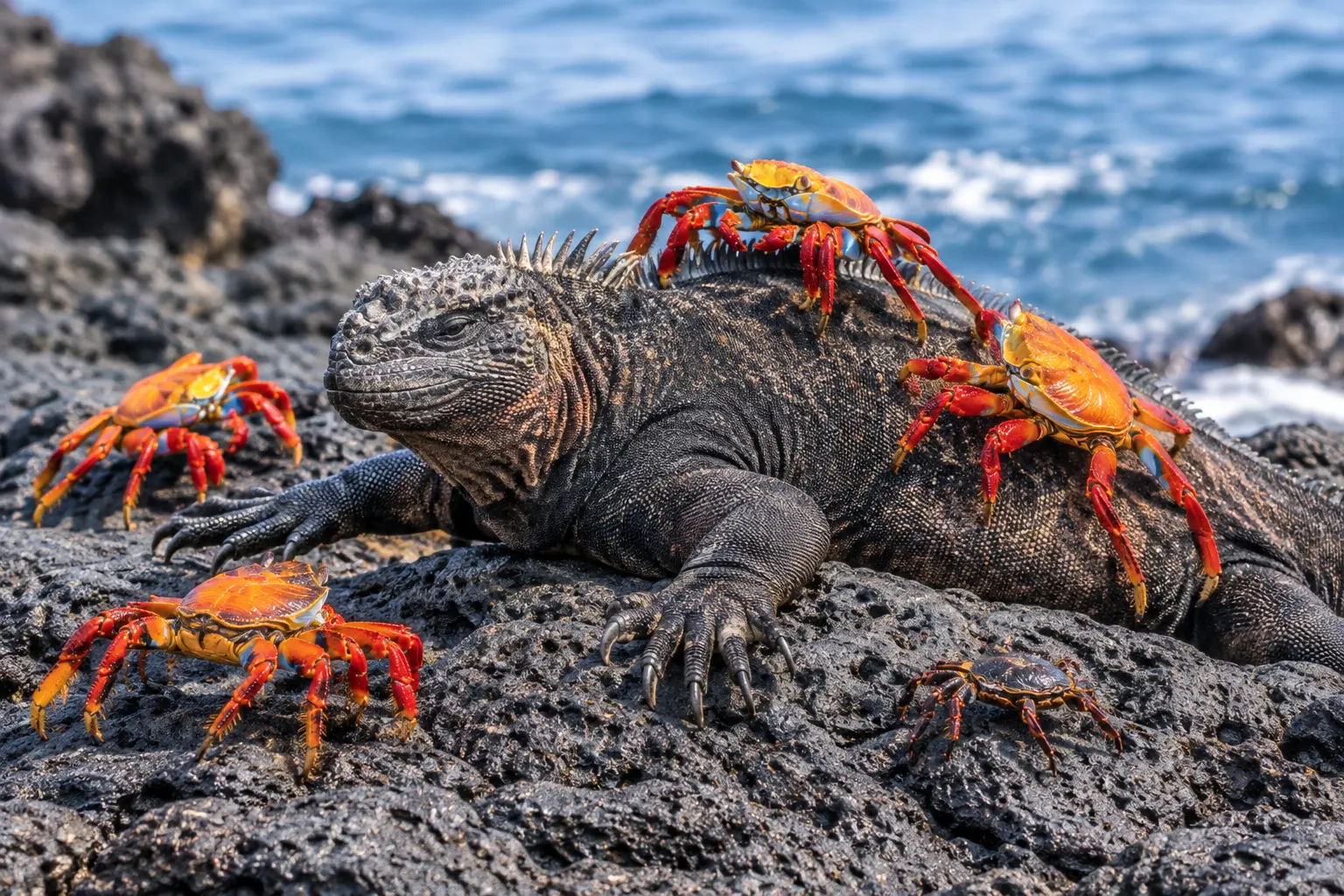
Adult crabs are bright red or orange on top, often with yellow and blue underneath. The young are very different: dark brown or almost black, with small pale spots. This dark colour hides them on the black lava from predators such as herons and gulls. As they grow and moult their shells, they slowly turn red.
A crab that eats almost anything
Sally Lightfoot crabs mostly graze on algae growing on the rocks at the edge of the sea, but they also eat dead fish, sea lion afterbirths and other scraps. They are famous for walking over marine iguanas and picking ticks and dead skin from their backs, a small service that both animals seem to accept. They can also be eaten by other animals, from moray eels to herons.
Where to see Sally Lightfoot crabs
You will find them on the rocky shores of almost every island. Some especially good places are:
- Puerto Egas, Santiago: the lava shore and tide pools are full of crabs, next to fur seals in the grottoes, on the central islands.
- Punta Espinoza, Fernandina: red crabs among thousands of marine iguanas on the black lava, on the western routes.
- Española and Genovesa: crabs line the landing rocks and the shores near the seabird colonies.
To find the yachts whose routes include these sites, see cruises by island, or locate each one on the interactive map.
Best time to see them
Sally Lightfoot crabs can be seen all year round, on almost every itinerary. They are most active at low tide, when more rock is exposed and they feed at the edge of the water. Check the Galápagos wildlife calendar and our guide to the best time to visit.
Tips for your visit
- Get low for photos. A low angle with the sea behind makes the red of the crab stand out against the waves.
- Watch your step on wet landings. Crabs cover the landing rocks, and the lava can be slippery.
- Look for the young. Small dark crabs are easy to miss; finding one next to an adult shows the difference in colour.
How to watch them responsibly
- Do not try to catch or pick up crabs.
- Watch where you step; young crabs are hard to see on the lava.
- Never feed them or move rocks to find them.
- Follow your naturalist guide and stay on the marked trail.
Frequently asked questions
Why is it called the Sally Lightfoot crab?
The most common story is that it was named after a light-footed Caribbean dancer, because it moves so quickly over the rocks.
Where can I see Sally Lightfoot crabs?
On the rocky shores of almost every island, such as Puerto Egas on Santiago and Punta Espinoza on Fernandina.
Why are some crabs black?
Those are young crabs; their dark colour hides them on the lava, and they turn red as they grow.
What do Sally Lightfoot crabs eat?
Mostly algae, but also dead animals and the ticks and dead skin of marine iguanas.
Are Sally Lightfoot crabs endemic to the Galápagos?
No. They live along the Pacific coast of the Americas, but the Galápagos is one of the best places to see them.
More Galápagos animals
On the same shores you will see sea lions, lava lizards and marine iguanas. Discover all of them, with the islands and months to see each one, in our guide to Galápagos animals.
Yachts that visit them

M/C Monique
A 2026 hybrid catamaran for 16 guests, with ocean-view suites, an open-air jacuzzi and a near one-to-one crew.
From USD 7,500
View yacht
M/Y Grand Majestic
A 39-metre US-designed luxury motor yacht, launched in 2018 and reaching 25 knots, with a 39 m² master suite, seven staterooms and…
Private charter On request
View yacht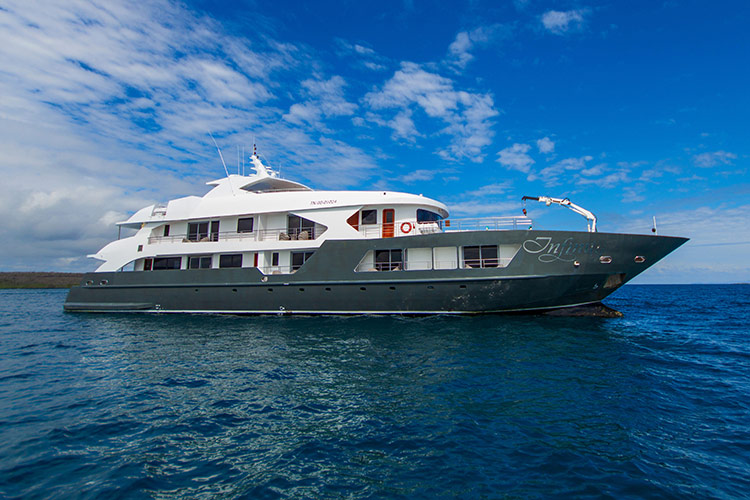
M/Y Infinity Expedition
A 49-metre luxury motor yacht launched in 2018, with eight double cabins and two suites, all with private balconies, a jacuzzi and…
Private charter On request
View yacht