
Galápagos Lava Lizards: The Push-Up Champions of the Islands
Small, quick and everywhere: why lava lizards do push-ups on the rocks, how to tell males from the red-headed females, where each species lives and how to spot them on almost every landing.
5 min read
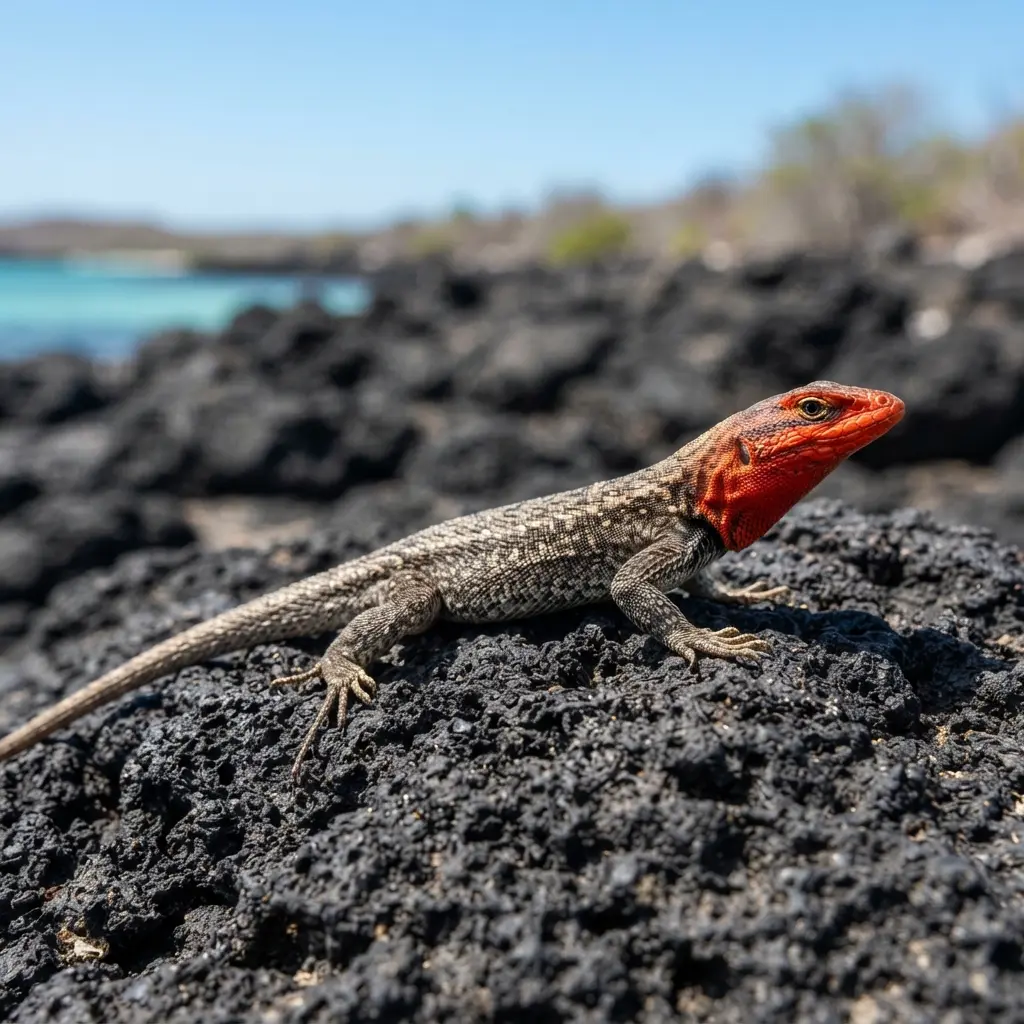
They are not the stars that people travel for, but lava lizards are the animals you will meet most often on the trails of the Galápagos. They dart across the black rock, stop in the sun, and suddenly start bobbing up and down as if doing push-ups. Watching them is one of the small pleasures of every landing, and behind their show there is a fascinating story of evolution.
Quick facts
| Fact | Lava lizard |
|---|---|
| Scientific name | Microlophus spp. (several species) |
| Endemic | Yes, all Galápagos species are found only in the islands |
| Size | Usually 15 to 30 cm long, including the tail; males are larger |
| Diet | Insects, spiders and other small animals, and some plants |
| Colours | Males greyish to brown with patterns; many females with red or orange heads and throats |
| Where to see them | Almost every island, from Española to Santiago |
| Best time | All year round, especially on sunny mornings |
Why do they do push-ups?
Lava lizards are very territorial. When a male wants to show that a rock is his, he raises and lowers his body on his front legs in a quick series of push-ups. A rival answers with his own display, and most disputes end there, without a fight. Females also do push-ups, though less often. Each species has its own rhythm, a kind of signature that helps lizards recognise their own kind.
They are also clever survivors. When a predator grabs them by the tail, they can drop it and escape; a new, shorter tail grows back later. They hunt flies, moths, ants and spiders, eat some leaves and flowers, and are often seen around sea lion colonies, where flies are plentiful.
Many islands, many lizards
Lava lizards are a small version of the story of Darwin’s finches. Their ancestors reached the Galápagos from the mainland, and as they spread to different islands they slowly changed. Scientists recognise several species today, most of them found on a single island or a small group of islands, such as Española, Floreana, Pinzón or San Cristóbal, while one species lives across the central islands. The Española lava lizard is one of the largest, and its females have strikingly red heads.
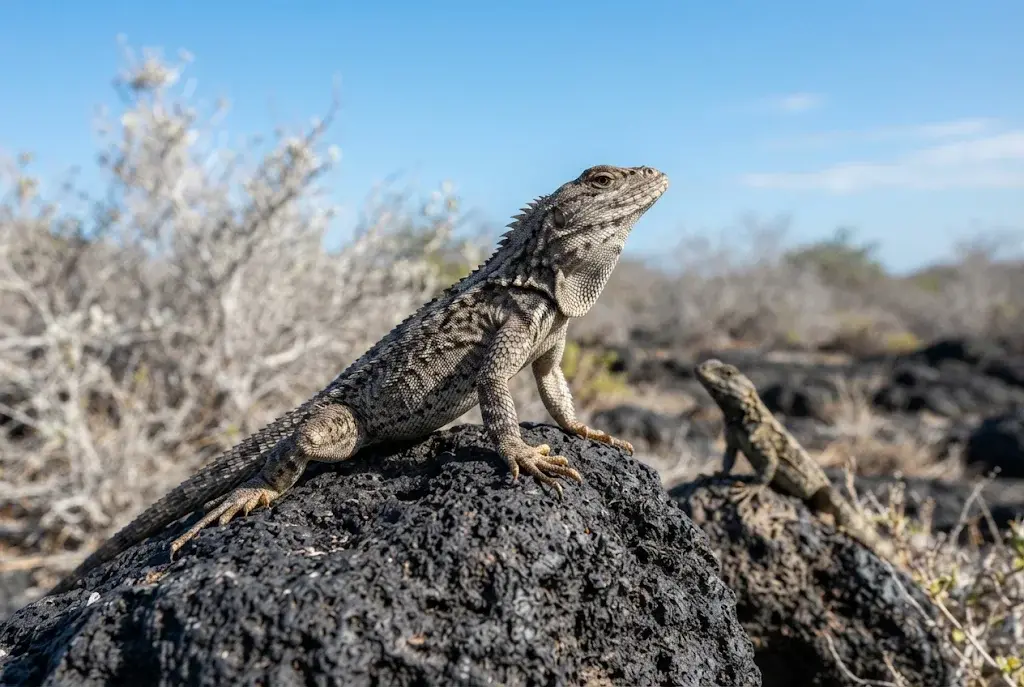
Males and females can look so different that they seem to be different animals. Males are larger and greyer or browner, often with dark patterns and a small crest, while many females have red, orange or yellow heads and throats.
Where to see lava lizards
You do not need to look for them: they find you. They live on rocky shores, lava fields and dry forest on most visitor sites. Some places where they are especially easy to see:
- Punta Suárez, Española: large lizards with bright red-headed females, among marine iguanas and nesting seabirds, on the southern routes.
- Puerto Egas, Santiago: along the black lava coast, often near fur seals and Sally Lightfoot crabs.
- North Seymour and South Plaza: on the trails of the central islands, alongside land iguanas.
- Floreana and Isabela: each with its own species, on rocky trails and lava fields.
To find the yachts whose routes reach these islands, see cruises by island, or locate each site on the interactive map.
Best time to see them
Lava lizards can be seen all year round. Like all reptiles they need the sun, so the best moments are mornings and late afternoons, when they come out to warm up on the rocks. In the hottest hours they shelter in the shade or among the stones, and on cool, cloudy days they are less active. The warm season, from December to May, is usually their most active time. Check the Galápagos wildlife calendar and our guide to the best time to visit to plan your trip.
Small animals, big role
Lava lizards are an important link in the food chain of the islands. They keep insects in check and are food for the Galápagos hawk, herons, owls, snakes and even mockingbirds. Most species are common, but those on islands with introduced cats and rats face extra pressure, and island species with small ranges are always vulnerable to change.
Tips for your visit
- Stand still and watch. If you stop on the trail, lizards soon go back to their business, and you may see a push-up duel a few steps away.
- Look at the heads. Try to spot the difference between the patterned males and the red-headed females: on Española it is especially striking.
- Use a short zoom. They are small and quick, so a telephoto or a phone zoom helps you capture the details of their scales and colours.
How to watch them responsibly
- Watch where you step: lava lizards often rest on the trail itself.
- Never try to catch them or touch their tails.
- Do not feed them or leave food on the trails.
- Follow your naturalist guide and stay on the marked path.
Frequently asked questions
Are lava lizards only found in the Galápagos?
The Galápagos species are endemic to the islands. Related lava lizards also live on the coasts of mainland South America.
Why do lava lizards do push-ups?
It is a display to defend their territory and attract mates. Each species has its own rhythm of push-ups.
Why do some lava lizards have red heads?
In many species the females have red, orange or yellow heads and throats, while the males are greyer and patterned.
Are lava lizards dangerous?
No. They are small and harmless, and they will simply run away if you come too close.
How many species of lava lizard are there?
Scientists recognise several species in the Galápagos, most of them limited to one island or a small group of islands.
More Galápagos animals
On the same trails you will also meet Darwin’s finches, Sally Lightfoot crabs and the curious mockingbirds. Discover all of them, with the islands and months to see each one, in our guide to Galápagos animals.
Yachts that visit them
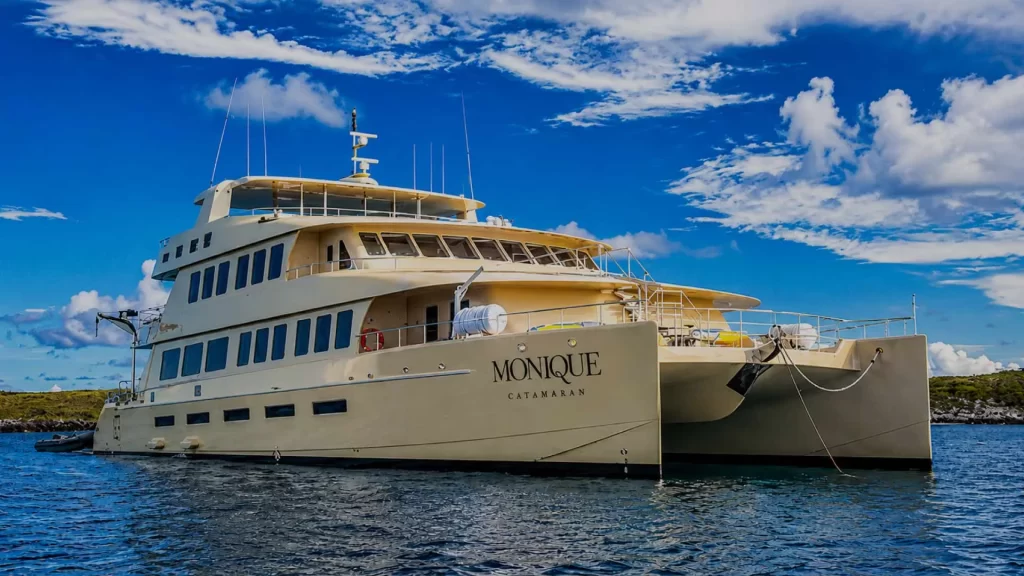
M/C Monique
A 2026 hybrid catamaran for 16 guests, with ocean-view suites, an open-air jacuzzi and a near one-to-one crew.
From USD 7,500
View yacht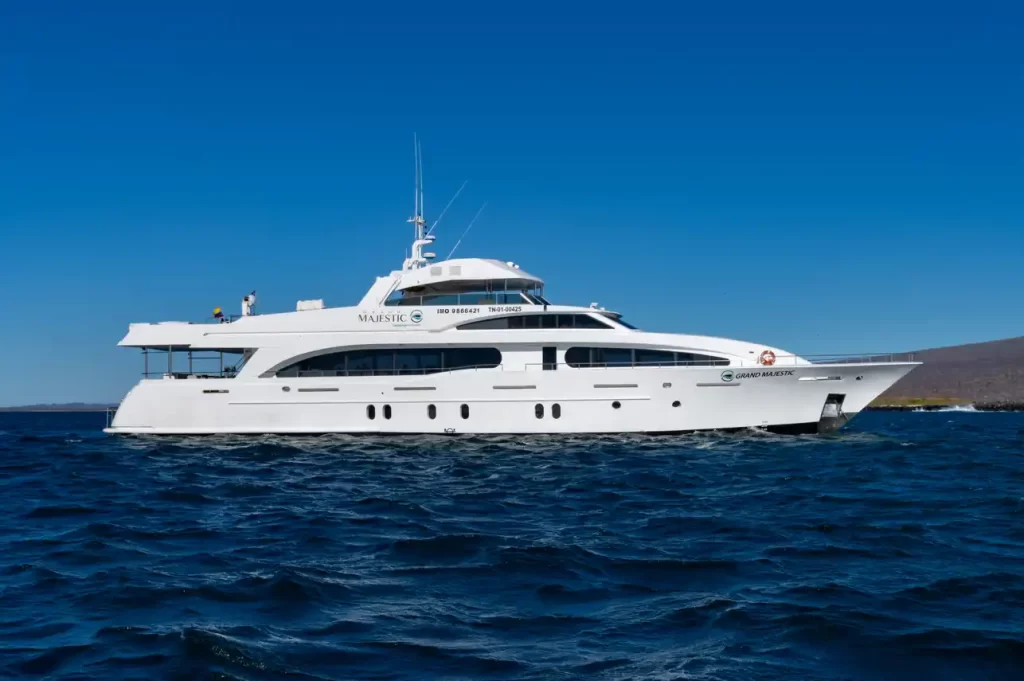
M/Y Grand Majestic
A 39-metre US-designed luxury motor yacht, launched in 2018 and reaching 25 knots, with a 39 m² master suite, seven staterooms and…
Private charter On request
View yacht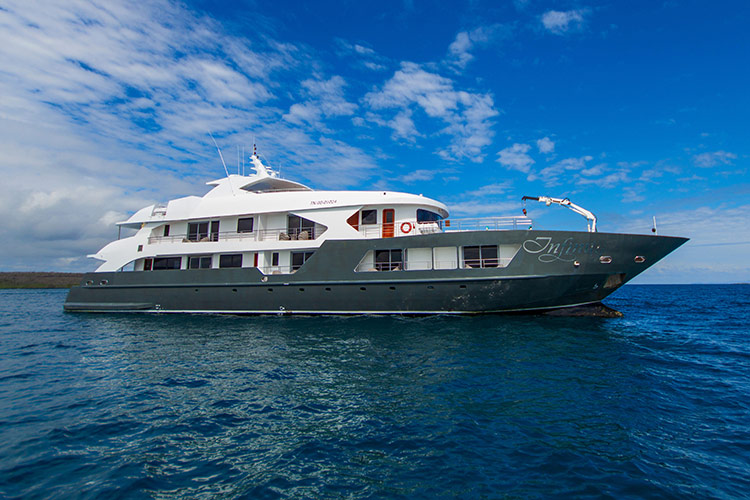
M/Y Infinity Expedition
A 49-metre luxury motor yacht launched in 2018, with eight double cabins and two suites, all with private balconies, a jacuzzi and…
Private charter On request
View yacht