
The Galápagos is a dream for photographers. Animals let you come close, the light changes from soft mornings to golden evenings, and every island has a different landscape. Yet the trip also has its own challenges: wet landings, salt spray, bright sun on black lava and strict park rules. These tips will help you come home with the photos you imagined, whether you use a professional camera or a phone. These Galápagos photography tips cover gear, settings, light and the park rules.
Galápagos photography tips: which camera to bring
You do not need professional gear to take great photos in the Galápagos, because the animals are so close. A modern phone gives excellent results for landscapes and close wildlife. A mirrorless or reflex camera with a zoom lens gives you more control, especially for birds in flight and animals further away. Whatever you bring, keep it light: you will carry it on every landing.
Lenses that work best
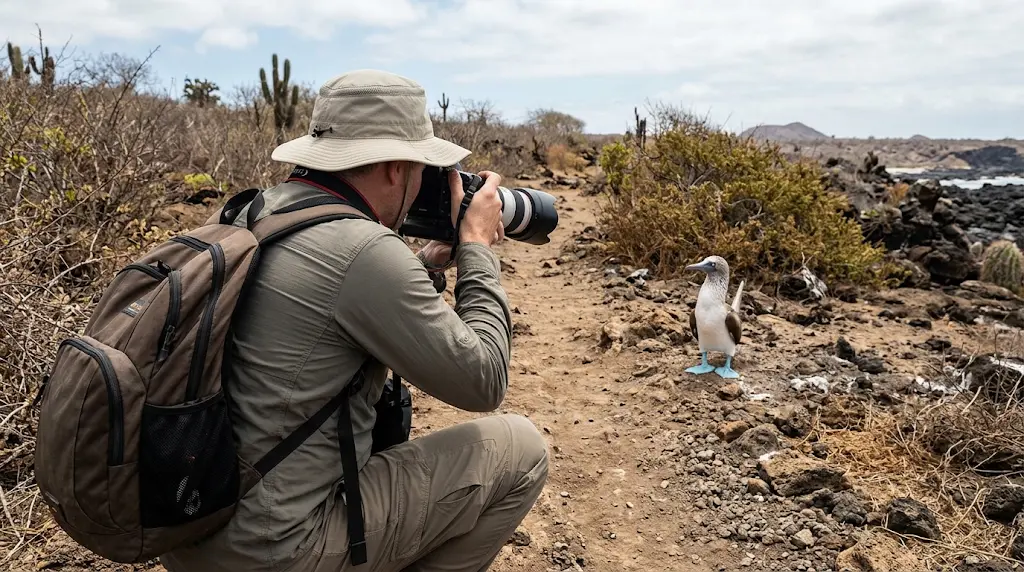
- A telephoto zoom of around 70 to 300 mm is the most useful lens for wildlife, from boobies on the trail to frigatebirds in flight.
- A standard or wide zoom for landscapes, such as the view from Bartolomé, and for animals very close to you.
- Avoid changing lenses on the beach. Sand and spray get in easily; a single versatile zoom is often the best choice.
Settings for wildlife
Use a fast shutter speed, at least 1/1000 s, for birds in flight and animals moving, and continuous autofocus to follow them. For black marine iguanas on dark lava or frigatebirds against a bright sky, adjust the exposure so the details are not lost. Get down to the animal’s eye level for more intimate portraits, and wait a moment: behaviour, not just a pose, makes a photo memorable.
Underwater photography
Half of the wildlife in the Galápagos is underwater. A waterproof action camera, a waterproof compact or a housing for your phone or camera lets you capture sea lions, turtles, rays and fish. Shoot close to your subject, near the surface where the light is best, and keep the sun behind you. Our guide to the best snorkelling spots tells you where the action is.
The park rules every photographer must follow
- No flash on wildlife, at any time.
- Keep at least two metres from animals on land and in the water.
- No drones without prior authorisation from the Galápagos National Park; professional filming also needs a permit.
- Stay on the marked trails and never move or touch animals to improve a shot.
Your naturalist guide will remind you of these rules, and following them keeps the animals as calm and close as they are today.
Protecting your gear
- Use a dry bag for every dinghy ride and wet landing.
- Bring spare batteries and memory cards; there is no shop at the visitor sites.
- Clean salt off lenses and cameras every evening with a soft cloth.
- Back up your photos each night to a laptop or drive.
For the rest of your bags, see our packing list for the Galápagos.
The best light and the best months
Early mornings and late afternoons give the softest light and the most active wildlife, and most yachts plan landings at these times. The warm season, from December to May, brings clearer skies and calm water for underwater photos; the cool season, from June to November, brings dramatic skies and more active seabirds. See the wildlife calendar to plan around nesting seasons, such as the albatrosses on Española.
Frequently asked questions
Can I fly a drone in the Galápagos?
Not without prior authorisation from the Galápagos National Park, which is rarely granted to tourists.
Is flash allowed in the Galápagos?
No. Flash photography of wildlife is prohibited.
What lens should I bring to the Galápagos?
A telephoto zoom of around 70 to 300 mm is the most useful, plus a wide or standard zoom for landscapes.
Is a phone enough for photos in the Galápagos?
For many travellers, yes: the animals are close and modern phones take excellent photos. A zoom lens helps for birds in flight.
Plan your photography trip
If photography is the heart of your trip, tell us which animals and landscapes you want to capture, and we will suggest yachts and routes with the best light and wildlife. Send us your enquiry.