
Waved Albatross: When and Where to See It on Española
The largest bird of the Galápagos nests almost only on one island: when the albatrosses are there, how their famous courtship dance works, how they take off from the cliffs and why they need protection.
4 min read
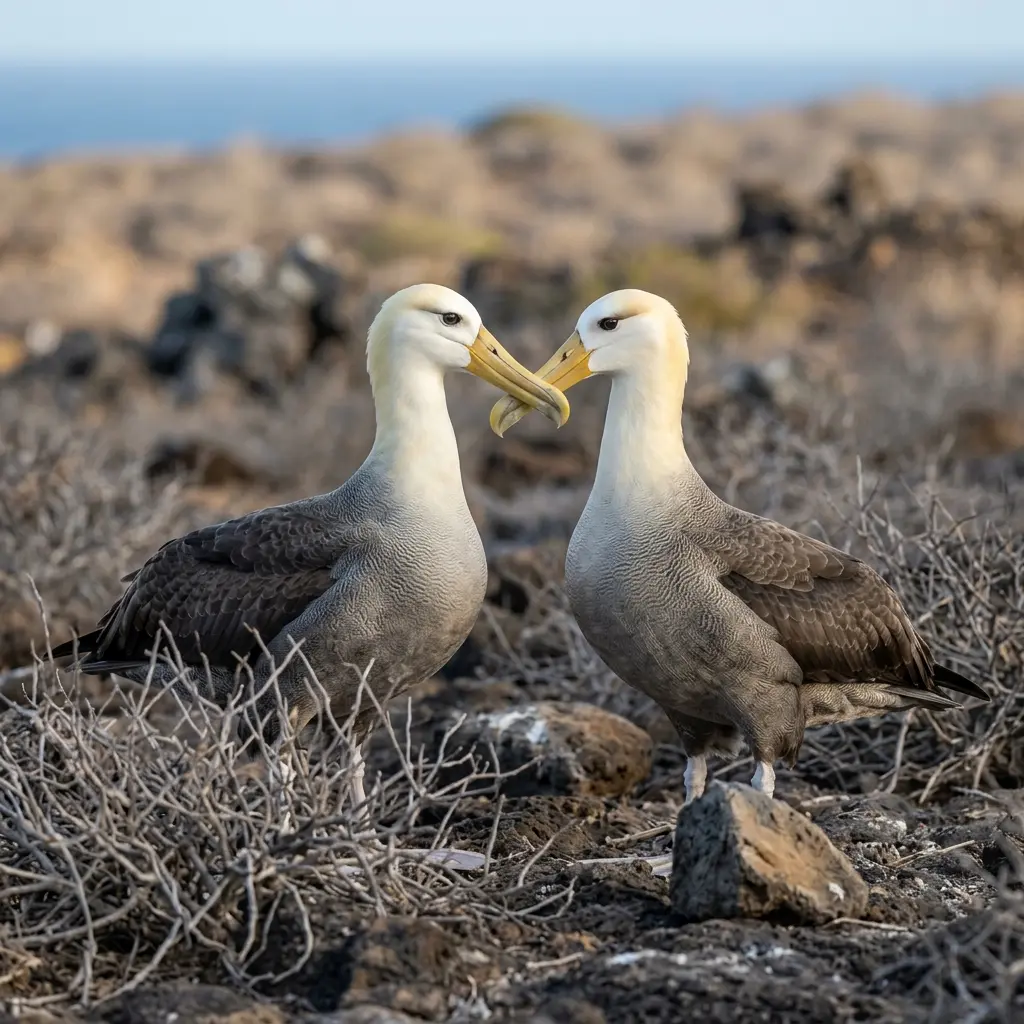
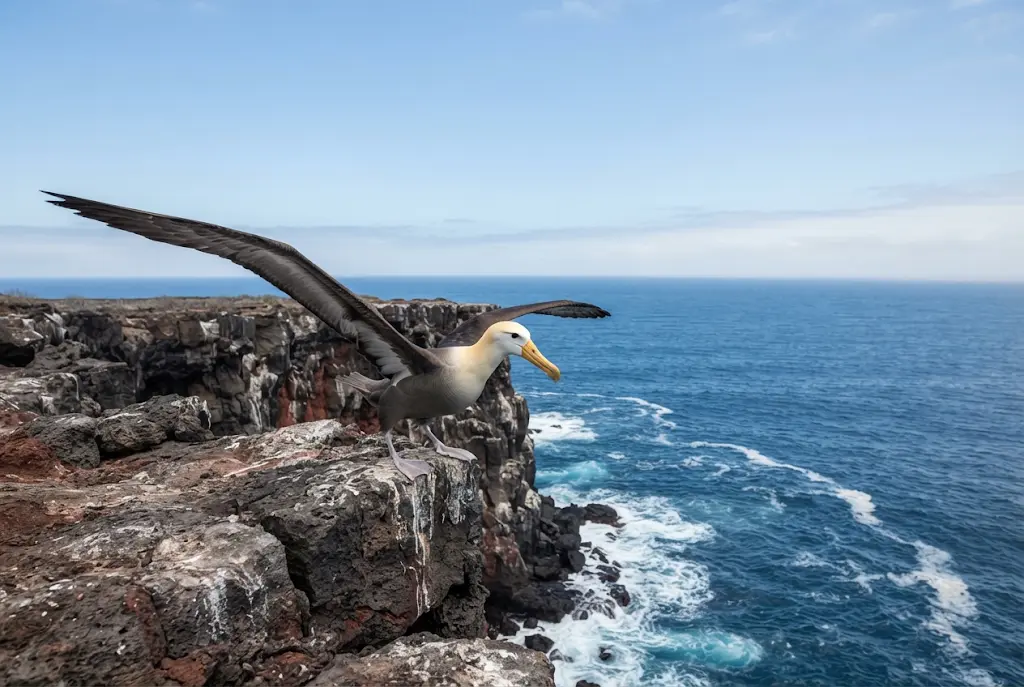
Few sights in the Galápagos are as moving as two waved albatrosses dancing. Face to face, they circle their bills against each other in a fast clattering duel, bow, point their bills to the sky and call with a long, strange moan. Then, at the cliff edge, one opens its enormous wings and lets the wind carry it out over the ocean. This happens almost only on one island, Española, and only for part of the year.
Quick facts
| Fact | Waved albatross |
|---|---|
| Scientific name | Phoebastria irrorata |
| Endemic | As a breeding bird, almost: nearly all nest on Española, with only a few pairs on Isla de la Plata, Ecuador |
| Size | Around 85 to 95 cm long, with a wingspan of more than 2 m |
| Weight | Around 3 to 4 kg |
| Diet | Squid, fish and crustaceans, caught at sea off South America |
| Conservation status | Critically Endangered (IUCN) |
| Where to see them | Punta Suárez, Española |
| Best time | April to December · absent from January to March |
A year on Española
Waved albatrosses spend part of the year at sea, feeding in the rich waters off Ecuador and Peru. Around late March and April they return to Española, where couples, which usually stay together for life, meet again and renew their bond with their dance. In April and May each female lays a single egg directly on the ground. Both parents take turns incubating it for about two months, and sometimes they even move it short distances by rolling it.
The chicks hatch around June and July and grow fast on an oily mix of partly digested food brought by their parents. By December the young are ready to fly, and the colony empties. From January to March there are no albatrosses on the island.
The famous dance
The courtship of the waved albatross is one of the most elaborate of any bird. Pairs fence with their bills, clattering them together, bow to each other, point their bills to the sky, clap their bills open and shut and let out long moaning calls. Each couple seems to have its own version, and the dance is most frequent at the start of the season, when pairs reunite, and among young birds looking for a partner.
Where to see waved albatrosses
The only place to see them on land is Punta Suárez, on Española, included on many southern routes. The trail crosses the colony and reaches the cliffs, where the albatrosses walk to the edge and launch themselves into the wind, an area guides call the albatross airstrip. On the same walk you will see Nazca boobies, blue-footed boobies, marine iguanas and the famous blowhole.
To find the yachts whose routes include Española, see cruises by island, or locate the island on the interactive map.
Best time to see them
Plan your visit between April and December. April and May are the months of courtship and eggs; June to September bring chicks of all sizes; October to December show large young birds getting ready to fly. Check the Galápagos wildlife calendar and our guide to the best time to visit to combine them with other animals.
Why they need protection
The waved albatross is listed as Critically Endangered. With almost the whole population nesting on one island, any problem there affects the entire species. The main threat is at sea: many albatrosses die caught on fishing hooks or in nets off Ecuador and Peru, and some are deliberately captured. Albatrosses breed slowly, raising only one chick at a time, so losses are hard to replace. On Española the colony is protected, and conservation groups work with fishing communities to reduce accidental captures.
Tips for your visit
- Check the dates. If albatrosses are a must, travel between April and December and choose a route that includes Española.
- Wait at the cliffs. Take a few minutes at the clifftop: watching an albatross take off is unforgettable.
- Wear good shoes. The Punta Suárez trail is rocky and uneven, with a fair amount of walking.
How to watch them responsibly
- Keep at least two metres away, and never stand between an albatross and the cliff edge.
- Never touch eggs or chicks, even if they seem alone.
- Do not use flash and keep your voice low near the colony.
- Stay on the marked trail and follow your naturalist guide.
Frequently asked questions
When can I see waved albatrosses in the Galápagos?
From April to December. They are absent from January to March.
Where do waved albatrosses nest?
Almost all of them nest on Española, at Punta Suárez, with only a few pairs on Isla de la Plata, off Ecuador.
How big is the waved albatross?
It is the largest bird of the Galápagos, with a wingspan of more than two metres.
When do albatrosses dance?
Mostly at the start of the season, in April and May, when pairs reunite, and among young birds looking for a partner.
Why is the waved albatross critically endangered?
Almost the whole population nests on one island, and many birds die at sea caught by fishing hooks and nets.
More Galápagos animals
On Española you will also find the Galápagos hawk, lava lizards with red-headed females and the bold Española mockingbird. Discover all of them, with the islands and months to see each one, in our guide to Galápagos animals.
Yachts that visit them

M/C Monique
A 2026 hybrid catamaran for 16 guests, with ocean-view suites, an open-air jacuzzi and a near one-to-one crew.
From USD 7,500
View yacht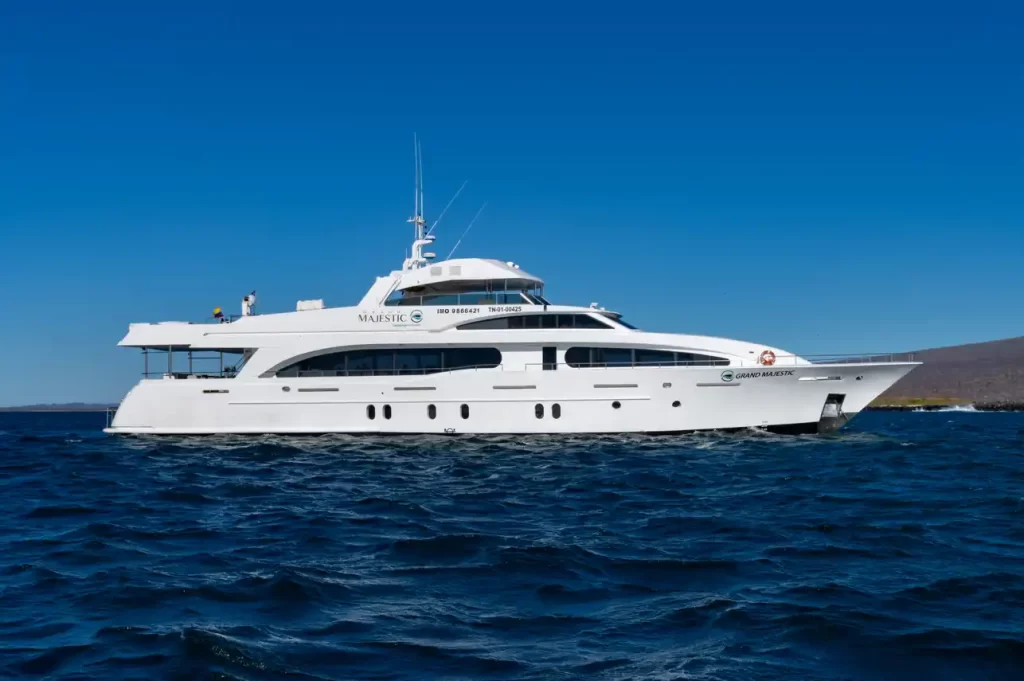
M/Y Grand Majestic
A 39-metre US-designed luxury motor yacht, launched in 2018 and reaching 25 knots, with a 39 m² master suite, seven staterooms and…
Private charter On request
View yacht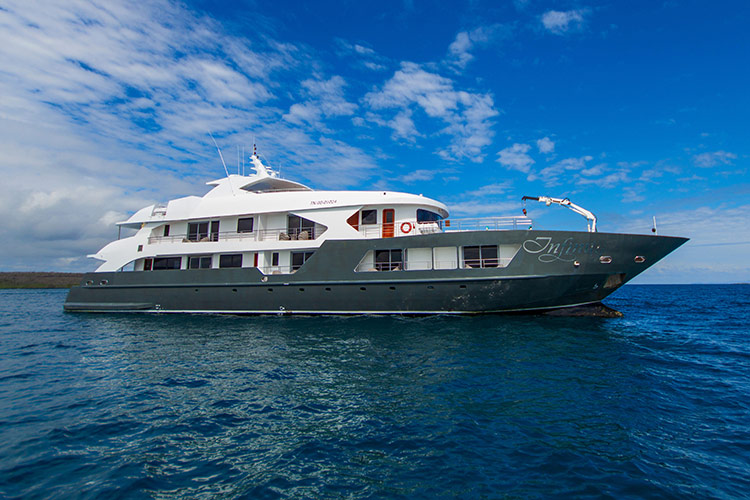
M/Y Infinity Expedition
A 49-metre luxury motor yacht launched in 2018, with eight double cabins and two suites, all with private balconies, a jacuzzi and…
Private charter On request
View yacht