
Darwin’s Finches: The Small Birds Behind a Big Idea
Small, brown and easy to overlook, yet famous all over the world: how Darwin’s finches helped explain evolution, how their beaks differ, the strange habits of some species and where to see them on your trip.
5 min read
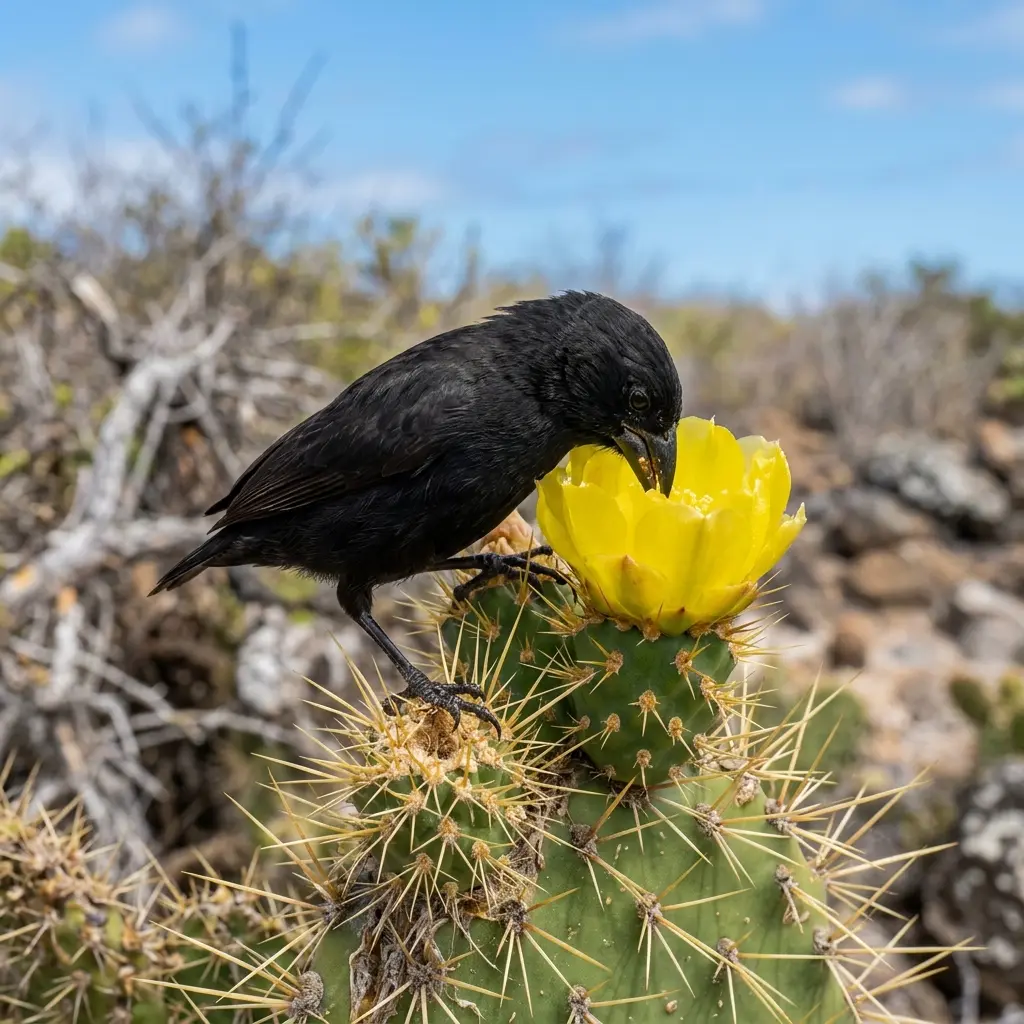
On almost every landing in the Galápagos, small brown and black birds hop around your feet, pecking at seeds on the trail or at a cactus flower. It is easy to walk past them. Yet these are Darwin’s finches, perhaps the most famous small birds in the world, and the differences between their beaks became one of the clearest examples of evolution in action.
Quick facts
| Fact | Darwin’s finches |
|---|---|
| Scientific group | Around 17 species of small tanagers (genera Geospiza, Camarhynchus, Certhidea and Platyspiza) |
| Endemic | Yes; all live only in the Galápagos, except one species on Cocos Island, Costa Rica |
| Size | From about 10 to 20 cm long |
| Diet | Seeds, insects, cactus flowers and fruit, depending on the species |
| Conservation status | Most are not threatened; the mangrove finch and the medium tree finch are Critically Endangered |
| Best places | Santa Cruz, Genovesa, Floreana, Española and Santiago |
| Best time | All year round |
A beak for every job
All Darwin’s finches come from a single ancestor that reached the islands from South America a few million years ago. As its descendants spread across the islands, they adapted to different foods, and their beaks changed with them. Ground finches have thick, strong beaks to crack seeds; the large ground finch can break seeds that are very hard. Cactus finches have longer, pointed beaks to feed on cactus flowers and fruit. Tree finches have beaks made for catching insects, and the warbler finch has a thin, fine beak, almost like a warbler.
Darwin and the finches
Charles Darwin collected finches when he visited the Galápagos in 1835, but at the time he did not realise how special they were, and he did not even label carefully which island each one came from. It was only back in England, when the ornithologist John Gould studied them, that it became clear they were a group of closely related species. Since 1973 the biologists Peter and Rosemary Grant have studied the finches of the small island of Daphne Major, and they have measured how beak sizes changed from one generation to the next after droughts and wet years: evolution seen in a few decades.
Surprising species
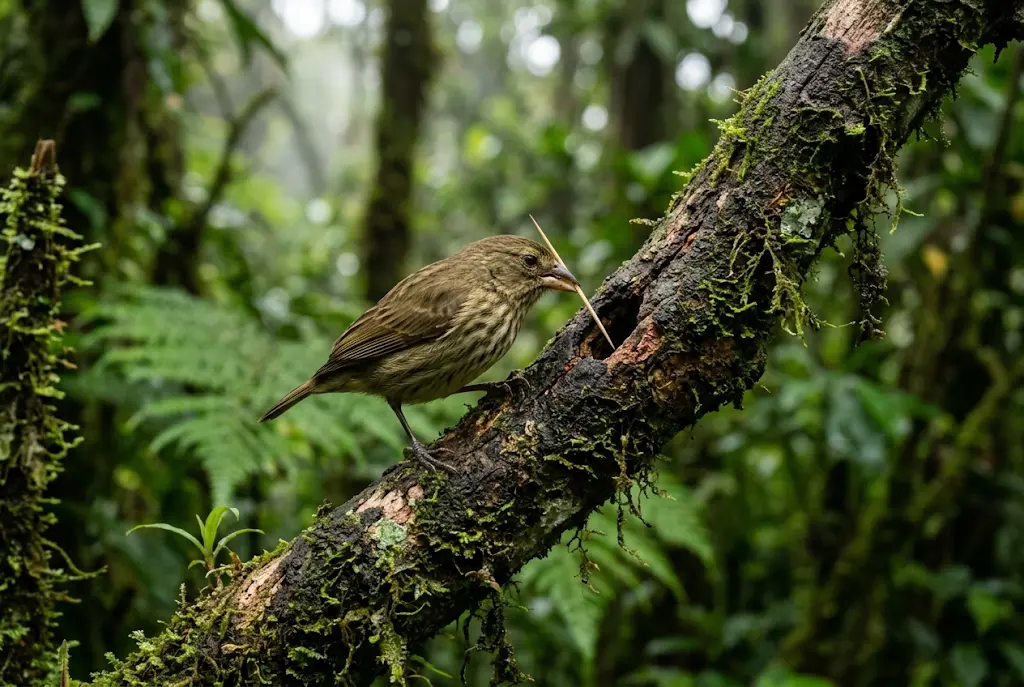
- Woodpecker finch: holds a cactus spine or twig in its beak to pull insect larvae out of holes in the wood.
- Vampire finch: on the remote islands of Wolf and Darwin, a form of the sharp-beaked ground finch pecks at the skin of Nazca boobies and drinks their blood.
- Mangrove finch: one of the rarest birds in the world, found only in a few mangrove forests on Isabela.
Where to see Darwin’s finches
Finches live on almost every island, so you will see them on any itinerary. Some places are especially good:
- Santa Cruz highlands: the forests of the tortoise reserves and Los Gemelos are home to several tree finches, on the central islands, together with giant tortoises.
- Genovesa: large cactus finches and sharp-beaked ground finches, on the northern routes.
- Española and Floreana: the Española cactus finch, and on Floreana the rare medium tree finch, on the southern islands.
To find the yachts whose routes include these sites, see cruises by island, or locate each one on the interactive map.
Best time to see them
Finches can be seen all year round. In the warm and rainy season, from January to May, there is more food and they breed; the males sing and build nests, so they are easier to notice. Check the Galápagos wildlife calendar and our guide to the best time to visit.
Threats
Most finches are still common, but some are in serious trouble. A parasitic fly introduced to the islands lays its eggs in finch nests, and its larvae feed on the chicks. Introduced rats, cats and habitat loss on the inhabited islands add to the pressure. Scientists are testing ways to protect the nests, and projects on Isabela and Floreana are working to save the rarest species.
Tips for your visit
- Look at the beak first. Even your guide often names finches by their beaks: thick, pointed or fine.
- Visit the highlands. A stop in the highlands of Santa Cruz adds tree finches that you will not see on the coast.
- Listen. In the rainy season the males sing a lot, which helps you find them in the bushes.
How to watch them responsibly
- Never feed finches or leave crumbs on the trail.
- Keep your food closed and your backpack zipped during landings.
- Do not touch nests in bushes or cactus.
- Stay on the marked trail and follow your naturalist guide.
Frequently asked questions
How many species of Darwin’s finches are there?
Around 17 in the Galápagos, plus one on Cocos Island in Costa Rica. The exact number changes as scientists study them.
Why are Darwin’s finches important?
Their different beaks show how one ancestor can give rise to many species adapted to different foods.
Where can I see Darwin’s finches?
On almost every island; the highlands of Santa Cruz, Genovesa and Española are especially good.
Are Darwin’s finches really finches?
Not true finches: they belong to the tanager family, but the name “Darwin’s finches” has stayed.
Is there really a vampire finch?
Yes. On Wolf and Darwin, a type of ground finch drinks the blood of Nazca boobies, especially in the dry season.
More Galápagos animals
On the same trails you will see mockingbirds, lava lizards and the Galápagos hawk. Discover all of them, with the islands and months to see each one, in our guide to Galápagos animals.
Yachts that visit them
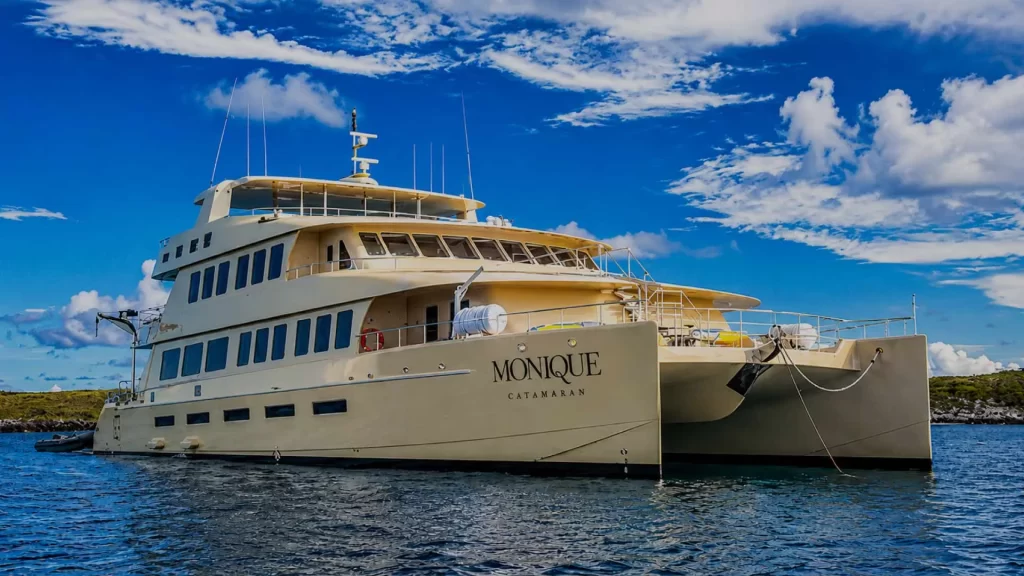
M/C Monique
A 2026 hybrid catamaran for 16 guests, with ocean-view suites, an open-air jacuzzi and a near one-to-one crew.
From USD 7,500
View yacht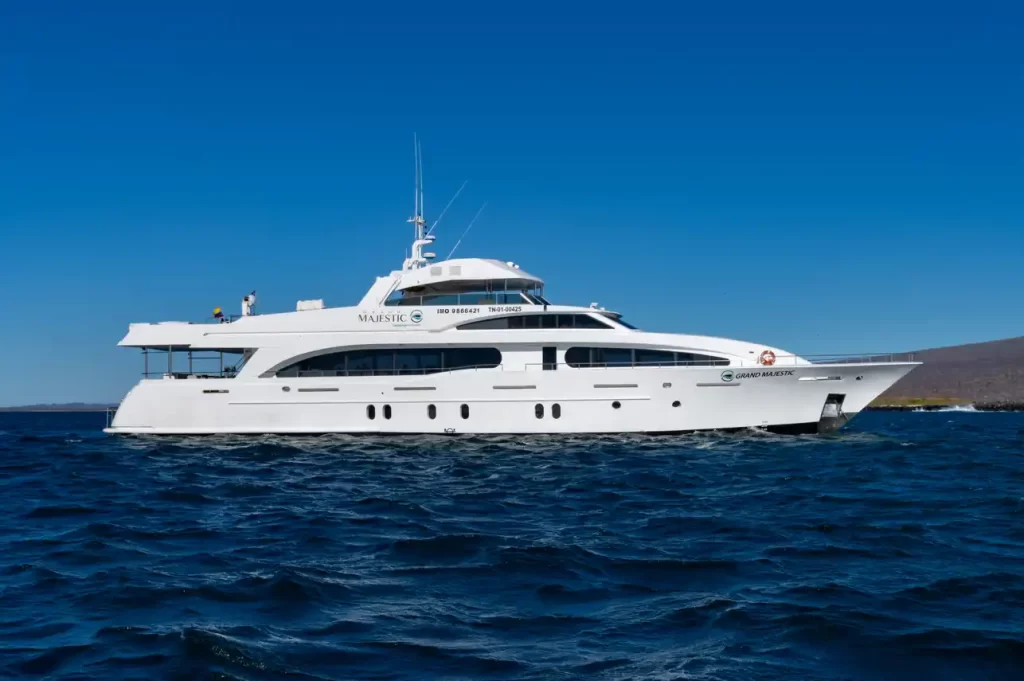
M/Y Grand Majestic
A 39-metre US-designed luxury motor yacht, launched in 2018 and reaching 25 knots, with a 39 m² master suite, seven staterooms and…
Private charter On request
View yacht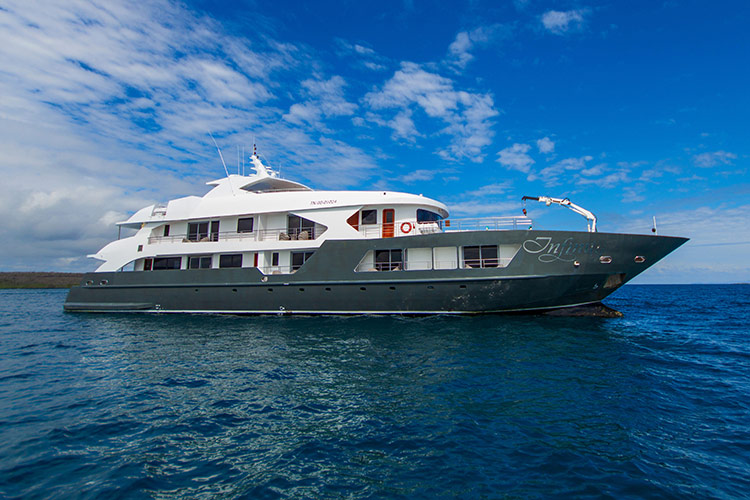
M/Y Infinity Expedition
A 49-metre luxury motor yacht launched in 2018, with eight double cabins and two suites, all with private balconies, a jacuzzi and…
Private charter On request
View yacht