
Santa Fe Land Iguana: The Galápagos Iguana of a Single Island
A pale, golden iguana that lives on one small island and nowhere else on Earth: how to recognise it, what makes Santa Fe special, the best way to visit and how the island is being restored.
5 min read
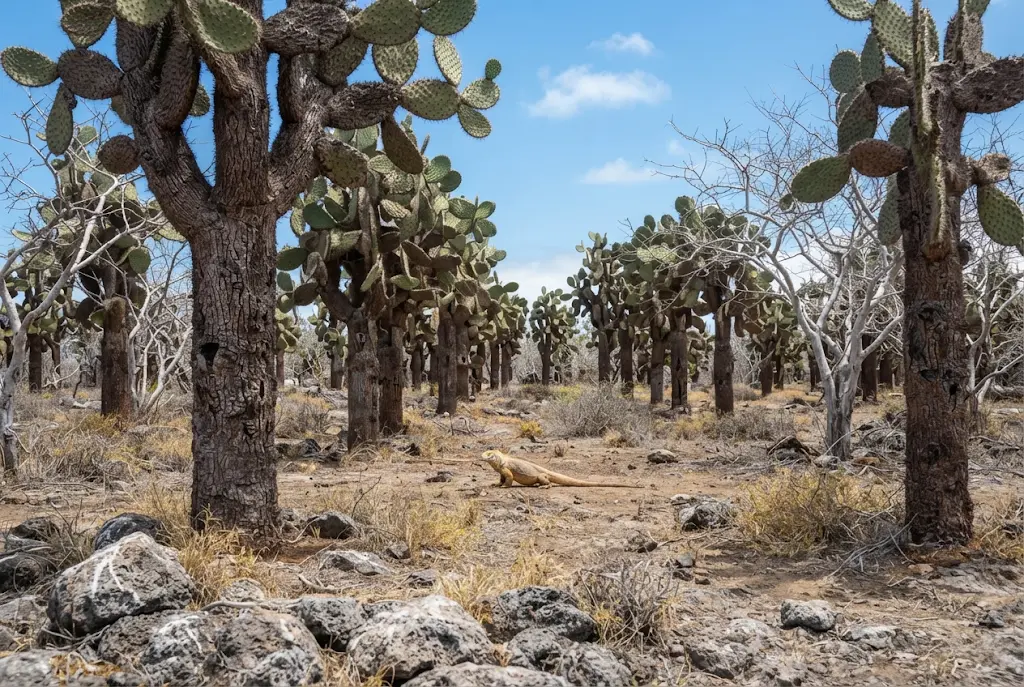
Santa Fe is a small, flat island south-east of Santa Cruz, and one of the oldest in the archipelago. Isolated for a very long time, its iguanas followed their own path and became a separate species. The Santa Fe land iguana lives here and nowhere else, so walking among them under the giant cactus is one of those rare experiences that you can only have in one place on the planet.
Quick facts
| Fact | Santa Fe land iguana |
|---|---|
| Scientific name | Conolophus pallidus |
| Endemic | Yes, found only on Santa Fe Island |
| Size | Around 1 m long, similar to the Galápagos land iguana |
| Colour | Pale cream to golden yellow, lighter than its relatives |
| Diet | Prickly pear cactus and other plants |
| Conservation status | Vulnerable (IUCN) |
| Where to see it | Santa Fe, Barrington Bay visitor site |
| Best time | All year round |
How to recognise it
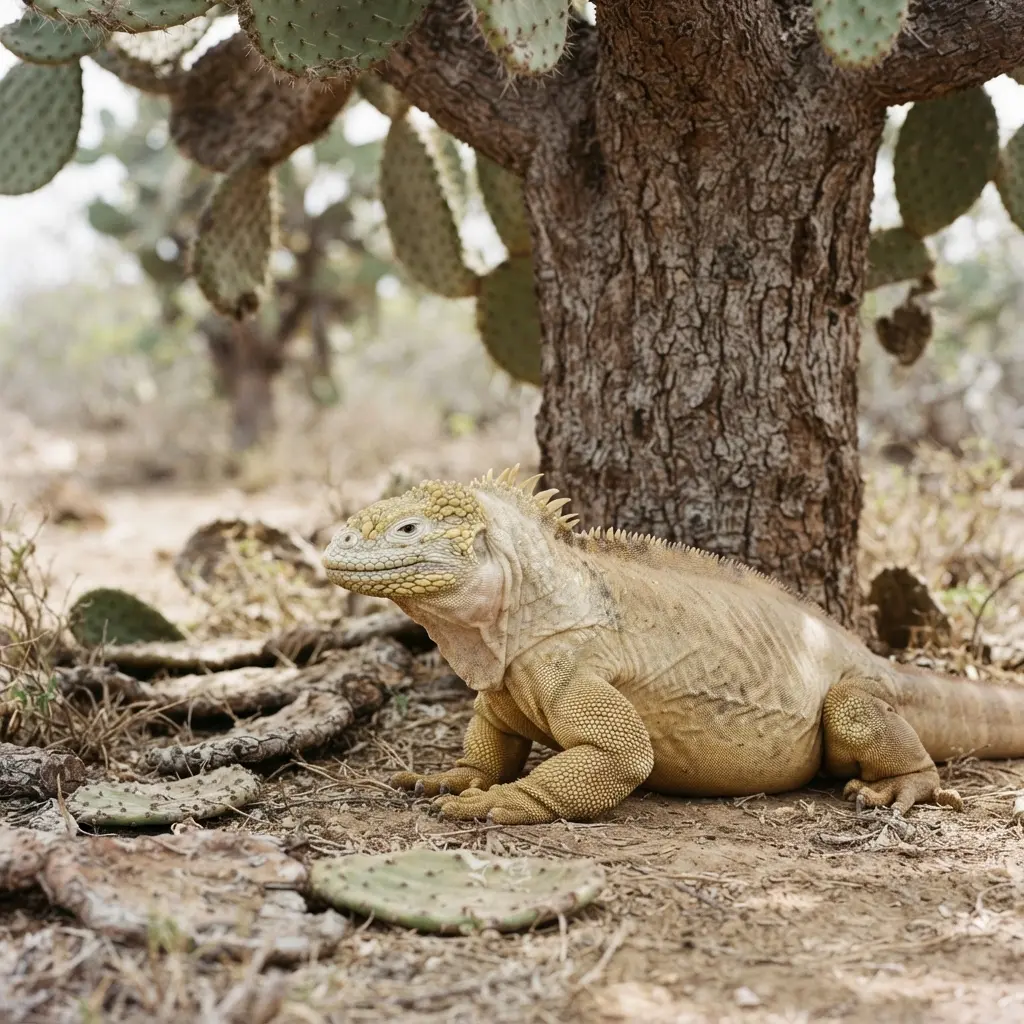
At first sight it looks like its cousin, the Galápagos land iguana, but there are clear differences. The Santa Fe iguana is paler, often with cream, sandy or golden tones that blend with the dry soil of the island. Its crest of spines along the back is more pronounced, and its snout is a little more pointed. Studies of its genes confirm what its looks suggest: it has been evolving apart for a very long time.
An island of giant cactus
Santa Fe is famous for its forest of prickly pear cactus, some of the tallest in the Galápagos, with thick, tree-like trunks covered in bark. Their pads, flowers and fruit are the iguanas’ main food, and their shade is where the iguanas spend the hottest hours of the day. Walking the trail, you will often find them lying beneath the cactus, waiting for a pad or a fruit to fall.
The island is also home to a colony of sea lions on the beach of Barrington Bay, to the Galápagos hawk and to the endemic Santa Fe rice rat, a small native rodent that survives only here.
Where and how to see it
The only place is Barrington Bay, the visitor site of Santa Fe, which is included on many itineraries of the central islands and the southern islands. A typical visit combines a wet landing on a white beach full of sea lions, a walk on a short loop trail through the cactus forest where the iguanas live, and a snorkel in the turquoise bay, often with playful sea lions and, at times, sea turtles and reef sharks.
To find the yachts whose routes include Santa Fe, see cruises by island, or locate the island on the interactive map.
Best time to visit
Santa Fe and its iguanas can be visited all year round. In the warm season, from December to May, the sea is calmer and warmer, ideal for snorkelling in Barrington Bay, and rain makes the cactus bloom. In the cool season, from June to November, the landscape is drier and the iguanas are easy to find in the shade of the cactus. Check the Galápagos wildlife calendar and our guide to the best time to visit to plan the rest of your route.
An island being restored
Like many islands, Santa Fe suffered from goats brought by people, which ate the plants that the iguanas and other animals need. The goats were removed in the early 1970s, and the vegetation slowly recovered. Santa Fe had also lost its giant tortoise long ago, so in 2015 the Galápagos National Park released young giant tortoises of a closely related lineage from Española, to bring back the role that tortoises once played in spreading seeds and shaping the landscape. Today the island is a living example of how the Galápagos can heal when given the chance.
Tips for your visit
- Look for the iguanas in the shade. In the middle of the day they rest under the cactus and among the rocks, and their pale colour makes them easy to miss.
- Pack for a wet landing. You step off the dinghy onto the beach, so wear sandals and keep your camera in a dry bag until you are ashore.
- Bring your snorkel gear. The calm bay is one of the best spots to swim with young sea lions, so do not miss the water time after the walk.
How to watch them responsibly
- Keep at least two metres away from iguanas and sea lions.
- Do not touch, feed or follow them, and never take cactus pads or fruit.
- Stay on the marked trail: the island’s plants are still recovering.
- Follow your naturalist guide, who leads every landing on Santa Fe.
Frequently asked questions
Is the Santa Fe land iguana a different species?
Yes. Scientists consider it a separate species, Conolophus pallidus, found only on Santa Fe Island.
How is it different from the Galápagos land iguana?
It is paler, from cream to golden yellow, with a more pronounced crest of spines and a slightly more pointed snout.
Can I see it on any cruise?
Only on itineraries that include Santa Fe. Many routes of the central and southern islands do; tell us if it is a priority and we will suggest the right ones.
Is Santa Fe a good snorkelling site?
Yes. Barrington Bay is calm and clear, with sea lions, colourful fish and, often, sea turtles.
Are there tortoises on Santa Fe?
Its original tortoise disappeared long ago, but since 2015 young tortoises from a closely related lineage have been released on the island to help restore it.
More Galápagos animals
Discover the other iguanas of the islands, the Galápagos land iguana and the marine iguana, and all the animals you can meet on your trip, with the islands and months to see each one, in our guide to Galápagos animals.
Yachts that visit them
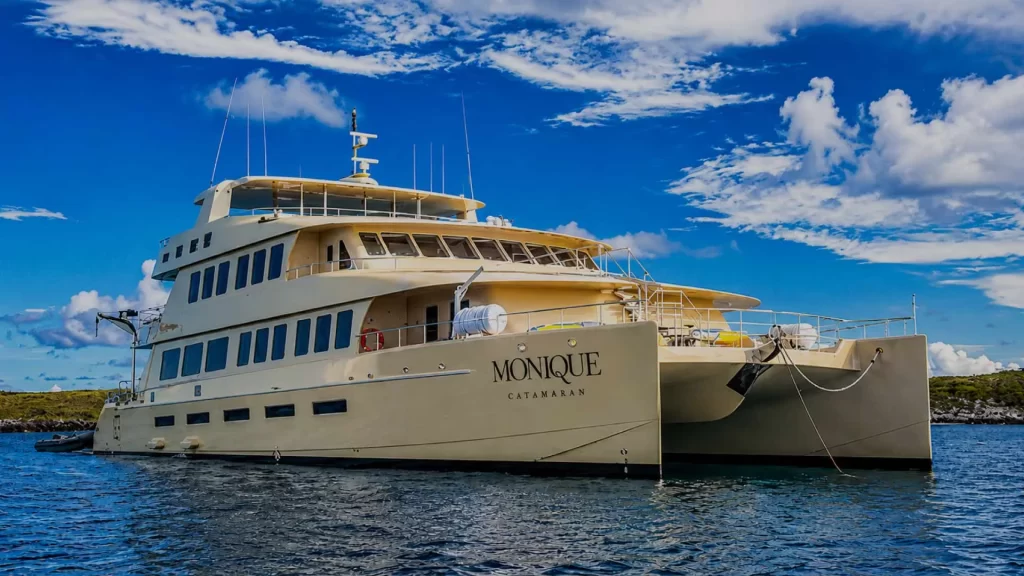
M/C Monique
A 2026 hybrid catamaran for 16 guests, with ocean-view suites, an open-air jacuzzi and a near one-to-one crew.
From USD 7,500
View yacht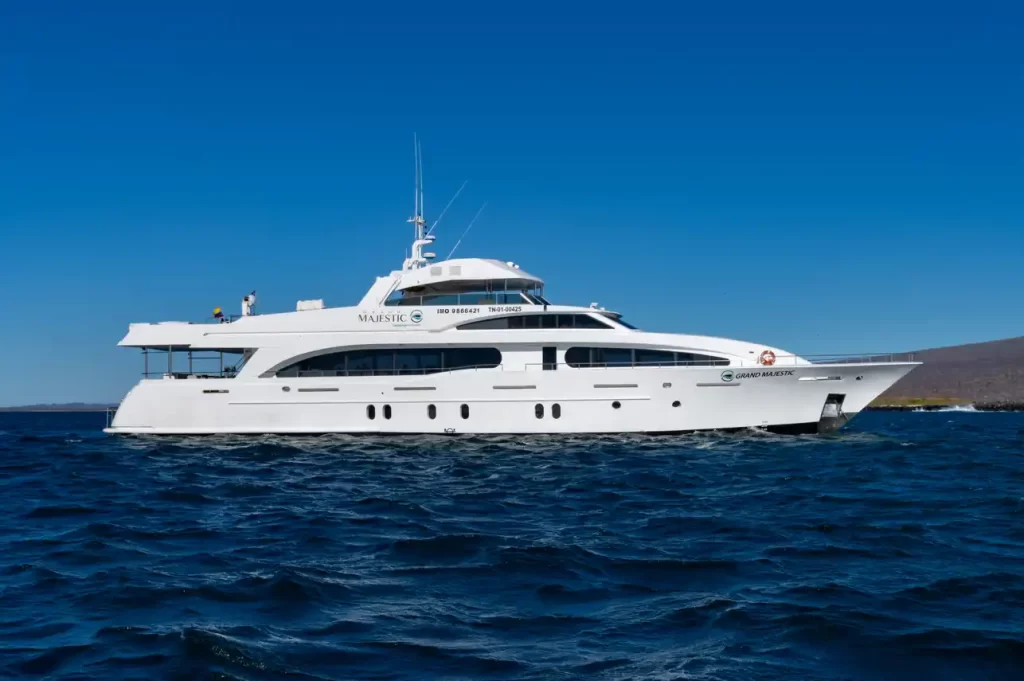
M/Y Grand Majestic
A 39-metre US-designed luxury motor yacht, launched in 2018 and reaching 25 knots, with a 39 m² master suite, seven staterooms and…
Private charter On request
View yacht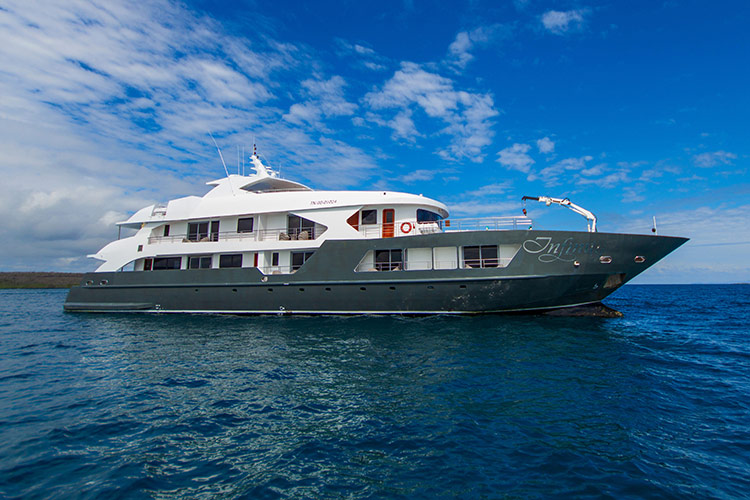
M/Y Infinity Expedition
A 49-metre luxury motor yacht launched in 2018, with eight double cabins and two suites, all with private balconies, a jacuzzi and…
Private charter On request
View yacht