
Whitetip Reef Shark: The Calm Shark of the Galápagos Channels
A slender shark that spends the day resting on the sand and hunts at night: how to recognise the whitetip reef shark, why it is harmless to snorkellers, and the channels and bays where you are most likely to see it.
4 min read
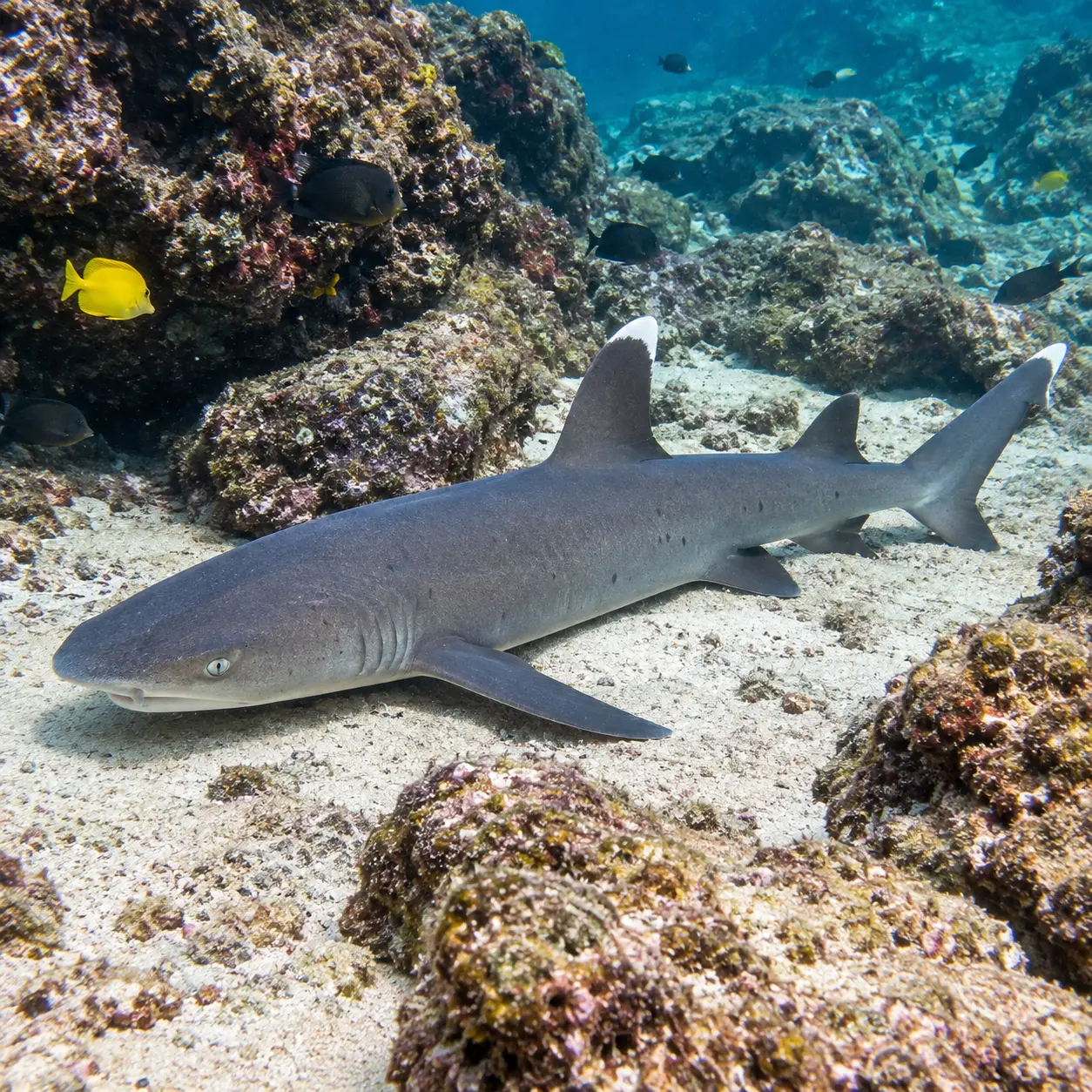
You look down through your mask into a clear sandy channel and see a grey shark lying perfectly still on the bottom, then another one beside it. Neither moves. After a while one lifts off the sand, swims slowly away with a lazy swing of its tail, and settles again a few metres further on. For many visitors, the whitetip reef shark is the first shark they ever see in the wild, and it is a calm and fascinating encounter.
Quick facts
| Fact | Whitetip reef shark |
|---|---|
| Scientific name | Triaenodon obesus |
| Endemic | No; it lives on coral and rocky reefs across the Indian and Pacific Oceans |
| Size | Usually up to about 1.6 m long |
| Diet | Reef fish, octopus, lobsters and crabs, hunted mostly at night |
| Conservation status | Vulnerable (IUCN) |
| Best places | Isabela, San Cristóbal, Bartolomé and Santa Cruz |
| Best time | All year round |
How to recognise it
The whitetip reef shark is slim and grey, with a short, broad snout and bright white tips on its first dorsal fin and on the upper lobe of its tail, which give it its name. Unlike most sharks, it can lie still on the bottom and keep breathing by pumping water over its gills, so it often rests in groups on the sand, under ledges or inside caves during the day. Locals call it “tintorera”, a name you will also hear for the famous channel on Isabela.
Resting by day, hunting by night
During the day, whitetip reef sharks spend long hours resting, often in the same spot day after day. At night they become active and hunt in groups over the reef, using their slim bodies to push into cracks and holes after fish, octopus and lobsters. They are not aggressive towards people, and if you keep a respectful distance they usually ignore you completely.
Where to see whitetip reef sharks
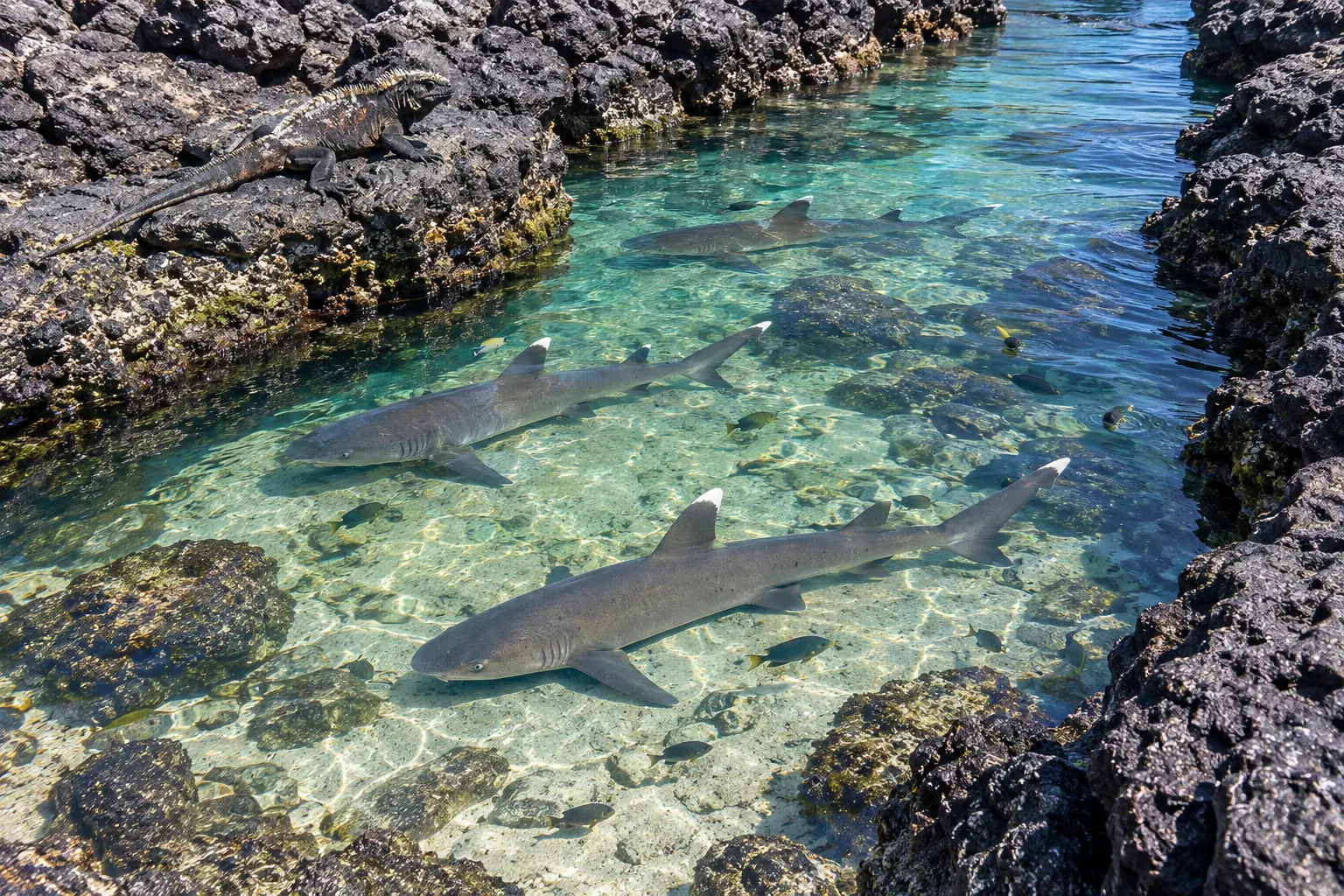
- Las Tintoreras, Isabela: a small islet near Puerto Villamil with a narrow lava channel where whitetips rest in calm water, a few metres from the trail, next to marine iguanas and sometimes penguins, on the western routes.
- Kicker Rock (León Dormido), San Cristóbal: divers and snorkellers often see whitetips in the channel between the two rocks.
- Bartolomé: whitetips are often seen while snorkelling around Pinnacle Rock, on the central islands.
- Santa Cruz and nearby islets: several snorkelling and dive sites around the island have resting whitetips.
To find the yachts whose routes include these sites, see cruises by island, or locate each one on the interactive map.
Best time to see them
Whitetip reef sharks live in the Galápagos all year round and do not migrate. In the warm season, from December to May, the water is warmer and often clearer for snorkelling; in the cool season, from June to November, a thicker wetsuit helps. Check the water temperature by month, the Galápagos wildlife calendar and our guide to the best time to visit.
Tips for your visit
- Look at the bottom and under ledges. Whitetips are often resting completely still and are easy to miss.
- Float calmly. Slow movements and few splashes let you watch them for longer.
- Visit Las Tintoreras. If your route includes southern Isabela, this is one of the easiest places to see them without even getting wet.
How to watch them responsibly
- Never touch, chase or try to wake a resting shark.
- Do not dive down on top of sharks resting on the bottom.
- Keep your fins away from the reef and the sand.
- Follow your naturalist guide’s instructions in the water.
Frequently asked questions
Are whitetip reef sharks dangerous?
No. They are calm and shy, and they are not considered a danger to snorkellers or divers who keep their distance.
Where can I see whitetip reef sharks in the Galápagos?
At Las Tintoreras on Isabela, Kicker Rock off San Cristóbal, Bartolomé and several sites around Santa Cruz.
Can I snorkel with sharks in the Galápagos?
Yes. Whitetip reef sharks are often seen while snorkelling, and at some sites you may also see Galápagos sharks or hammerheads.
Why do whitetip reef sharks lie on the bottom?
They can keep breathing while still by pumping water over their gills, so they rest during the day and hunt at night.
When is the best time to see them?
All year round; they live in the islands permanently.
More Galápagos animals
On the same snorkels you can see green sea turtles, sea lions and, on dives, hammerhead sharks. Discover all of them, with the islands and months to see each one, in our guide to Galápagos animals.
Yachts that visit them

M/C Monique
A 2026 hybrid catamaran for 16 guests, with ocean-view suites, an open-air jacuzzi and a near one-to-one crew.
From USD 7,500
View yacht
M/Y Grand Majestic
A 39-metre US-designed luxury motor yacht, launched in 2018 and reaching 25 knots, with a 39 m² master suite, seven staterooms and…
Private charter On request
View yacht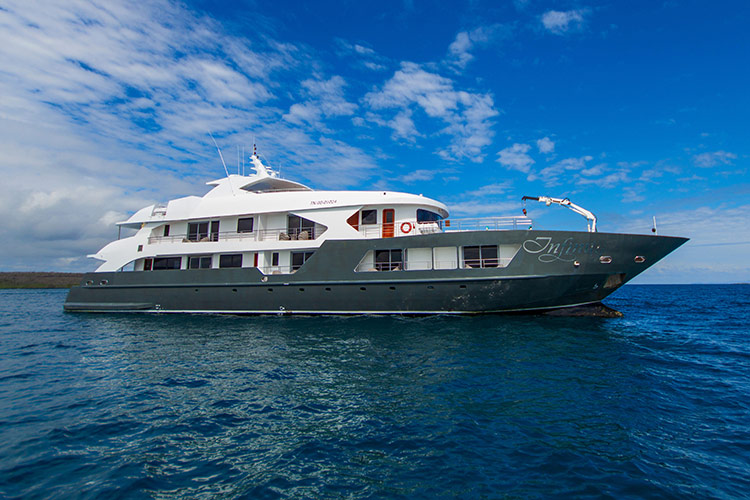
M/Y Infinity Expedition
A 49-metre luxury motor yacht launched in 2018, with eight double cabins and two suites, all with private balconies, a jacuzzi and…
Private charter On request
View yacht